













If you are deciding whether to hire a forward-deployed engineer, the strongest signal is not simply that your team needs more coding capacity. It is that an important AI, integration, or enterprise software initiative keeps getting stuck between a viable solution and production because no single engineer owns the messy last mile: customer context, data, security, integrations, deployment, and iteration.
A forward-deployed engineer (FDE) works close to users and real systems while writing production code and owning the technical outcome.
Companies typically hire one when deployment friction is delaying revenue, consuming core engineering capacity, slowing customer onboarding, or preventing strategic accounts from reaching value.
Hire one when a technically viable AI, software, or integration project repeatedly stalls before production because requirements, systems, security constraints, or ownership are complex.
The strongest signal is recurring deployment friction that affects business results. This may appear as delayed enterprise deals, slow onboarding, failed AI pilots, overloaded senior engineers, or customers waiting too long to reach value.
Cost varies significantly by location, seniority and AI expertise. Senior FDEs command premium engineering compensation because the role combines production engineering with customer-facing delivery, while an external FDE partner can provide project-based capacity without permanent headcount.
Hire internally when customer-embedded engineering will be a permanent part of your operating model. Use an external partner when the immediate need is an AI deployment, complex integration, modernization project, or strategic implementation and you need experienced capacity quickly.
An FDE should own a measurable production outcome, not just a backlog. Typical ownership includes discovery, integration, technical decisions, deployment, production issues, adoption, documentation, and knowledge transfer.
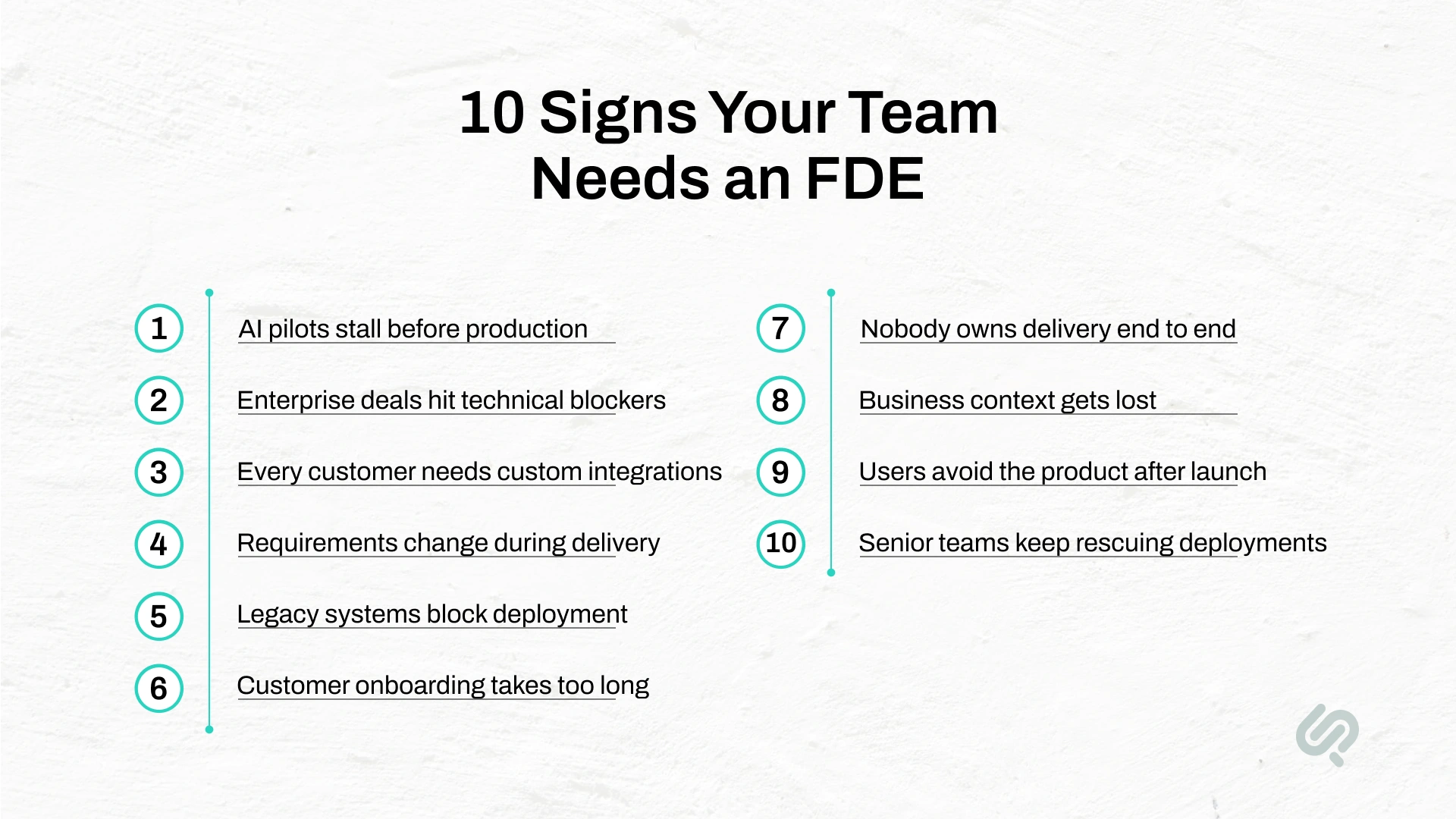
A forward-deployed engineer is most useful when projects are technically possible but repeatedly slow down because of integration complexity, unclear ownership, changing requirements, or production constraints.
These signs can help you identify when a standard engineering setup is no longer enough.
An AI prototype can work in a controlled environment and still fail when it meets real company systems. Production introduces permissions, data quality, monitoring, security, latency, integrations, evaluation, and infrastructure constraints.
Gartner found that, on average, only 48% of AI projects make it into production, and organizations take about eight months to move from AI prototype to production. (1)
Example:
A forward-deployed AI engineer can work across the model, data, applications, infrastructure, and business workflow to resolve those production blockers rather than handing them between separate teams.
A company may need an FDE before a customer has even gone live.
Large prospects often want the product but cannot move forward until difficult technical requirements are solved.
Common examples include:
If valuable deals repeatedly depend on senior engineers stepping into the sales or onboarding process, the company may already have an informal forward-deployed function.
A solutions engineer can prove that a product is technically suitable. An FDE goes further by helping build and deploy what the strategic account actually needs.
Large customers often have different CRMs, ERPs, databases, APIs, identity systems, and cloud environments.
Standard onboarding quickly breaks down when every implementation needs custom technical work.
Example:
A customer-embedded engineer can adapt the solution to each environment without creating constant handoffs between teams.
Complex projects rarely arrive with perfect specifications. Important requirements often appear only after engineers see real systems and users begin testing the solution.
Example:
A company requests an AI support assistant. Development begins, but the team later discovers that useful answers depend on information across Zendesk, Google Drive, internal databases, access controls, and undocumented employee workflows.
In a traditional delivery model, every discovery can create another requirements cycle and another handoff.
Forward-deployed engineering keeps discovery and implementation close together. The engineer can speak with users, understand what changed, turn vague feedback into a technical decision, implement it, and validate the result against the real workflow.
This is particularly useful when customer feedback arrives as business context rather than clean engineering tickets.

A solution can work technically and still fail to reach production because it does not fit the company's security, infrastructure, or compliance requirements.
Common blockers include:
These issues are expensive when they appear late in development. A customer-embedded engineer can work with security, infrastructure, product, and engineering teams early enough to design around the real constraints rather than discovering them just before launch.
If customers sign contracts but wait weeks or months before receiving real value, technical implementation may be the bottleneck.
Example:
An FDE can take direct ownership of these blockers and help reduce time-to-value.
Projects often involve several teams, but no one owns the complete technical outcome.
Example:
When problems fall between these teams, decisions slow down. A forward-deployed engineer connects the stages and stays accountable through production.
Important details can disappear as requirements move through business teams, product managers, architects, and developers.
Example:
An FDE works directly with users to understand the actual business problem before deciding what should be built.
A product can work technically and still fail because it does not fit real workflows or produces inconsistent results.
Example:
An embedded AI engineer can observe real usage and improve prompts, retrieval, workflows, integrations, fallback logic, or user experience.
Many companies are already doing forward-deployed engineering before they hire someone for the role.
Look at who gets called when an important implementation starts failing.
It may be:
This can work while the customer base is small. It becomes difficult to scale once several implementations need the same level of attention.
A dedicated FDE can take ownership of these deployment problems while feeding recurring technical patterns back into the product and engineering teams.
An FDE adds the most value when the work contains uncertainty, customer context, and difficult production constraints. For predictable delivery, another role is often more efficient.
If the scope is clear and unlikely to change, a normal software engineering team can usually own delivery.
If customers follow the same implementation path with few technical exceptions, there may be little need for embedded engineering.
Basic setup, permissions, standard migrations, and well-documented integrations are usually better suited to implementation or professional services teams.
An additional FDE may create overlap if existing engineers already understand the users, systems, deployment environment, and business requirements.
Use a solutions engineer when the main goal is demonstrating the product, answering architecture questions, and validating technical fit before a sale.
Not every account should receive senior embedded engineering. If implementation cost consistently exceeds the commercial value of the work, the better answer may be a more standardized product or onboarding model.
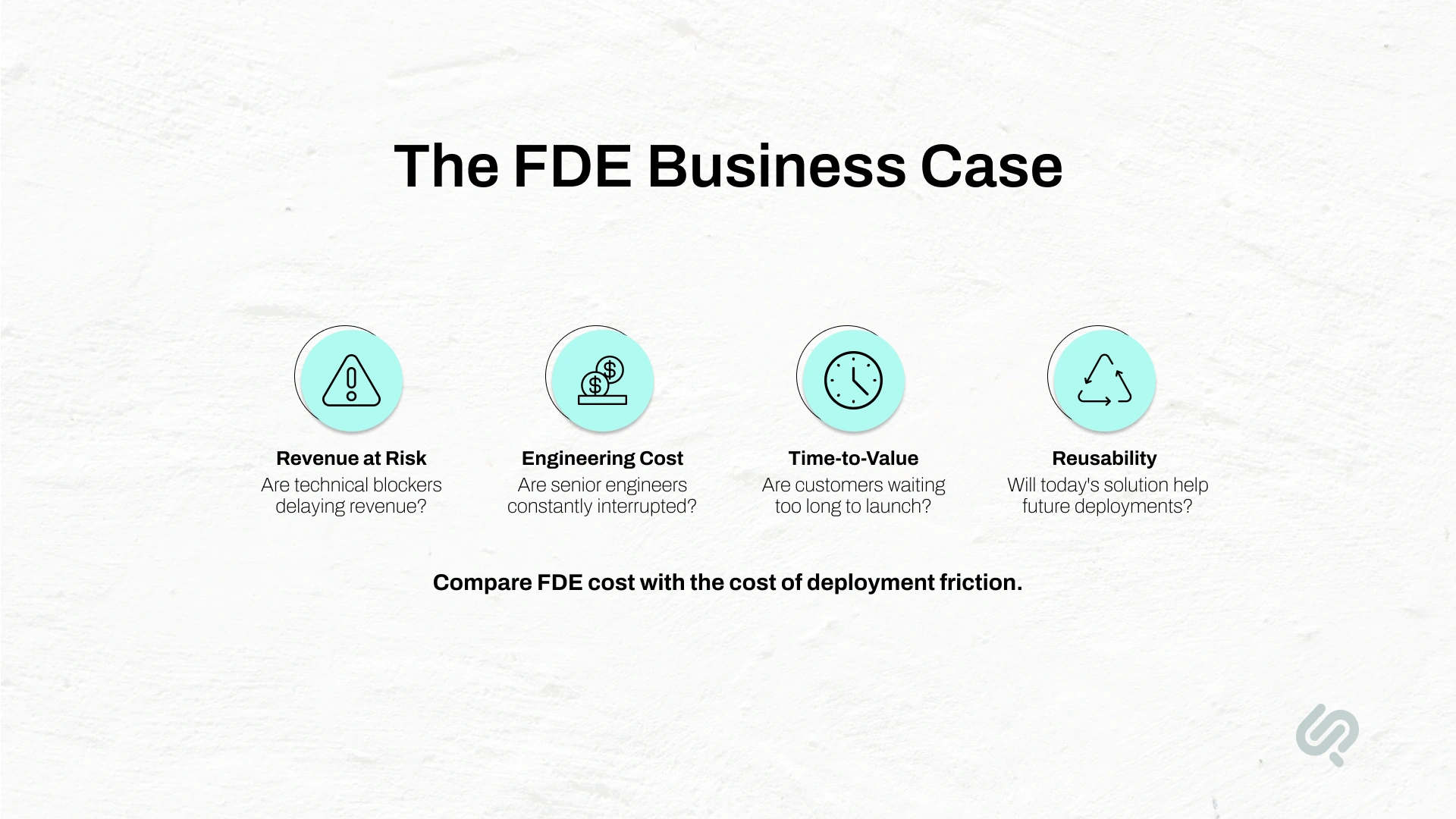
The useful question is not simply "How much does an FDE cost?"
A better question is: "What is deployment friction already costing the company?"
Look at four areas.
Are technical blockers delaying:
The more revenue tied to solving the implementation problem, the easier dedicated FDE capacity becomes to justify.
Calculate how much time senior engineers currently spend on customer-specific integrations, deployment fixes, troubleshooting, and implementation calls.
An FDE may be worthwhile if assigning one engineer to this work protects several core engineers from repeated interruptions.
Measure how long it takes customers to move from signing a contract to receiving meaningful value.
Long onboarding cycles can affect adoption, customer satisfaction, expansion, and retention even when the core product works well.
Ask whether solving the current deployment will create something useful for future customers.
That might include:
There is no universal contract value or company size at which you should automatically hire a forward-deployed engineer. The business case is strongest when recurring implementation friction is expensive and solving it creates leverage beyond one customer.
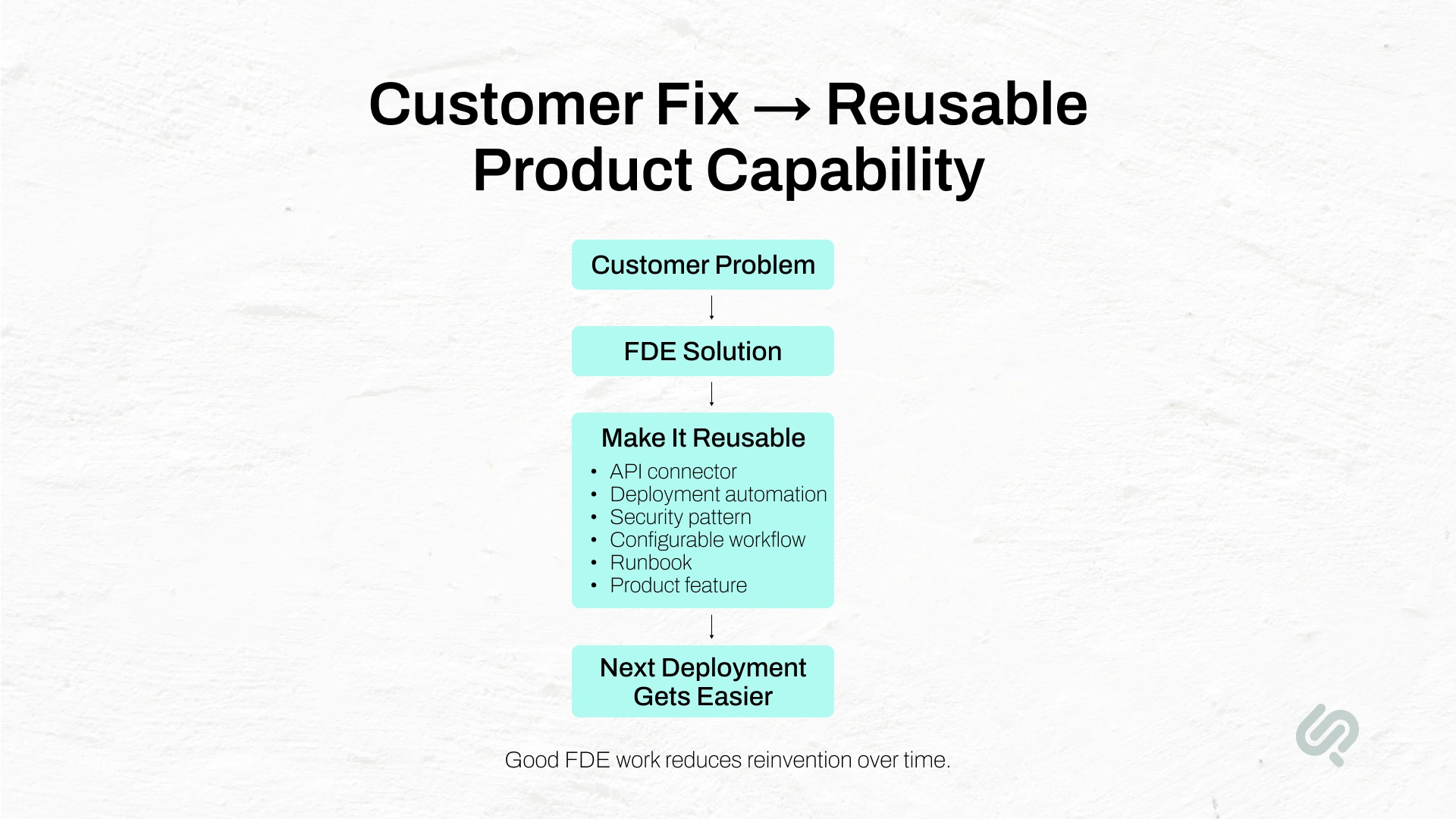
Forward-deployed engineering can go wrong when every customer receives another custom script, workaround, or private version of the product.
That model eventually creates technical debt.
A strong FDE function should solve today's customer problem while making tomorrow's implementation easier.
After a deployment, ask what can become reusable.
There is a simple way to judge whether the model is working:
Does each new deployment require less reinvention than the one before it?
Useful measures include:
If every customer requires the same amount of custom engineering, the company may have a product architecture problem rather than an FDE capacity problem.
A good FDE partner should reduce long-term implementation dependency, not make itself permanently necessary.
Companies have easier access to capable AI models, APIs, cloud platforms, and development tools than they did a few years ago. The harder problem is making that technology work with real company data, existing applications, security controls, infrastructure, and business workflows.
The gap is particularly visible in enterprise AI. McKinsey's 2025 AI survey found that 88% of organizations were using AI in at least one business function, but only about one-third had started scaling AI across the enterprise. (2)
Demand for engineers who can close that implementation gap has grown quickly. Reuters reported that demand for forward-deployed engineers and related roles increased 42-fold between 2023 and 2025. AWS also committed an initial $1 billion in 2026 to an organization designed to embed AI engineers directly with customers. (3)
"The signal is usually not that a company lacks engineers. It is that nobody owns the space between the business problem, the existing systems, and the production outcome. Forward-deployed engineering puts technical ownership directly inside that gap."
— Hammad Maqbool, AI Specialist, Phaedra Solutions
The hiring decision becomes clearer once implementation problems start affecting customer value, engineering capacity, or revenue.
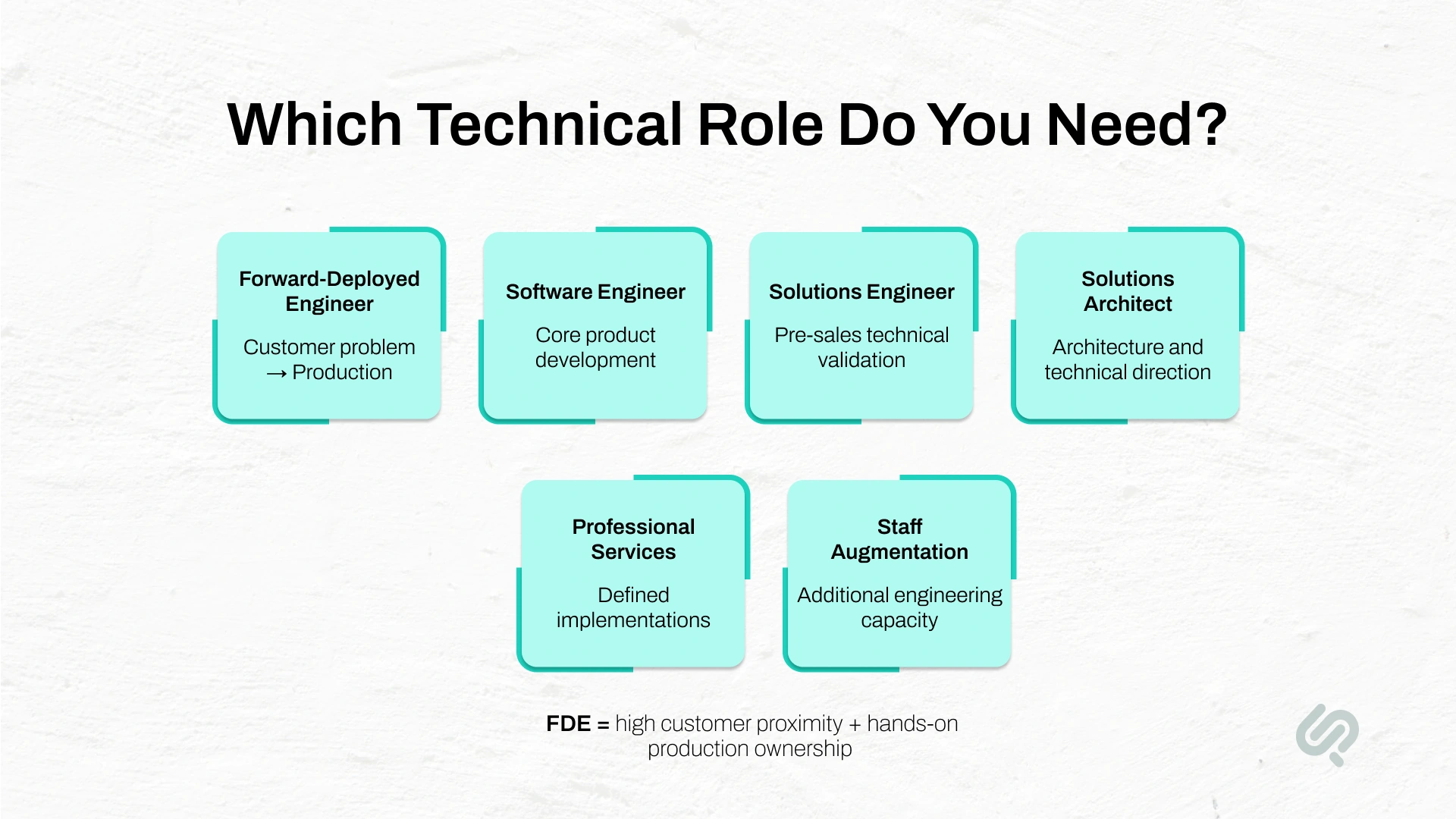
The main difference is the type of ownership each role takes.
Choose an FDE when the company needs someone who can move between business conversations and production engineering without handing the problem to another team every time requirements change.
The best option depends mainly on whether forward-deployed engineering is becoming a permanent business capability or solving a specific delivery problem.
An internal team makes sense when embedded customer engineering is becoming a repeatable part of how the company sells, implements, and supports its product.
Forward-deployed engineering services are usually more practical when the immediate need is an AI production rollout, complex integration, enterprise modernization initiative, or strategic customer deployment and the business does not want to wait for a full hiring cycle.
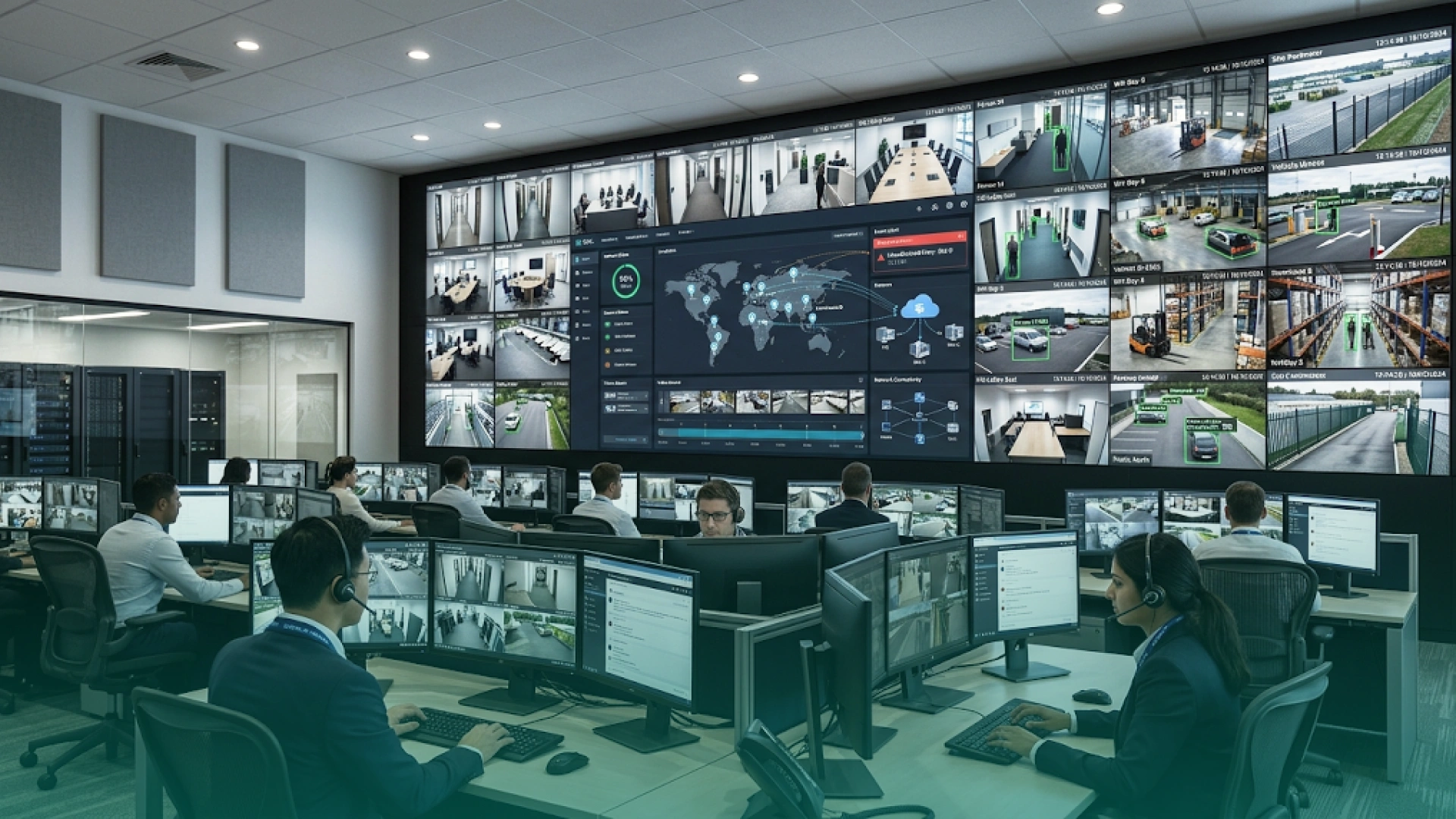
A security technology client needed to connect fragmented surveillance systems, introduce AI capabilities, and move the platform into reliable multi-location production.
Phaedra Solutions handled the engagement in a strong FDE-style model, combining close technical discovery with hands-on engineering, integration, cloud deployment, testing, and rollout.
The team built an AI Cloud Surveillance Platform with real-time monitoring, OpenAI-powered search, face detection, tracking, AWS infrastructure, Docker, and CI/CD. What stands out is that Phaedra Solutions did not stop at building features.
The team stayed focused on making the platform work in the client’s real environment and scale as operational needs grew.
Do not evaluate a forward-deployed engineering company like a normal staffing supplier. The engineer must be able to code, but production coding alone is not enough.
Look for five things.
Ask for examples where the team stayed involved after the prototype and handled deployment, testing, monitoring, optimization, or production issues.
The engineer should challenge assumptions and investigate the business workflow rather than simply convert requirements into tickets.
Look for experience with APIs, cloud infrastructure, legacy systems, databases, authentication, DevOps, and data pipelines.
For AI projects, the AI deployment engineer should also understand model APIs, RAG, agents, evaluation, observability, security, cost management, and production failure modes.
A good engagement should make your internal team stronger.
Architecture decisions, deployment procedures, system constraints, runbooks, and operational knowledge should not disappear when the external engineer leaves.
Ask what happens to customer-specific work after the implementation.
A good forward-deployed engineering company should identify patterns that can become reusable integrations, automation, documentation, infrastructure, or product capabilities.
Be cautious if the provider's model depends on accumulating custom code that only its own engineers understand. Good FDE work should leave both the product and the internal engineering team stronger.
A strong FDE must be comfortable speaking with executives, operations teams, product owners, security teams, and engineers.
Being able to explain trade-offs in plain English is part of the role.
Phaedra Solutions' Forward-Deployed Engineering Services embed senior engineers close to your business, users, and systems to take complex AI and software initiatives from discovery through production. The model is designed for AI deployment, difficult integrations, modernization projects, and enterprise implementations where conventional handoffs are slowing delivery.
Phaedra is also AI-first in how this work is delivered. Engineers can use AI-assisted discovery, development, testing, documentation and engineering automation with tools such as Claude and Cursor while senior engineers retain responsibility for architecture, security, code quality and production decisions.
Book a free consultation with our forward-deployed engineering team to identify what is blocking your project, whether an FDE model is the right fit, and what the fastest realistic path to production looks like.



Ameena is a content writer with a background in International Relations, blending academic insight with SEO-driven writing experience. She has written extensively in the academic space and contributed blog content for various platforms.
Her interests lie in human rights, conflict resolution, and emerging technologies in global policy. Outside of work, she enjoys reading fiction, exploring AI as a hobby, and learning how digital systems shape society.