













AI investment decisions involve more than choosing a model or buying licenses. Businesses need to understand what the technology can improve, how it will connect to existing operations, what it will cost to maintain, and how results will be measured.
This report brings together 60 statistics from verified sources, covering spending, adoption, financial outcomes, integration, agents, productivity, and governance. It explains the limits of each dataset and turns the evidence into practical questions for buyers.
AI spending, operational integration, and financial returns measure different stages of progress. Use these headline findings as starting points, then check the population and methodology before applying them to your business.
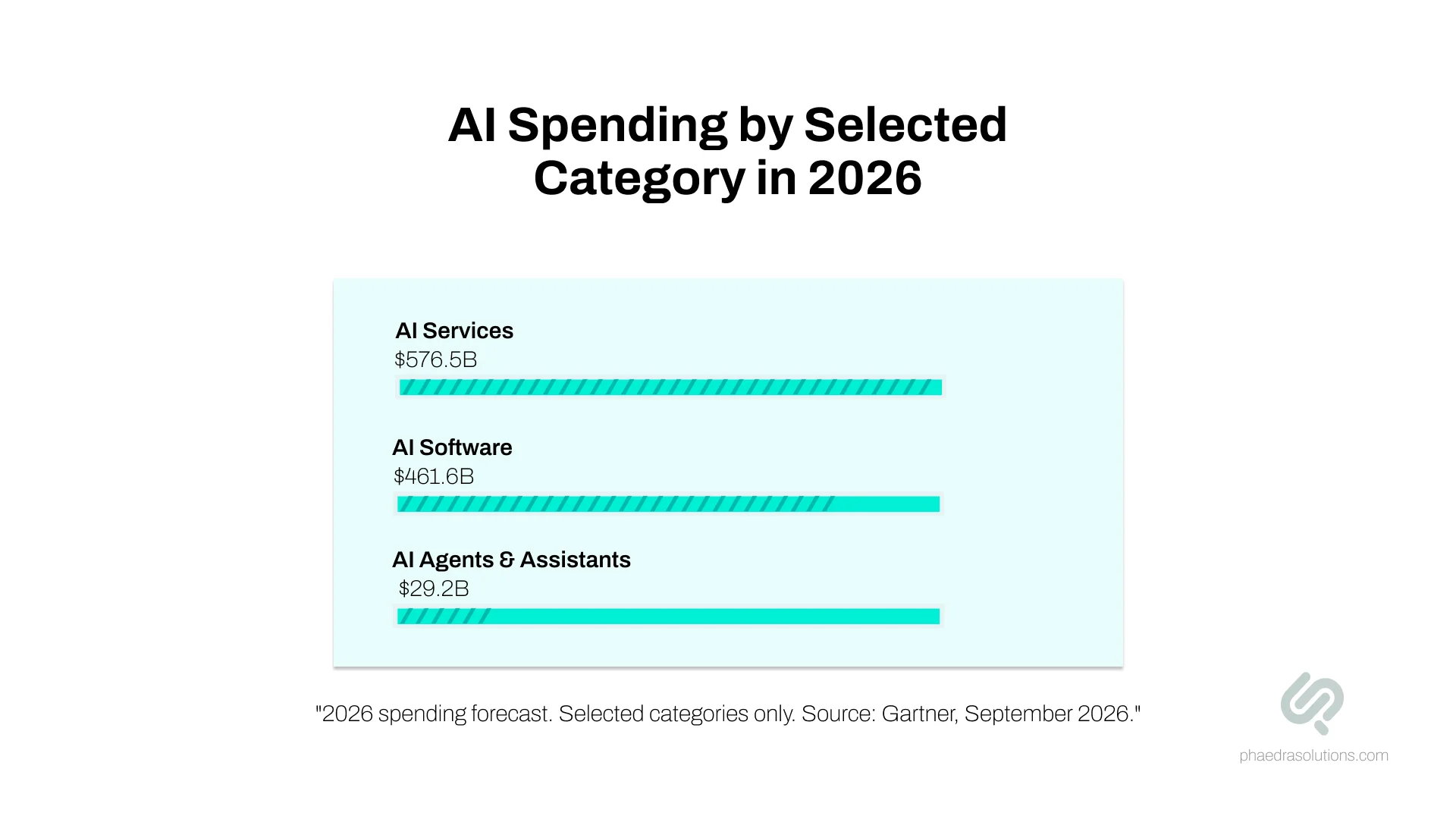
AI services are one category within a larger AI spending market. Overall spending also includes infrastructure, software, models, and other technologies. A total-market forecast cannot be treated as revenue available to AI consulting and development firms.
Gartner’s September 2026 forecast provides the following context:
For a buyer, market growth supplies context. Your budget should follow the scope of the problem: data preparation, integration, development, testing, deployment, and ongoing support. Supplier revenue growth does not establish customer ROI.
There is no single adoption percentage that describes every business. Country, company size, survey coverage, and the definition of use all affect the result.
EU enterprise adoption rose 6.5 percentage points between 2024 and 2025. Eurostat, December 2025. (4)
The Census Bureau broadened its question in November 2025 from AI in producing goods or services to AI in any business function. Comparisons spanning that change need qualification. (2)
The UK result covers businesses handling digitized data. Eurostat covers specified sectors and excludes enterprises below its size threshold. These figures should not be used as a direct US–UK–EU league table. (3) (4)
What to ask internally: Which teams use AI, which tools are approved, which workflows depend on them, and where does their output enter a customer or business system? An inventory answers more operational questions than a company-wide adoption percentage.
International comparisons are most useful when they use the same measurement method. Enterprise adoption and individual usage need separate views.
Among enterprises covered by Eurostat’s 2025 survey:
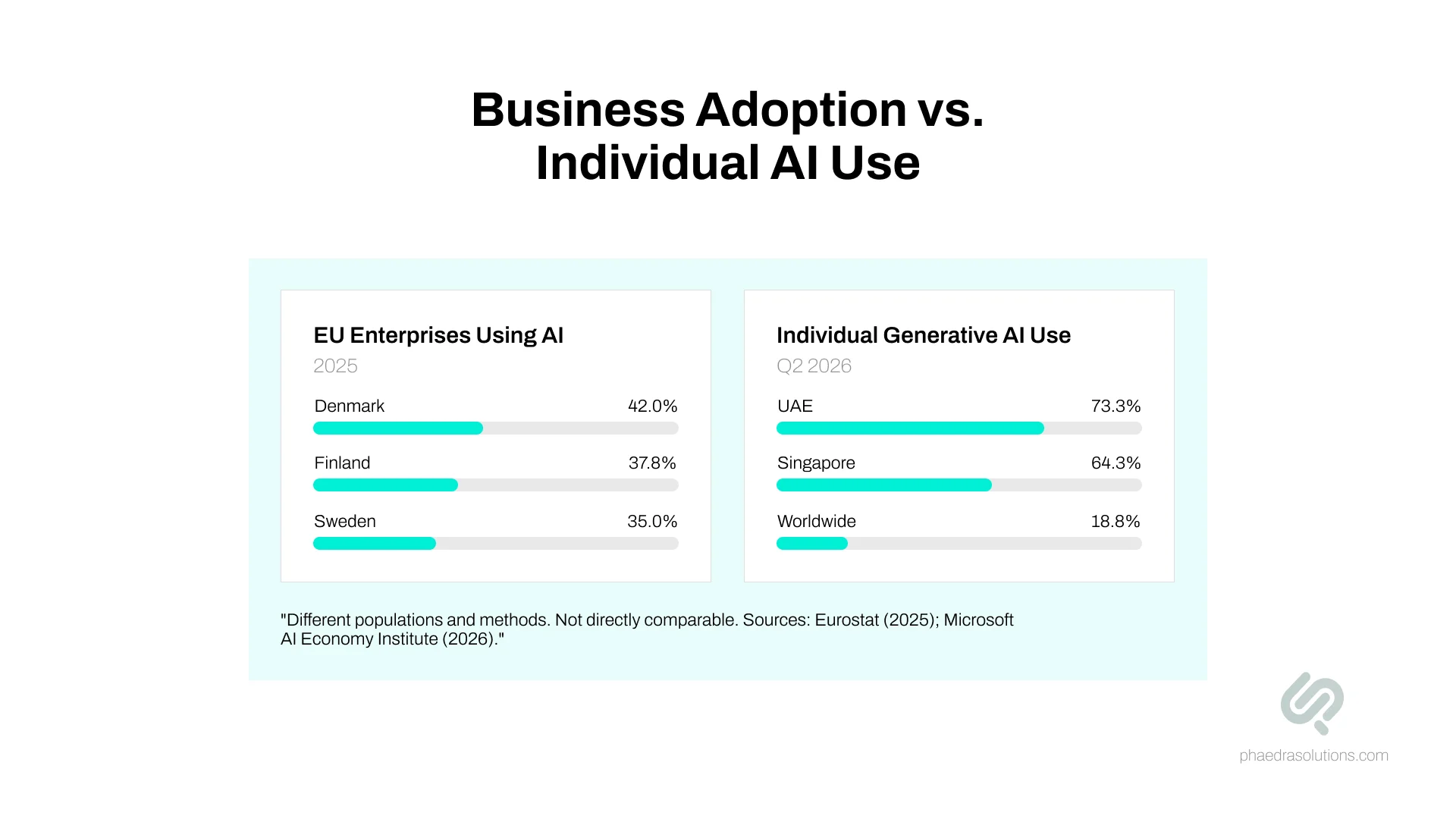
Microsoft’s measure covers people aged 15–64 and uses anonymized telemetry adjusted for factors including device share and internet penetration. It estimates usage rather than corporate procurement or deployment maturity. (5)
For international businesses, use these findings to inform local research. Check employee familiarity, language needs, customer expectations, deployment availability, and data requirements in each market before assuming one rollout will fit every region.
AI applications range from analyzing information to generating content and supporting customer-facing work. A useful implementation starts with a specific task and an acceptable result.
These application categories can overlap. A business may use AI for several activities, so the percentages should not be added together.
Start with work that has a clear input, a repeatable process, and a result someone can evaluate. The following are illustrative planning examples, not measured outcomes:
Evaluate whether AI is necessary. A fixed rule, better search, or an existing software feature may meet the requirement with less operational complexity. Where AI is appropriate, define the review and exception process before launch.
For tes moving toward implementation, a structured guide to building an AI system can help clarify the development process.
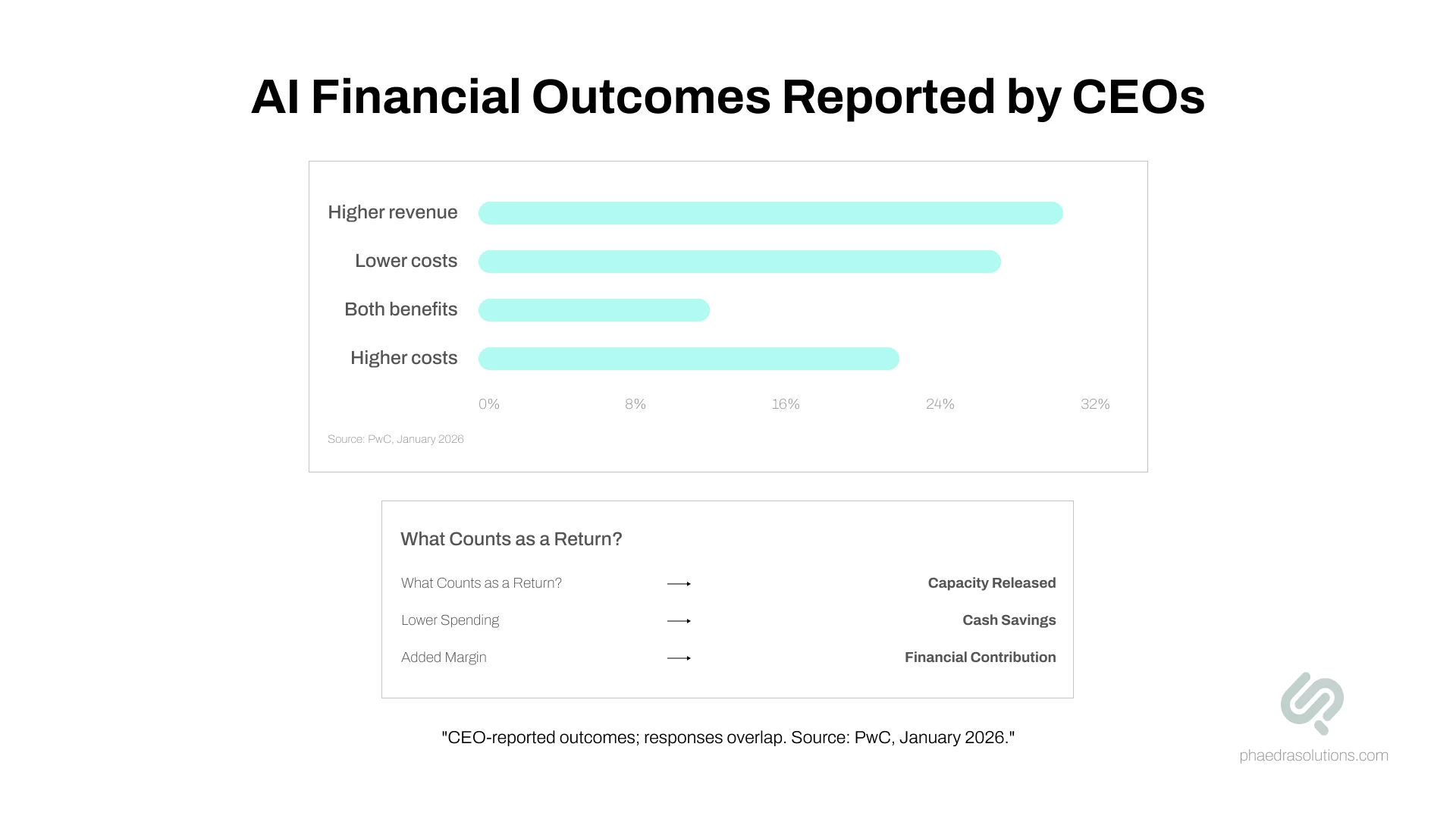
Financial benefits are reported, but the type of benefit and the measurement method matter. The headline findings show that broad adoption cannot be treated as evidence of a profitable implementation.
PwC’s January 2026 CEO survey reported:
These are CEOs’ reported outcomes, not a common audited calculation of net project returns. Revenue gains, cost changes, and enterprise EBIT are also different measures. (6) (7)
Use the same period for costs and benefits:
AI ROI = (realized financial benefit − total AI cost) ÷ total AI cost × 100
Include implementation, integration, licenses, infrastructure, evaluation, maintenance, and human review in total cost. For additional sales, use incremental contribution after associated costs rather than counting all new revenue as profit.
Distinguish three outcomes:
Time saved becomes a financial benefit only when the business can explain how that capacity was used or how spending changed. Avoid counting the same improvement twice.
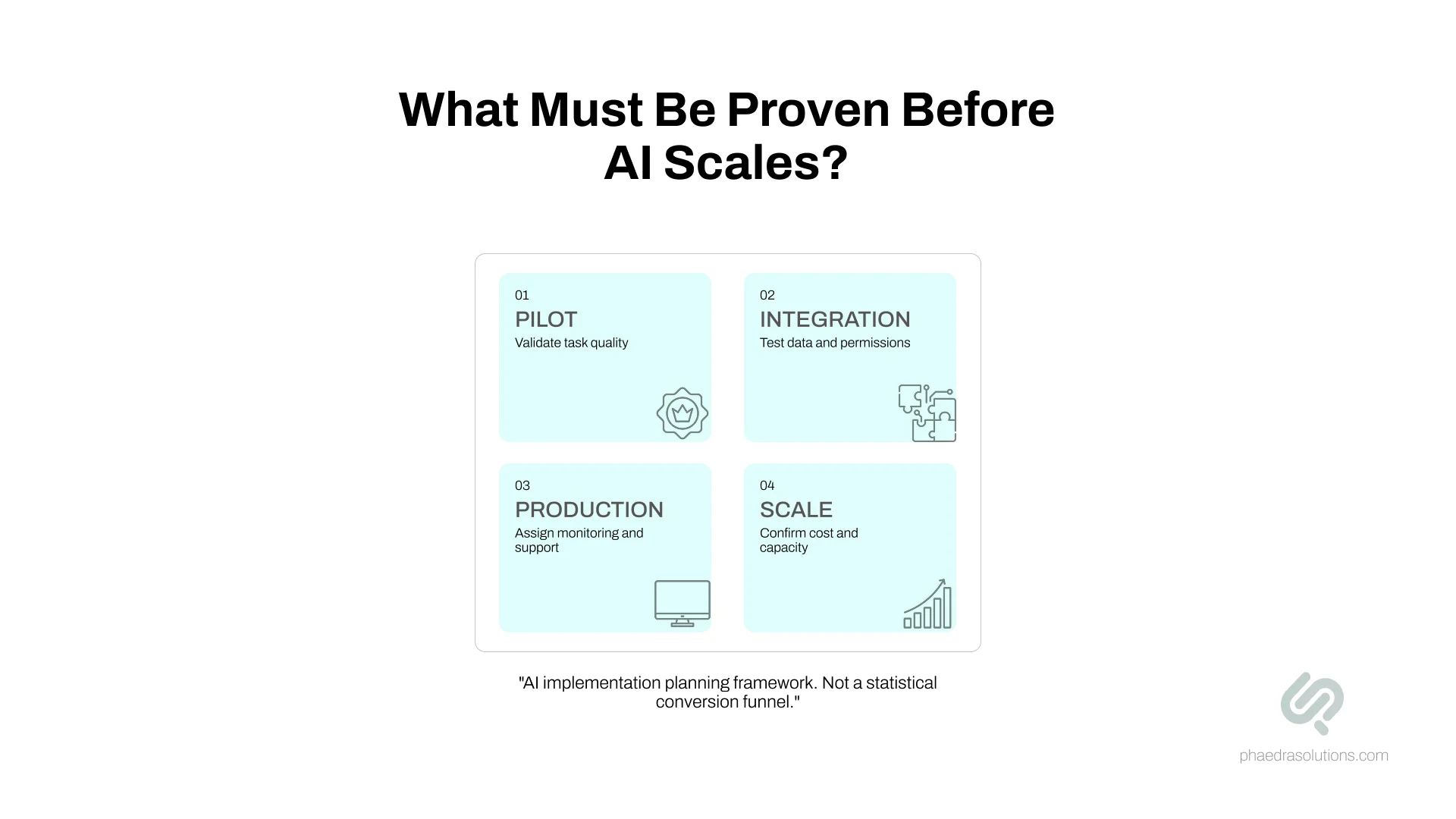
An AI pilot, an integrated tool, and a scaled service represent different levels of deployment. Each needs its own acceptance criteria.
The opening statistics show different forms of incomplete integration across Deloitte, UK DSIT, and the Goldman Sachs survey. Their definitions and populations differ, so they cannot form one market-wide conversion funnel.
Additional findings show how organizations are changing their operations:
A demonstration may handle clean examples while real operations include missing records, inconsistent documents, unavailable services, or unusual requests. Include these conditions in testing. Define when the system should stop, ask for clarification, or send work to a person.
“Before expanding an AI pilot, agree on who owns its output, how errors reach a person, and what a completed task costs. Those decisions give the business a clear basis for deciding whether to scale.”
— Hammad Maqbool, Head of AI & LLM Engineering, Phaedra Solutions
AI agents create choices about how much functionality to buy, configure, integrate, or build. The right choice depends on workflow requirements and the team's ability to operate the result. For complex implementations, enterprise AI agents introduce additional integration and governance requirements.
McKinsey’s August 2026 survey reported agent scaling among 40% of respondents from organizations with more than $1 billion in annual revenue, compared with 22% from smaller organizations. (7)
The customization expectations in the headline findings describe intentions, not completed projects. They should not be read as evidence that every organization needs a custom agent. (8)
Ask providers to explain which components are custom and why. A proposal should identify the packaged services, data connections, custom logic, evaluation work, and ongoing responsibilities separately.
For AI agent workflows that update records, send messages, or trigger transactions, specify exactly which actions they can take and which require approval. A useful assistant and an authorized operator have different responsibilities.
Operating costs include the work required to keep AI useful, available, and controlled. Model or token charges are only part of that budget.
The FinOps headline finding concerns a specialist practitioner survey. It does not mean nearly every business has established AI cost controls. (10)
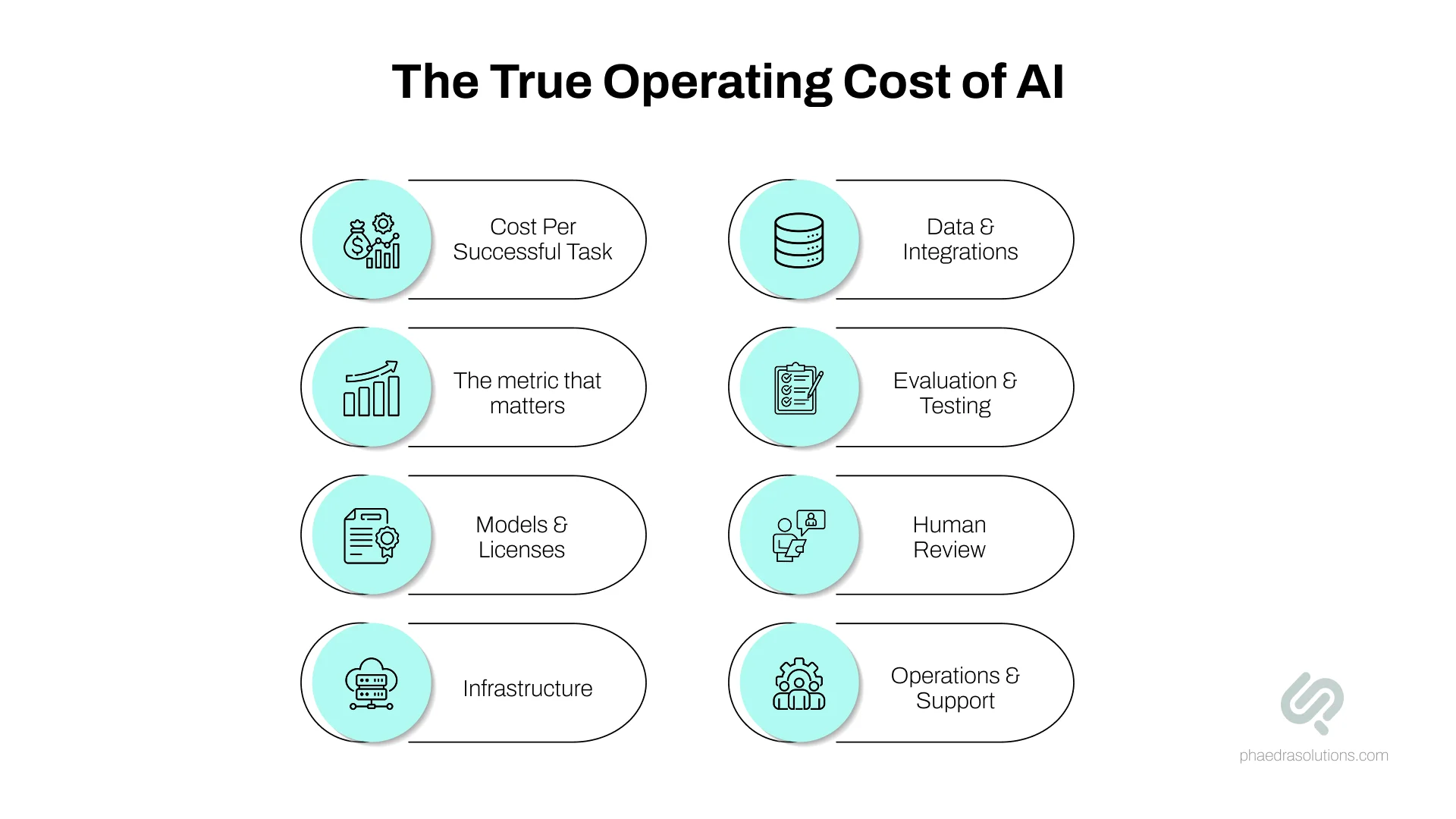
Measure cost per successfully completed business task. For an invoice workflow, that might mean an invoice processed accurately and accepted by the finance system, including any required review. For support, it might mean a correctly resolved case rather than a generated response.
Set usage alerts, identify expensive failure loops, and compare alternative models using the same quality requirements. A lower price per token offers limited value if more retries or manual corrections are required.
The answer depends on the work, the tool, and the outcome being measured. More output, faster completion, better quality, and greater profit are related but distinct results.
METR subsequently reported selection problems in its newer experiment: some developers did not want to work without AI, and some withheld tasks from randomization. The researchers considered the newer data an unreliable signal of the current effect’s size. The older slowdown result should therefore retain its historical label. (12)
Compare similar work over a defined period. Record the time required for completion, review, correction, and downstream fixes. Track quality alongside speed, and document which tools and processes changed.
For software teams, useful measures include accepted work, defects, review effort, deployment reliability, and maintenance. For other teams, use an equivalent completed business outcome. Do not assume additional generated material has additional value.
AI deployment needs people who can connect technology to a working process and remain accountable after launch. That includes training employees as well as building systems.
The Goldman Sachs sample consists of program participants, rather than a nationally representative sample of all small businesses. Anthropic’s target measures intended training capacity, not demonstrated customer outcomes. (9) (14)
When evaluating an AI development company, ask who will own each responsibility:
These responsibilities may be shared by a small team. The requirement is named ownership, a defined deliverable, and a clear escalation path for each.
AI security covers the model, its data, its connected tools, and the environment in which it operates. Review the complete system before granting it access to sensitive information or consequential actions.
An AI-enabled attack uses AI to assist the attacker. An attack targeting an AI application concerns the victim’s AI system. Teams building these systems should also establish an AI security and governance checklist before production deployment.
These categories are different. The IBM sample contains breached organizations and does not estimate the likelihood that any business will be breached. (16)
Google Research’s contextual approach to agent security examines whether an action is appropriate in its specific circumstances. Permission to read information does not automatically authorize every use or destination for that information. The publication identifies research problems and architectural directions rather than proving a complete security solution. (17)
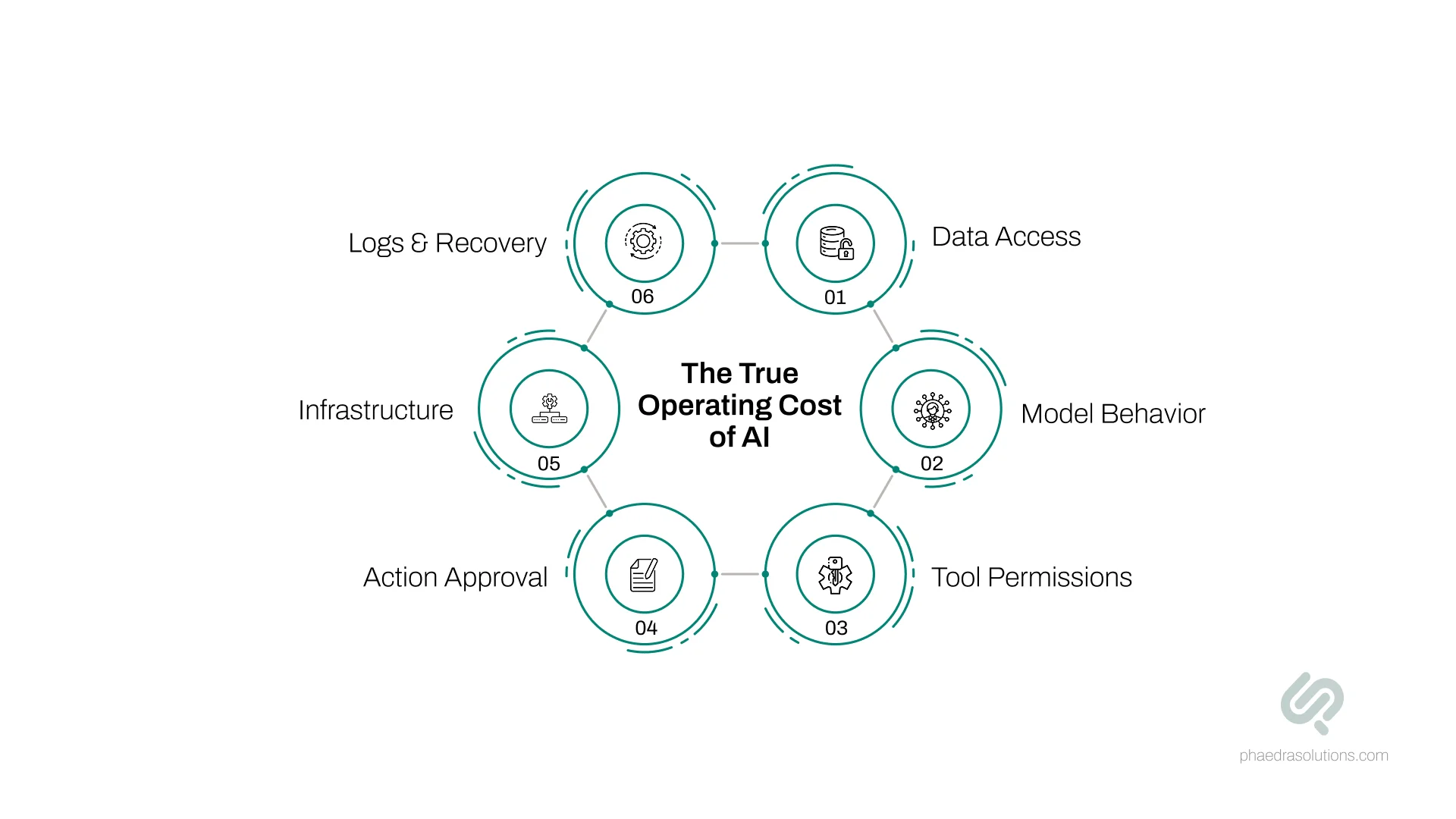
Approve AI investment against a defined outcome, a realistic operating plan, and evidence that the organization can support the result. Include deployment location and vendor dependencies in that decision.
Keep forecasts separate from commitments. A survey expectation should not become your staffing plan or a supplier’s promised saving.
For cross-border operations, ask where data is processed and retained, who can access it, and how the service can be changed or exited. Verify applicable requirements for the actual data and deployment rather than assuming a vendor’s headquarters settles the question.
Keep the first release narrow enough to evaluate. Expand when task quality, operating costs, user adoption, and support responsibilities are understood.
This is a sourced evidence review, not an original Phaedra Solutions market survey. The 60 numerical findings come from government statistics, original surveys, research papers, forecasts, and company disclosures.
Figures were checked against originating publications. News coverage and other statistics pages served as discovery leads, not as the final evidence for the report’s numerical claims.
Verification confirms that the publisher reports the figure and that its scope is represented accurately. It does not remove sampling error, self-reporting limitations, forecasting uncertainty, or methodological weaknesses.
The report has global coverage but does not claim equally detailed evidence for every country or industry. The single Phaedra Solutions project example below is company-reported and is not included in the market-statistics count.
Start with a workflow your team can measure. Phaedra Solutions helps businesses assess AI use cases, develop proofs of concept, and integrate AI into existing products and operations through its AI services.
Project example: Phaedra Solutions’ AI Cloud Surveillance Platform connected IP cameras and access controls with web and mobile monitoring and OpenAI-powered search.
Unsure where to start? Discuss your AI project.



Musa is a senior technical content writer with 7+ years of experience turning technical topics into clear, high-performing content.
His articles have helped companies boost website traffic by 3x and increase conversion rates through well-structured, SEO-friendly guides. He specializes in making complex ideas easy to understand and act on.