

.webp)


.webp)
.webp)
.webp)






.webp)
Web app development cost in 2026 usually ranges from $18,000 to $60,000 for an MVP, $45,000 to $250,000+ for a custom web or mobile app, and $180,000 to $500,000+ for enterprise-grade software.
The final price depends on your app type, feature complexity, platform, integrations, AI features, security needs, and post-launch support.
That is why a basic MVP does not cost the same as a SaaS platform, customer portal, marketplace, or AI-powered mobile app. A simple web app may only need login, core screens, and a backend. A larger product may need dashboards, payments, APIs, admin panels, mobile apps, AI automation, cloud infrastructure, and compliance.
This guide breaks down realistic 2026 app development costs, what increases the budget, where AI-first agencies can reduce delivery time, and how to plan your budget before you hire a development partner.
Web app development cost in 2026 usually starts around $18,000–$60,000 for an MVP, $45,000–$150,000 for a custom SaaS or portal, and $180,000–$500,000+ for enterprise web applications. The cost increases with user roles, integrations, dashboards, security, AI features, and scalability needs.
A simple mobile app usually costs $25,000–$50,000, a medium-complexity app costs $50,000–$120,000, and a complex or enterprise mobile app can cost $120,000–$500,000+. Native iOS and Android builds usually cost more than cross-platform apps built with React Native or Flutter.
An AI-first agency can often reduce total cost because AI-assisted workflows speed up discovery, prototyping, code scaffolding, QA testing, documentation, and sprint planning. The hourly rate may not be lower, but the number of manual hours can be reduced when the process is managed well.
The biggest cost drivers are feature complexity, backend logic, user roles, third-party integrations, real-time features, AI functionality, security requirements, compliance, cloud infrastructure, and post-launch maintenance. Unclear scope is also one of the fastest ways to increase cost.
Plan for hosting, maintenance, bug fixes, security patches, app store fees, third-party tools, AI API usage, monitoring, analytics, and future feature improvements. A safe budget is usually 15–25% of the original development cost per year for maintenance and updates.
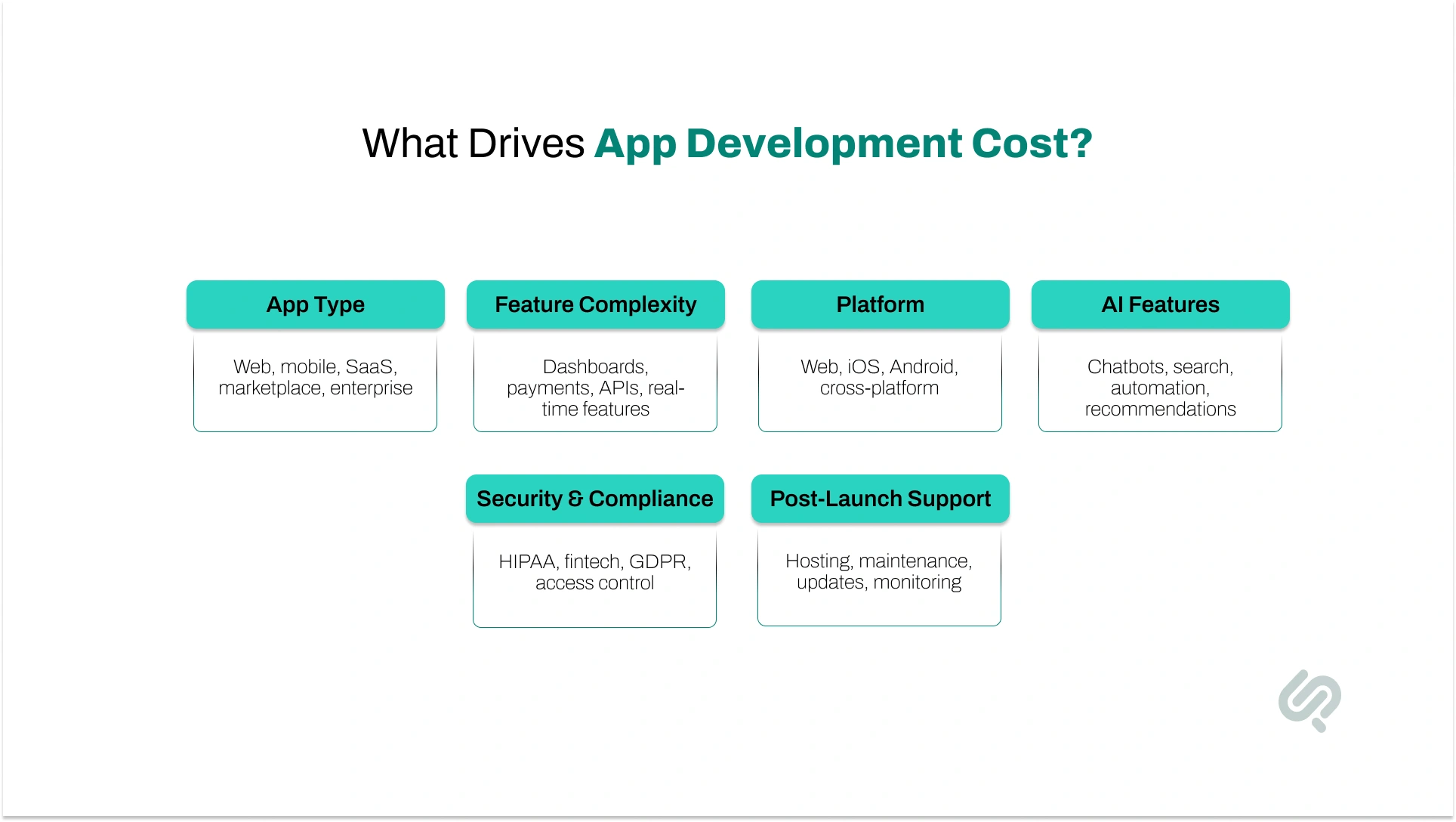
The cost to build a web or mobile app with an AI-First agency in 2026 depends on what you are building, how complex it is, and how much of the development process can be improved with AI-assisted workflows.
A basic MVP may only need core screens, user login, simple backend logic, and launch support. A custom app may need advanced UI/UX design, payment systems, admin dashboards, third-party integrations, and stronger security.
An AI-powered or enterprise app may need automation, AI agents, data workflows, compliance, cloud infrastructure, and long-term maintenance. That is why app development pricing is not one fixed number. The right way to estimate cost is to look at your app type, feature set, platform, timeline, and the agency model behind the build.
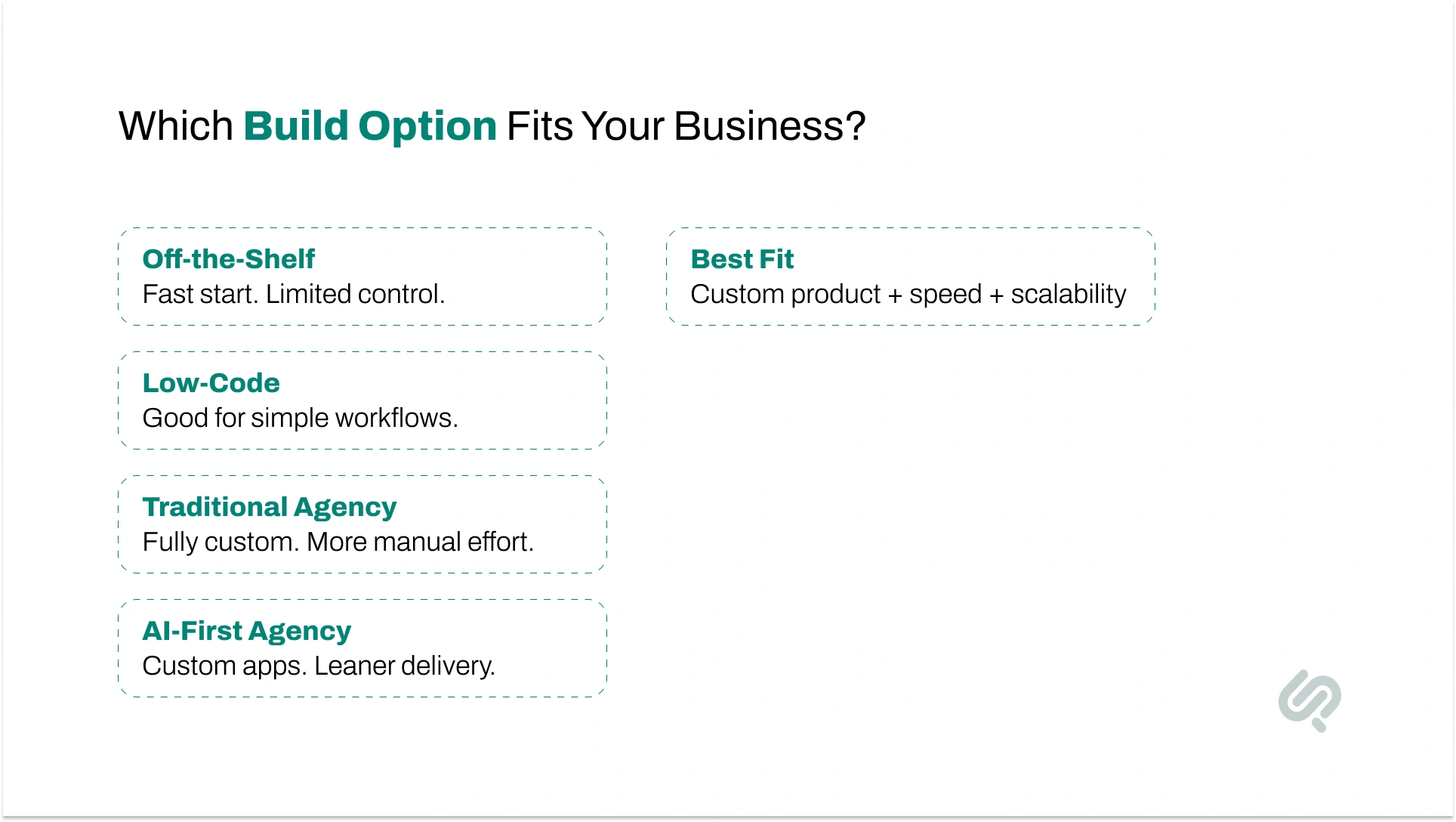
Before you compare app development quotes, first decide what kind of solution you actually need.
Not every business needs a fully custom app from day one. Some teams can start with an off-the-shelf tool or low-code platform. But if your product needs custom workflows, AI features, user roles, integrations, dashboards, or long-term scalability, a custom build usually makes more sense.
An AI-First agency is usually the better choice when you need a custom product, but do not want slow delivery, unclear scope, or a bloated team. AI helps speed up repetitive work, while experienced engineers still handle architecture, security, integrations, and final quality.
This matters because web app development cost is not only about the number of screens. It also depends on how efficiently your team can plan, build, test, and launch the product.
Web apps are often faster and more cost-effective to build than native mobile apps because they run in browsers and do not need app store submission.
That makes them a smart starting point for startups, SaaS founders, marketplaces, internal tools, and businesses that want to launch faster.
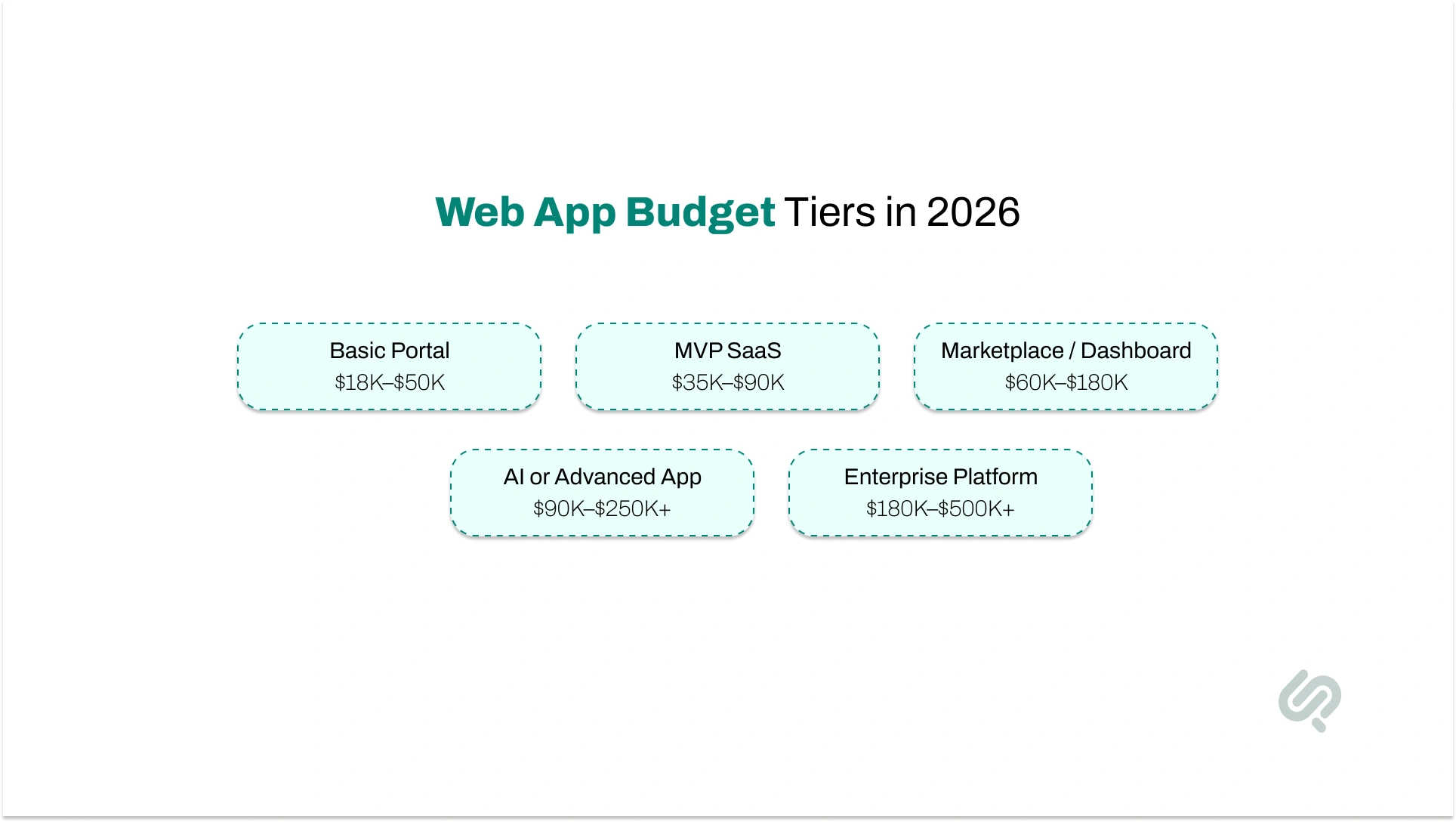
A clear budget range helps you avoid underestimating the project before you speak with a development partner.
Use this quick guide to understand where your project may fit:
If your product needs only a few core workflows, your custom web app development cost will stay closer to the lower range. If it needs complex permissions, real-time data, AI features, third-party APIs, admin dashboards, or compliance, the budget will increase.
The safest approach is to start with a scoped MVP, validate the main workflow, and then add advanced features after launch.
Web app development cost increases when the product needs more than basic pages, simple user flows, and standard backend logic. The biggest cost drivers usually include:
An AI-First development agency can reduce repetitive work across discovery, prototyping, development, QA testing, and documentation.
This helps shorten timelines while senior engineers stay focused on architecture, security, integrations, performance, and final product quality.
Mobile apps usually cost more than web apps because they need extra testing across devices, screen sizes, operating systems, app store rules, performance, storage, and security
If you build separate native apps for iOS and Android, the cost can nearly double. That is why many startups and growing businesses choose React Native or Flutter to launch faster with one shared codebase.
Mobile app pricing increases when your app needs more than basic screens and simple user actions. The biggest cost drivers usually include:
As an AI-First app development agency, we use AI-assisted workflows to speed up planning, prototyping, development, QA testing, and documentation.
This helps reduce repetitive work while our senior engineers focus on performance, security, architecture, integrations, and app store readiness.

Adding AI features increases the overall AI app development cost because you are not just building normal app screens. You are also adding model integrations, data flows, AI testing, monitoring, and ongoing usage costs.
AI-powered apps become more expensive when they need:
AI features also create monthly costs after launch. These costs grow as more users interact with your app.
Typical monthly costs include:
As an AI-First app development agency, we plan these costs early so your AI-powered app does not become expensive to run after launch. The goal is not just to build the feature, but to make sure it stays accurate, secure, scalable, and cost-effective.
An MVP, or Minimum Viable Product, is the first working version of your app with only the core features needed to test the idea with real users. It is usually the best starting point for startups, new products, and businesses that want to validate demand before investing in a full build.
Instead of spending $200,000+ on a complete product too early, an MVP helps you test the main user flow, collect feedback, and improve the product with less risk.
A well-scoped MVP should include:
Most app development estimates are not a single cost. They are made up of multiple stages, from planning to launch.
Here is how a typical app development budget is usually divided:
This breakdown helps you compare app development quotes more clearly. If one quote is much cheaper than another, check what is missing. Some vendors exclude discovery, QA, DevOps, documentation, or post-launch support to make the first estimate look smaller.
A serious app development cost estimate should show what is included, what is excluded, and what could increase the budget later.
Most app cost guides only talk about the build cost. But after launch, your app also needs hosting, maintenance, security, tools, and compliance support.
Here are the main hidden costs to plan for:
These hidden costs do not mean your app is too expensive to build. They simply mean your budget should cover both initial development and long-term ownership.
Building a new app from scratch is usually easier to estimate because the team starts with a clean foundation. This is called a greenfield project.
Legacy modernization is different. You are not starting from zero. You are improving, rebuilding, or replacing parts of an existing system while the business may still depend on it.
That can affect the budget.
Legacy system modernization may include extra work such as:
A new web app may cost less at the start, but modernization can be more cost-effective when the existing system still has valuable business logic. Instead of replacing everything, the team can improve the parts that slow down performance, increase risk, or block growth.
For business leaders, the main question is not always “Should we rebuild or modernize?” The better question is:
What parts of the system still create value, and what parts are now costing us time, money, and growth?
An AI-First development team can support modernization by speeding up code analysis, documentation, test generation, migration planning, and technical discovery. But senior engineers still need to make the final decisions on architecture, security, scalability, and rollout strategy.
This is where the cost difference becomes clear. A traditional agency and an AI-First agency may charge similar hourly rates for senior developers, but the total project cost can be very different because the number of manual hours is lower.
Traditional agencies usually bill for every hour spent on discovery, design, development, QA, documentation, DevOps, and project management. For a mid-complexity app, that can quickly add up.
A typical project team may include:
With standard agency rates, a 12-week build can easily reach $140,000–$160,000+ before DevOps, discovery, maintenance, or post-launch support are added.
An AI-First development agency works differently. The hourly rate may not be much lower, but AI-assisted workflows reduce repetitive work across the project.
AI helps reduce time spent on:
The result is usually a shorter timeline and lower total cost. A project that may cost $150,000 with a traditional agency could cost around $95,000–$115,000 with an AI-First agency, depending on scope, complexity, and review needs.
Let’s look at a side by side comparison:
“AI-first development does not mean handing your product to AI. It means using AI to remove repetitive effort while senior engineers focus on architecture, security, performance, and product decisions. That is where cost and timeline improvements become practical, not risky.”
— Mujtaba Sheikh, Development Head, Phaedra Solutions
The key point is simple: AI-First app development does not make expert work cheap. It makes the delivery process leaner. Senior engineers still need to handle architecture, security, integrations, performance, code review, and final quality. AI reduces repetitive work around them.
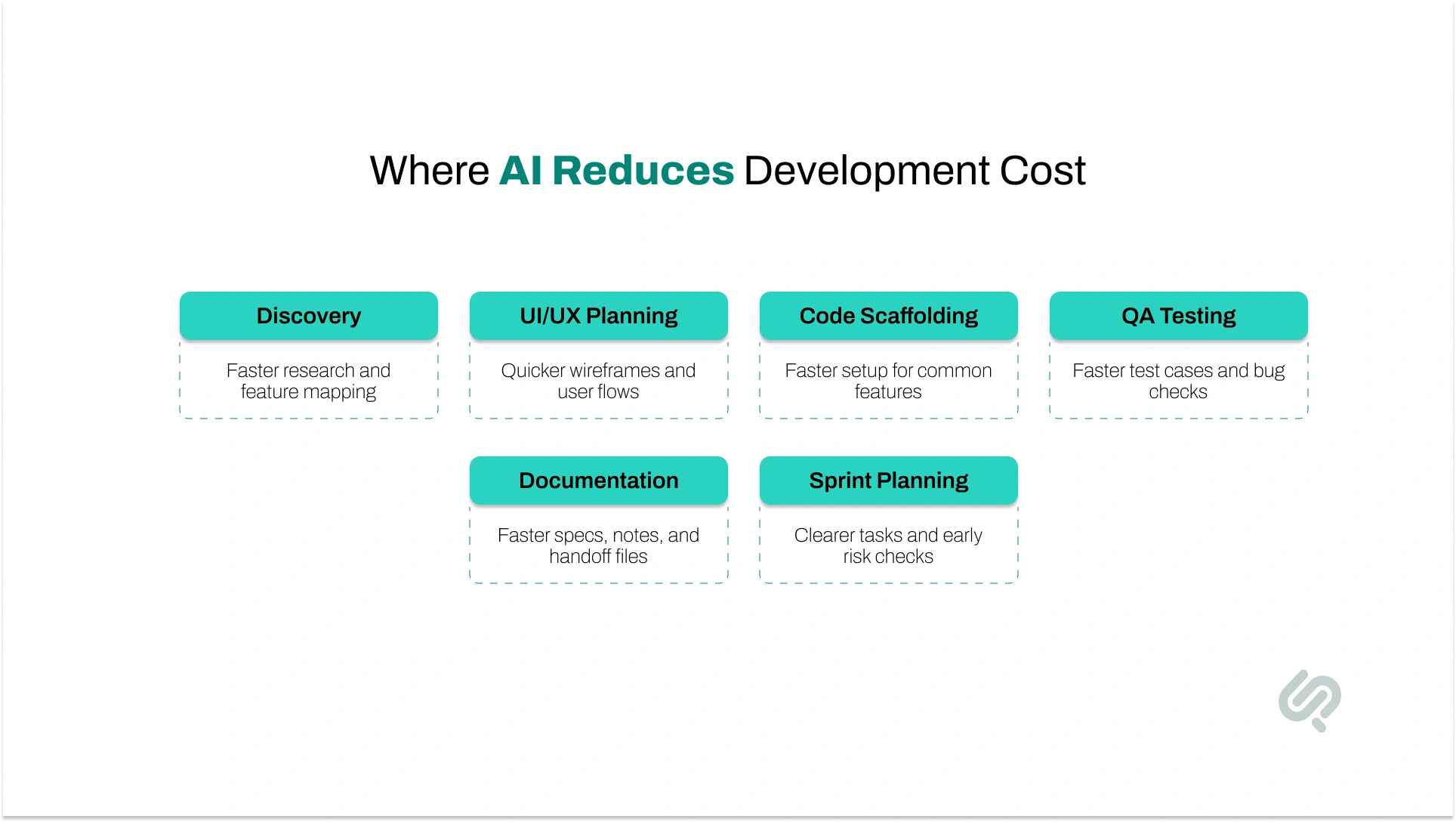
AI reduces cost by cutting down repetitive work that usually takes many manual hours. It does not remove the need for expert developers, designers, QA engineers, or architects.
The biggest savings usually come from:
McKinsey research found that developers using generative AI tools completed some common software development tasks up to twice as fast, including documentation, code generation, and refactoring. This supports the main reason AI-first agencies can reduce delivery effort. (1)
This is where an AI-First development agency can reduce timelines by 30–80%, depending on scope, project complexity, and how much of the work can be accelerated with AI tools.
The key point: AI does not make expert work cheap. It makes the delivery process leaner.
AI can speed up development, but it does not replace the decisions that make a product secure, scalable, and useful.
Google Cloud’s 2024 DORA report found that AI adoption can increase individual productivity, flow, and job satisfaction, but it can also hurt delivery stability and throughput when teams ignore fundamentals like robust testing and small batch sizes. (2)
The best AI-First agencies use AI to make skilled teams faster and more efficient — not to replace the expertise that protects the project.
You can reduce app development cost without hurting quality by making smarter decisions before development starts. The goal is not to build the cheapest app. The goal is to avoid wasted time, unclear scope, and features users may not need.
Some industries cost more because they need stronger security, compliance, integrations, or real-time performance.
A simple app in a regulated industry can cost more than a larger app in a low-risk industry. That is because compliance, security, privacy, and data protection require extra planning, testing, and expert review.
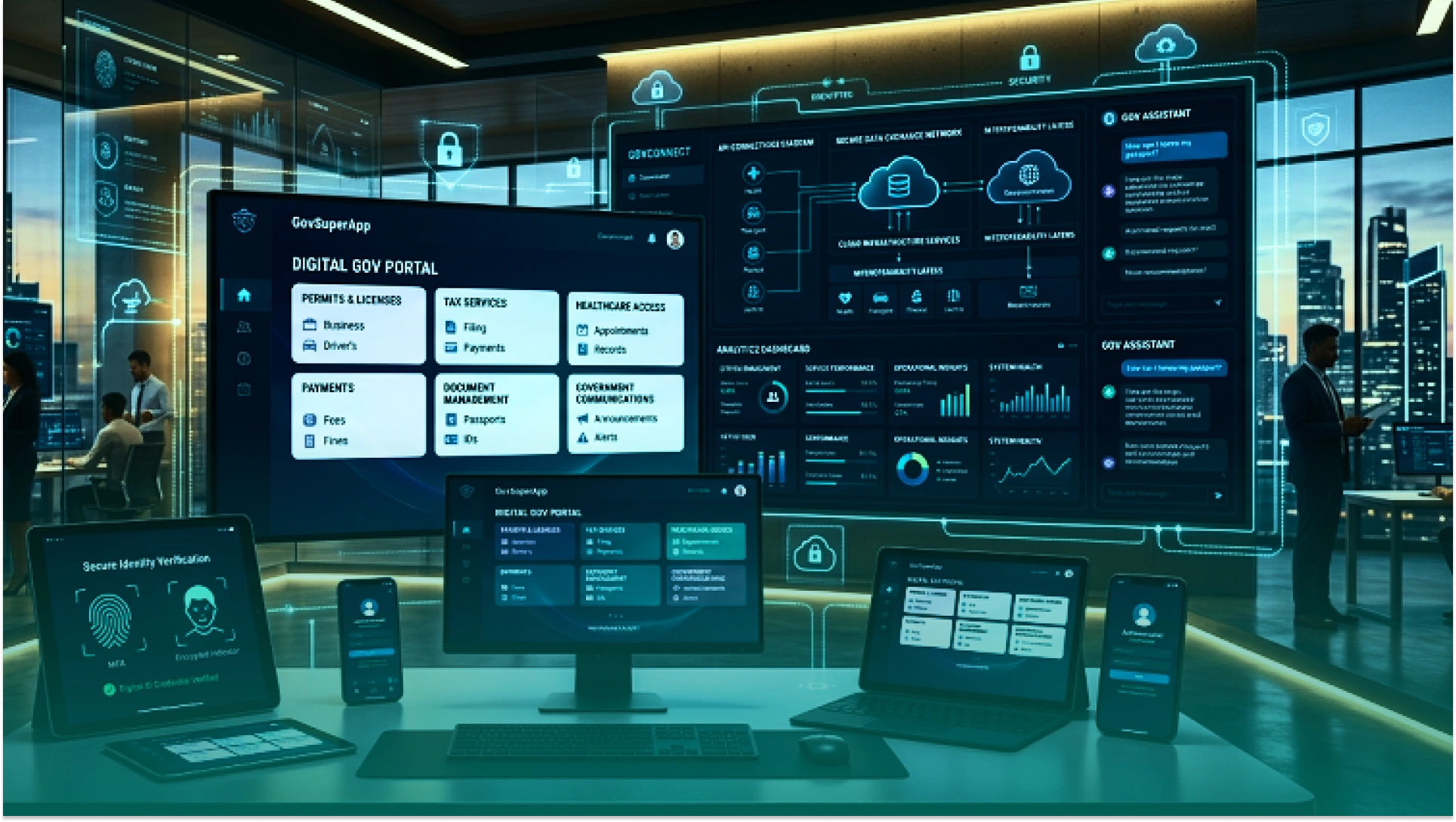
Phaedra Solutions helped build a secure digital government platform that unified 30+ public services across web and mobile. The solution included a citizen-facing web portal, mobile super app, centralized authentication, MFA, role-based access control, secure APIs, real-time service tracking, analytics, and AI-powered service assistance.
This case shows why app development cost depends on more than screens. Complex platforms need secure identity, backend architecture, integrations, compliance planning, and scalable infrastructure. With an AI-First delivery approach, teams can speed up planning, documentation, testing, and delivery workflows while senior engineers stay focused on security, architecture, and long-term scalability.
A cheaper quote is not always a better quote. It may simply include less work.
Before you choose an app development partner, compare each estimate line by line. This helps you avoid surprise costs during the project.
Ask these questions:
Also, check the pricing model.
For most serious web and mobile app projects, a discovery-first approach is safest. It gives you a clearer app development budget before you commit to the full build.
Many agencies now say they use AI, but not every team has a real AI-First development workflow. The right agency should clearly explain how AI improves delivery, reduces cost, and protects quality.
A real AI-First agency should explain how AI supports discovery, design, development, QA, documentation, and project management.
Ask for specific examples, not vague claims.
Senior engineers should review AI-assisted code before it goes into production.
A strong discovery phase should include scope, user flows, wireframes, technical planning, and cost estimates.
Ask whether they offer maintenance, support hours, retainers, or a dedicated team after launch.
Avoid agencies that show these warning signs:
The best AI-First agencies use AI to reduce repetitive work, not to remove expert thinking. You still need senior people for architecture, security, UX, QA, compliance, and final product decisions.
Building a web or mobile app in 2026 is not just about writing code. You need the right scope, budget, architecture, AI workflow, QA process, and launch plan before development starts.
Phaedra Solutions helps startups, SaaS teams, and growing businesses build AI-first web and mobile apps with a faster, leaner delivery process. Our team uses AI-assisted workflows across discovery, UI/UX planning, development, QA testing, documentation, and launch preparation while senior engineers still handle architecture, security, integrations, code review, and final quality.
This helps reduce repetitive work, shorten delivery timelines, optimize cost, and keep the product scalable from the start.
If you are planning a new MVP, SaaS platform, customer portal, marketplace, mobile app, or AI-powered product, book an AI-first web and mobile app development consultation with Phaedra Solutions.
We will help you understand your realistic budget, timeline, feature scope, and best development approach before you commit to the build.



Ameena is a content writer with a background in International Relations, blending academic insight with SEO-driven writing experience. She has written extensively in the academic space and contributed blog content for various platforms.
Her interests lie in human rights, conflict resolution, and emerging technologies in global policy. Outside of work, she enjoys reading fiction, exploring AI as a hobby, and learning how digital systems shape society.