

.webp)


.webp)
.webp)
.webp)




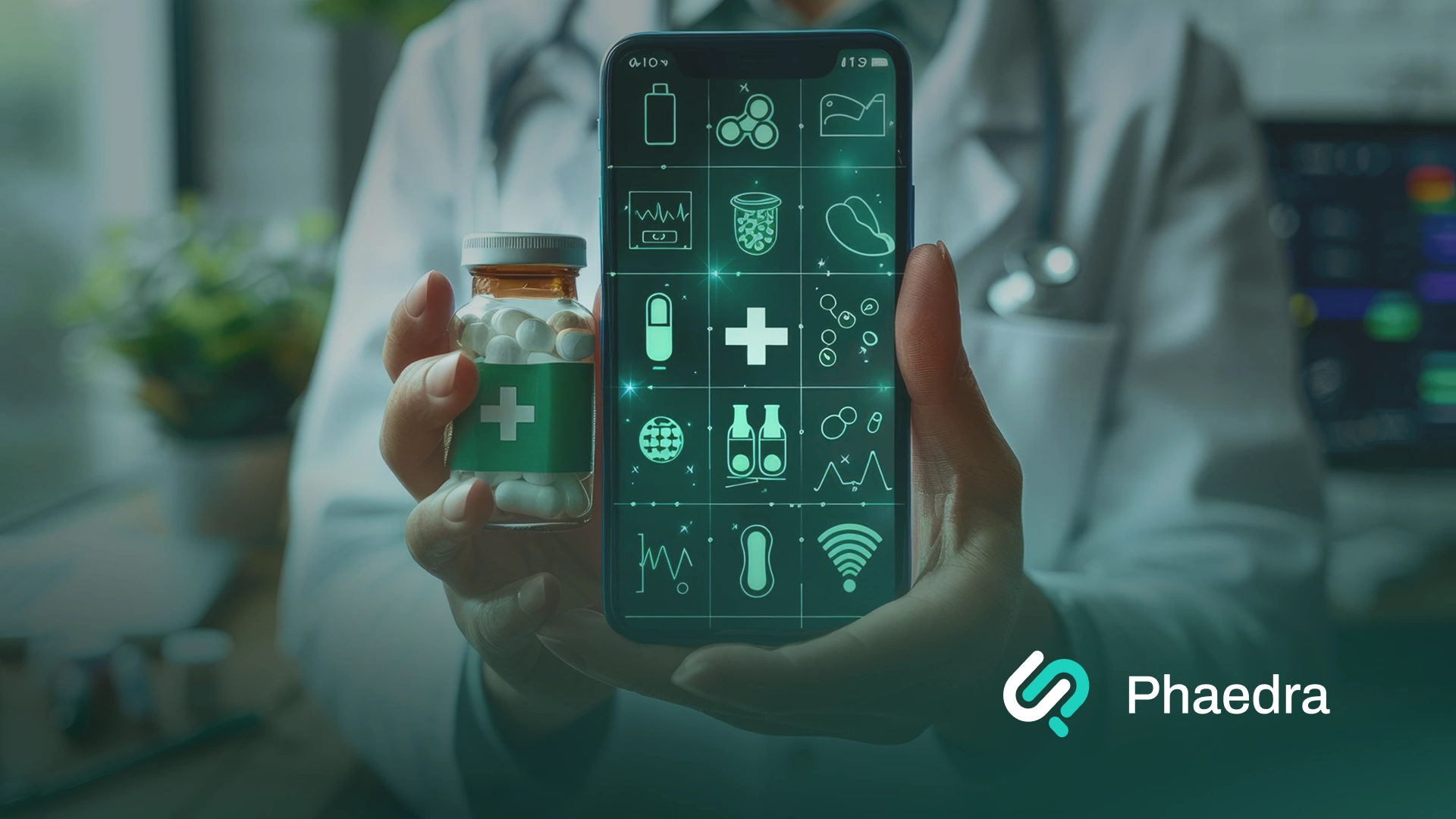
Medicine delivery apps are transforming modern healthcare by bringing pharmacies directly to patients’ doorsteps.
With just a tap, people can order prescription drugs or over-the-counter (OTC) medicines, track their delivery in real time, and even receive reminders to stay on schedule.
The demand for these apps is booming.
In 2024, the global online pharmacy market was valued at $131.8 billion and is projected to reach $472.1 billion by 2032, growing at a strong CAGR of 17.4%. (1)
For patients managing chronic conditions, seniors with mobility challenges, or busy professionals balancing work and health, medicine delivery apps are nothing short of life-changing.
They improve accessibility, ensure timely medication, and simplify an essential part of daily healthcare.
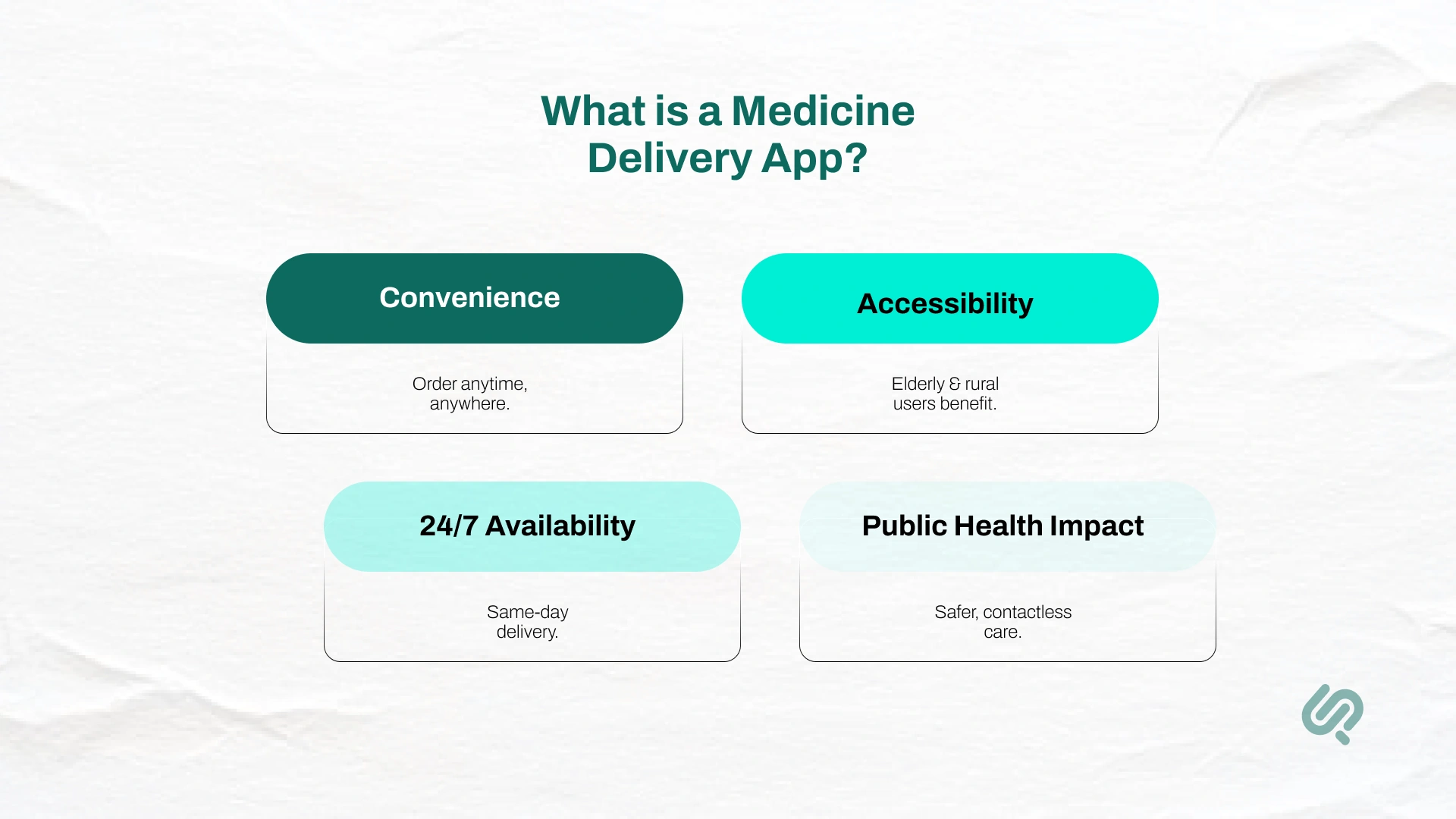
A medicine delivery app (also called an online pharmacy app) is a digital platform that lets users order prescription or over-the-counter (OTC) medicines online and have them delivered to their doorstep.
Here’s why such apps have risen in importance in recent times:
Medicine delivery platforms can be structured in different ways depending on their business model, audience, and scale.
Below are the 5 main types:
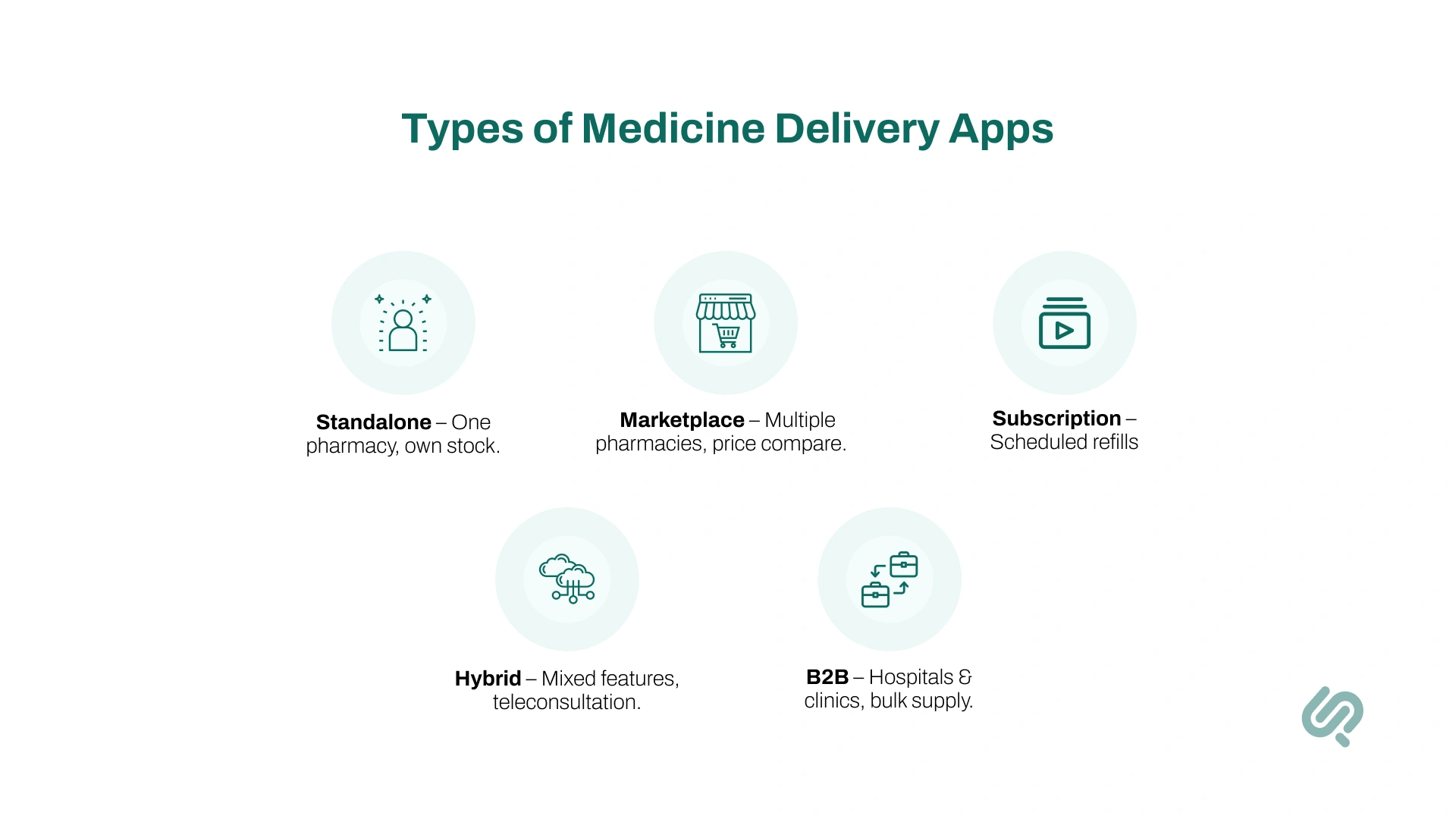
These apps are developed by a single pharmacy or a pharmacy chain. Customers order directly from the store’s own stock, and the pharmacy manages delivery logistics.
Example: CVS Pharmacy app in the U.S., which lets users refill prescriptions and get same-day deliveries from CVS stores.
Marketplace apps connect users to multiple local pharmacies. Customers can browse across pharmacies, compare prices, and pick the most convenient option.
The app acts as a mediator, charging commissions for each order.
Example: PharmEasy in India, which partners with a wide network of pharmacies to offer customers variety and competitive pricing.
These apps target patients with chronic conditions who need regular refills. Instead of placing orders every month, users subscribe to scheduled deliveries. This guarantees medication availability and helps businesses maintain recurring revenue.
Example: PillPack by Amazon, which organizes and delivers monthly prescriptions automatically.
Hybrid apps combine multiple business models in one platform. For instance, they may include both on-demand deliveries and subscription plans, or integrate teleconsultations with medicine delivery.
This makes them versatile and attractive to a wider user base.
Example: 1mg, which started as an aggregator but also offers subscription refills and tele-medicine features.
These apps are designed for hospitals, clinics, and care facilities rather than individual consumers.
They simplify bulk ordering of medicines, track inventory, and ensure the timely supply of essential drugs for medical institutions.
Example: Enterprise-focused platforms that supply hospitals with high-demand medicines and track stock automatically.
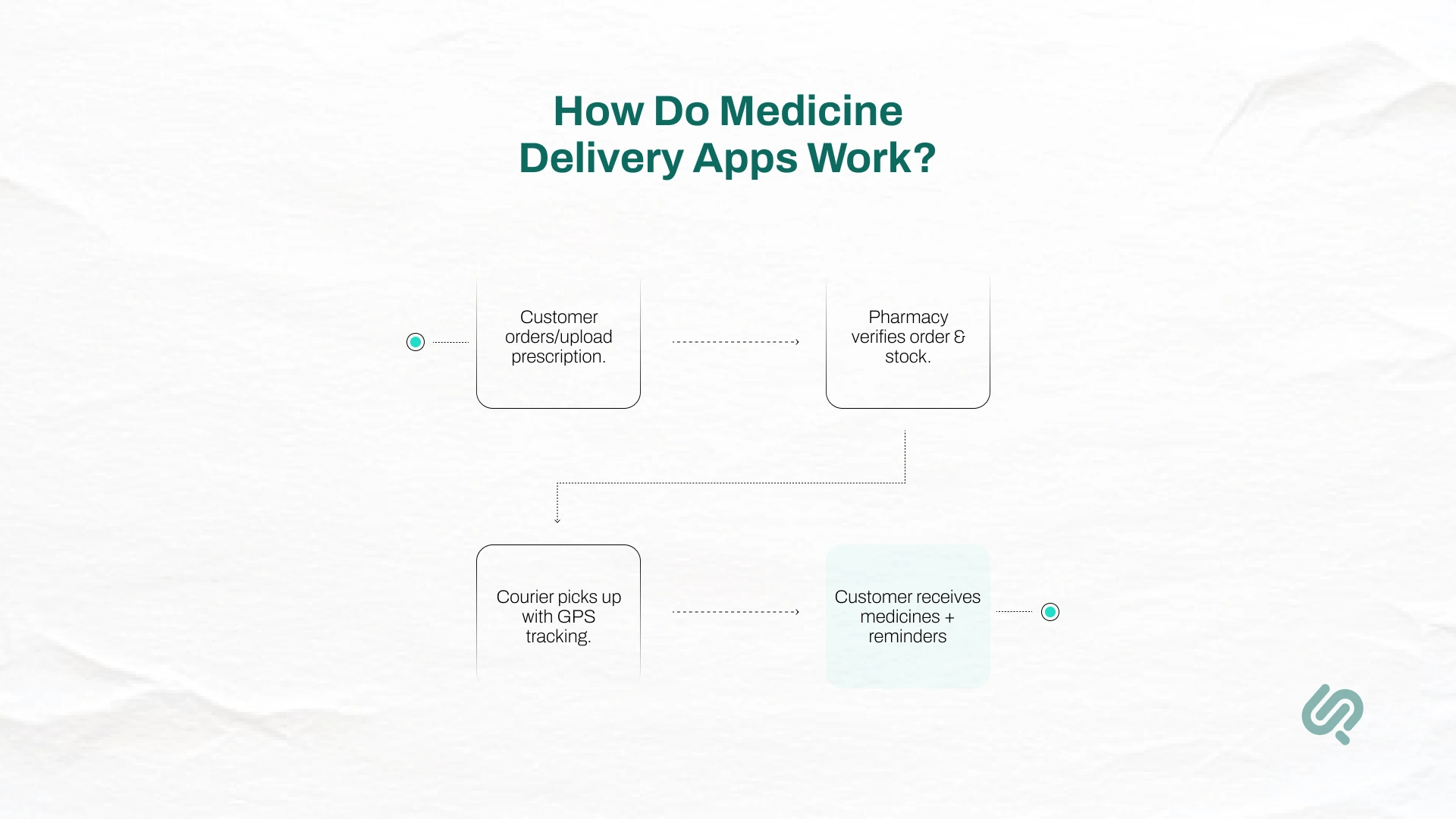
The workflow involves four main parties:
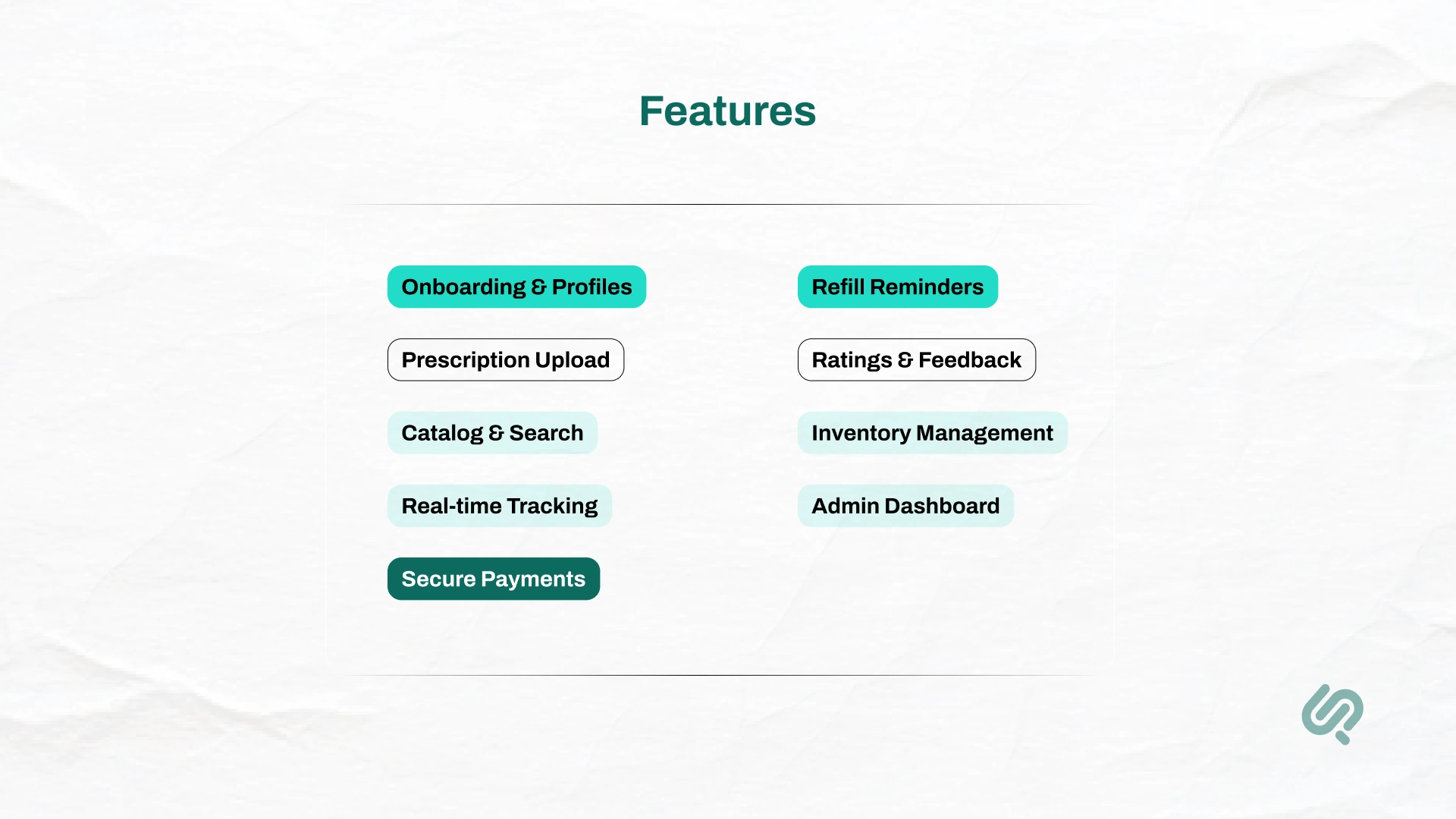
Users should be able to sign up quickly using email, phone, or social login. Profiles store essential details like addresses, prescriptions, and insurance for faster, personalized ordering.
Customers can securely upload scanned prescriptions within the app. Licensed pharmacists then review and verify them to ensure compliance with medical regulations.
A well-organized catalog with categories, filters (brand, price, substitutes), and product details helps users find medicines easily. Clear images and dosage info build trust and accuracy.
GPS-enabled tracking lets users follow their order from the pharmacy to the doorstep. Estimated delivery times and live status updates improve transparency and convenience.
Offer flexible payment methods, including credit/debit cards, digital wallets, UPI, and insurance claims. All transactions must be PCI-DSS compliant to ensure user trust.
Push notifications remind patients to take or refill medicines on time. One-tap reordering from past purchases saves effort and boosts adherence.
Allow users to rate pharmacies, delivery partners, and overall experience. Feedback helps maintain quality, highlights issues, and builds credibility for new customers.
Pharmacies need tools to update stock levels, approve prescriptions, and manage incoming orders. Automated alerts prevent stockouts and improve efficiency.
A centralized dashboard lets admins manage users, pharmacies, orders, and payments. It also provides analytics and ensures compliance with healthcare regulations.
Building a successful medicine delivery app requires more than coding; it demands research, planning, compliance, and user-first design.
Here’s a step-by-step breakdown:
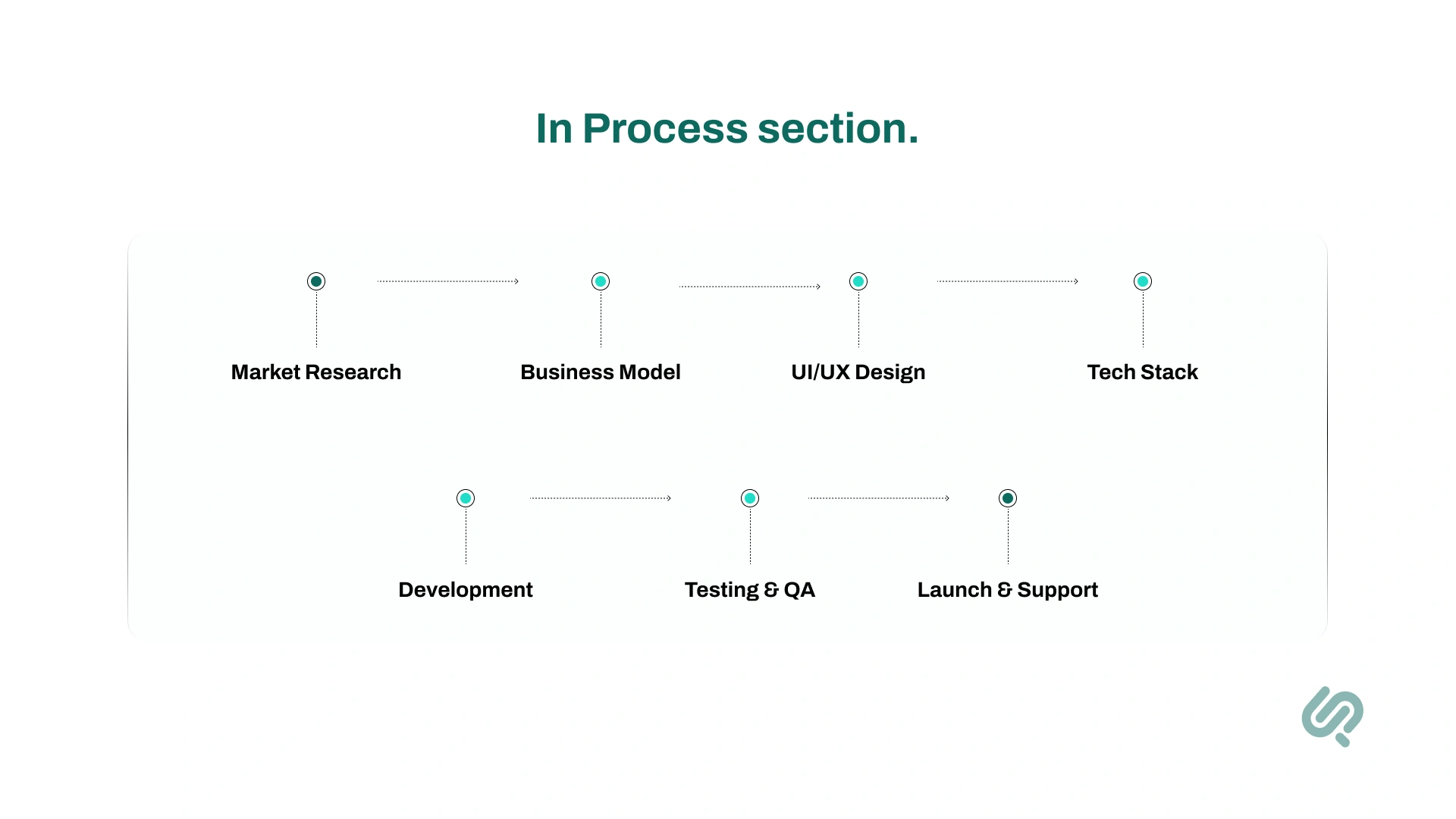
The first step in medicine delivery app development is strong market research.
Just as in food delivery app development or telemedicine app development, analyzing competitors like Capsule, NetMeds, or 1mg helps you see what works and where gaps exist, such as slow deliveries or missing insurance support.
Defining your target users is critical. Urban professionals, elderly patients, or rural communities all have different needs. The new app ideas come from combining competitor insights with real pain points.
Partnering with the best app development company ensures your MVP covers essentials before scaling with advanced features like AI-powered reminders or integrations with the best AI apps in 2026.
Knowing how to make apps that stand out means focusing on trust, convenience, and accessibility, much like choosing the best weather app for Android for reliability.
With the right strategy and expert Medicine Delivery Application Development Services, you can build more than an app; you can create a trusted healthcare solution.
Your business model determines how your pharmacy delivery app development project will generate revenue and serve users. Popular models include:
Once you’ve chosen a model, define the MVP (minimum viable product) features.
At the very least, your medicine delivery app should include a searchable catalog, prescription upload, secure payments, and order tracking.
Later, you can add advanced features like AI-driven reminders or teleconsultation services. Starting lean reduces app development cost while still validating your idea with real users.
Design is where your app either builds trust or loses users. A medicine delivery app must be intuitive, accessible, and user-friendly, especially since many users may be seniors or people managing health issues.
Keep navigation simple, with large fonts, clear buttons, and minimal steps from browsing to checkout. Accessibility features (like voice search or screen-reader compatibility) make your app inclusive.
Your design should also reassure users. Show medicine images, dosage details, and clear prescription verification prompts.
A clean, professional look communicates reliability essential in healthcare app development, where trust is non-negotiable.
Your tech stack forms the foundation of your medicine delivery application development. It directly impacts speed, scalability, and security.
Selecting the right tech stack ensures your pharmacy delivery app development project is future-proof and compliant with healthcare data standards.
This is where your app comes to life. Using an Agile development approach, break the process into sprints for faster iterations and testing.
Integration of third-party APIs (payments, GPS, notifications) ensures your medicine delivery app is functional and user-friendly from the first launch.
Testing is critical in healthcare app development, where security and reliability cannot be compromised.
Strong QA ensures your medicine delivery app is bug-free, secure, and trustworthy before release.
Deploy your app on Google Play Store and Apple App Store, ensuring your listings are optimized with the right keywords (e.g., online pharmacy app, medicine delivery app).
The cost of medicine delivery app development depends on the scale, features, and technology you choose.
Here’s a clear breakdown:
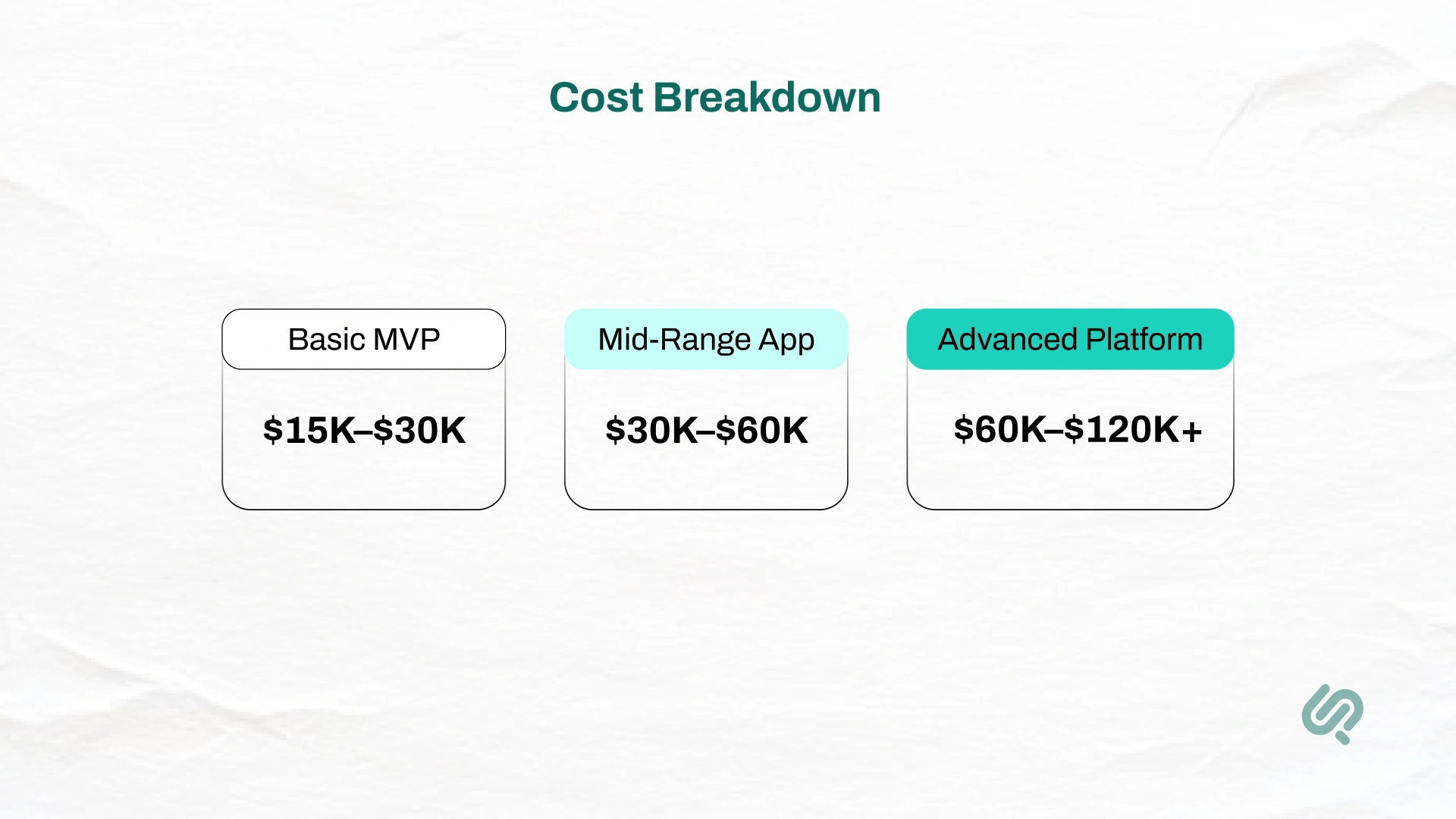
Basic MVP development with essential features like user registration, medicine catalog, prescription upload, secure payments, and basic order tracking.
Ideal for startups wanting to validate their idea quickly.
Includes additional features such as real-time GPS tracking, push notifications, inventory management for pharmacies, and an admin dashboard.
Suitable for businesses aiming for a polished product ready for scaling.
A full-featured solution with AI-driven medication reminders, telemedicine integration, subscription models, advanced analytics, and multi-platform support.
Designed for enterprises and large-scale pharmacy networks.
A few factors can decide if the cost of your medicine delivery app will be high or mid-range:
For those interested in making tons of money from their medicine delivery apps, here are 5 wonderful monetization strategies:
Building a great product is only half the journey. The other half is ensuring people actually use it.
Effective marketing helps your medicine delivery app stand out in a competitive healthcare market.
The number of downloads for health & fitness apps (including medical tracking apps) grew significantly in 2024.
For example, global Health & Fitness app downloads reached 3.6 billion across iOS and Google Play, up ~6% year-over-year. (2)
Developing and scaling a medicine delivery app comes with unique challenges, but each has a solution.
The future of medicine delivery app development is being shaped by emerging technologies and consumer expectations.
Businesses that adapt early will have a strong advantage.
More than 350,000 medical apps were available in app stores in 2021, and the medical apps market is expected to grow by around 28.4% by 2030 (3)
Medicine delivery app development is transforming how patients access essential healthcare.
With rising demand and a market projected to exceed $470 billion by 2032, the opportunity is massive for startups and established pharmacies alike.
Success lies in understanding your users, building trust through compliance and security, and offering seamless digital experiences.
Start lean with an MVP and scale strategically using AI, telemedicine, and IoT innovations.
The right Medicine Delivery Application Development Services can help you build a reliable, user-focused platform that enhances accessibility and convenience.



Ameena is a content writer with a background in International Relations, blending academic insight with SEO-driven writing experience. She has written extensively in the academic space and contributed blog content for various platforms.
Her interests lie in human rights, conflict resolution, and emerging technologies in global policy. Outside of work, she enjoys reading fiction, exploring AI as a hobby, and learning how digital systems shape society.