

.webp)
.webp)
.webp)
.webp)









Trying to understand what product comparison AI actually does inside ChatGPT’s new shopping feature, and whether it can genuinely help you choose the right products without scrolling through endless tabs?
If you’re curious about smarter, faster decision-making, the new OpenAI shopping tool is designed exactly for that.
You probably want to know how it works behind the scenes, how accurate its recommendations are, where the data comes from, and how strong the personalization feels in real use.
And, of course, how it performs as an AI product research assistant when comparing multiple options side-by-side.
This guide breaks it all down clearly: what the feature is, how it works step by step, what problems it solves, real use cases, benefits, limitations, and how to get the most value out of ChatGPT’s Shopping Research.

The ChatGPT Shopping Research feature is a new AI tool that turns ChatGPT from a simple Q&A bot into a smart product research assistant. This makes it especially valuable for ChatGPT users who want a more efficient and personalized shopping experience.
Instead of giving quick, surface-level answers, it now analyzes the web, asks follow-up questions, compares options, checks specs, reads reviews, and generates tailored ChatGPT product recommendations based on what you actually need.
It works like an AI shopping guide, helping you cut through noise, shortlist the right options, and understand why one product might fit you better than another.
This upgrade is especially useful for anyone exploring AI for e-commerce or wanting smarter, faster shopping decisions powered by clear ChatGPT product comparison insights.
At its core, this feature solves a major problem: information overload. Most shoppers spend minutes (often hours) jumping between tabs, checking prices, comparing specs, and reading conflicting reviews. ChatGPT now does all of that heavy lifting for you.
Studies even show that 44% of shoppers need 3+ minutes just to find a single product, and 74% feel overwhelmed by marketing noise during the decision process. (1)
ChatGPT eliminates this “choice paralysis” by doing the deep research for you and presenting only the best, most relevant options.
In short, ChatGPT Shopping Research combines deep web analysis with personalized questioning to help shoppers make fast and confident decisions.
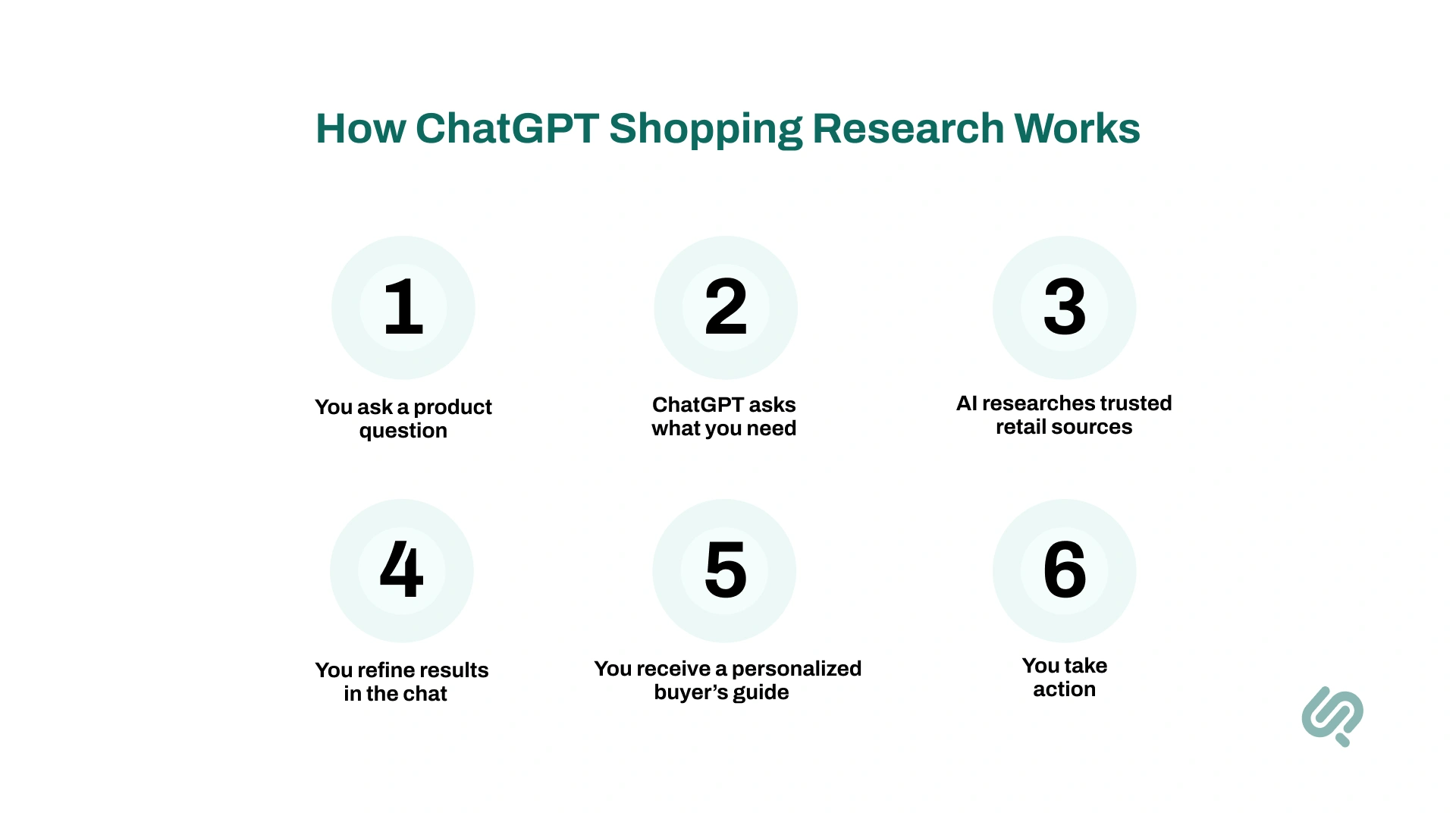
ChatGPT’s Shopping Research feature works like a guided assistant that collects your needs, researches products across trusted sources, compares options, and creates a personalized buyer’s guide.
Here’s how the entire process works in simple, clear steps.
You can begin a shopping query by asking ChatGPT a product-related question.
When ChatGPT detects you’re looking for something, it suggests switching to ‘Shopping Research mode’. Free and paid users can access it as long as they’re logged in.
How it starts:
Next, ChatGPT asks what you’re looking for. It gathers details so it can find the best possible match.
This part feels like a short interview where ChatGPT learns your preferences.
What ChatGPT may ask:
Your answers create a requirements profile, and if ChatGPT Memory is on, it can also use what it already knows about you (e.g., that you prefer gaming laptops).
Once it understands your needs, ChatGPT begins researching the web.
It reads product pages, specs, reviews, and trusted sources to gather accurate, up-to-date information.
What happens behind the scenes:
During this phase, ChatGPT may show early product ideas so you can react in real time.
One of the most powerful parts: you can guide the research as it happens. ChatGPT updates its search based on your reactions.
Ways to refine results:
This back-and-forth helps ChatGPT refine your matches until it finds products that genuinely fit your needs.
Once the research is complete, ChatGPT delivers a clear, structured buyer’s guide.
This summary saves you hours of reading and comparing on your own.
What the guide includes:
It’s designed to feel like a human expert created a tailored recommendation just for you.
After reviewing the buyer’s guide, you can follow the links to retailer sites and complete the purchase.
ChatGPT is also testing Instant Checkout, which will let you buy directly inside the chat for supported merchants.
Your next options:
This turns product research into an interactive, user-driven process rather than endless browsing.

ChatGPT’s Shopping Research shines in situations where users need fast, accurate, and personalized AI buying assistance.
These use cases show how the feature solves real shopping problems, saving time and helping people choose the right product with confidence.
Tech shopping is overwhelming because every device comes with long spec sheets, confusing terminology, and dozens of similar models.
ChatGPT simplifies that entire digital shopping experience by handling the technical work for you and turning it into plain language you actually understand.
With AI-powered product suggestions, it compares specs, checks reviews, and highlights the best options based on your budget and needs.
This kind of guided, conversational support mirrors how AI-powered assistants are already improving other industries, such as event chatbots that streamline event management and attendee experiences.
Example: ‘Find me a gaming laptop under $1,000 with a 15-inch screen.’
Why it’s useful:
Sometimes you already know which items you’re considering, but choosing between them feels impossible.
ChatGPT can compare products directly and explain where each one stands out. Instead of switching between multiple tabs, you get a digestible summary in one place.
Example: ‘Compare these three stroller models for a small apartment.’
Why it’s useful:
When you have a need but don’t know which products even exist, ChatGPT acts like a discovery engine.
It searches the entire category, finds the best-rated or most recommended products, and helps you understand what makes each one worth considering.
Example: ‘I need a budget-friendly 4K projector for movie nights.’
Why it’s useful:
Some purchases depend more on style than specs. ChatGPT can find similar-looking items, match a color or pattern, or locate a “dupe” of a designer product. If you upload an image, it can even search visually.
Example: Find me a long black dress similar to this, but under $250.
Why it’s useful:
Gift shopping is personal and often stressful. ChatGPT listens to who you're buying for, it acts as an AI shopping assistance and recommends thoughtful, relevant gifts.
It focuses on personality, interests, humor, and practicality, something generic gift lists rarely do well.
Example: ‘A gift for my dad who loves fishing but has everything.’
Why it’s useful:
Prices vary across stores, and discount codes can be hard to track. ChatGPT acts as an AI shopping comparison tool that checks pricing across trusted retailers, identifies where you can save the most, and even spots student or seasonal discounts you might miss.
By offering personalized product recommendations based on your needs and budget, it streamlines consumer decision-making using AI, making it easier to choose the right product at the right price without juggling multiple tabs or missing hidden deals.
Example: ‘Find the best Black Friday deal for these sneakers. I’m a student.’
Why it’s useful:
If you're new to DIY or home repairs, it's easy to buy the wrong tool. ChatGPT guides you toward beginner-friendly products, explains what each tool does, and suggests accessories you’ll actually need.
Example: ‘What cordless drill should a beginner get for basic home repairs?’
Why it’s useful:
Teams often spend hours comparing office tools and software subscriptions. ChatGPT can analyze pricing models, features, integrations, and fit for your use case.
Example: ‘Compare Asana, Monday.com, and ClickUp for a team of 20.’
Why it’s useful:
From vacuums to air purifiers to kitchen appliances, ChatGPT makes everyday shopping easier by filtering choices based on your home size, lifestyle, and preferences. It avoids low-quality products and focuses on reliability.
Example: ‘Find a quiet cordless vacuum for a small apartment.’
Why it’s useful:
Outdoor and travel gear come in different capacities, materials, and price ranges. ChatGPT helps match the right gear to your experience level and plans, whether you're hiking, camping, or starting a new hobby.
Example: ‘I need a beginner-friendly hiking backpack for weekend trips.’
Why it’s useful:
The ChatGPT shopping research feature gives shoppers and businesses a smarter, faster, and more confident way to make purchase decisions.
Here are the key benefits explained in simple terms.
One of the biggest advantages is speed.
ChatGPT takes work that normally requires reading articles, checking prices, and comparing specs across multiple sites, and condenses it into a single, easy conversation.
Example:
Instead of reading five “best laptops” lists and checking three retailer pages, ChatGPT gives you a complete laptop comparison in minutes.
Unlike salespeople or sponsored articles, ChatGPT does not push a specific brand.
It compares products based on real data, quality sources, and what you personally care about.
Example:
If Product A is cheaper but Product B has better battery life, ChatGPT will explain the trade-off clearly, with citations.
ChatGPT doesn’t give generic answers.
It asks clarifying questions and tailors results around your budget, lifestyle, brand preferences, and must-have features.
Example:
If “best smartphone” means camera quality for you but battery life for someone else, ChatGPT adjusts its suggestions accordingly.
The final output is a clean, consolidated buyer’s guide that includes specs, pros/cons, prices, availability, and comparisons, all in one place.
Example:
For a camera, ChatGPT summarizes image quality, lens features, pricing, reviews, and citations without you switching websites.
Because ChatGPT fetches information in real time, you get current pricing, stock availability, and model updates, not outdated information from old blog posts.
Example:
If a TV goes on sale today, ChatGPT includes the sale price in your results.
Online shopping often means too many choices and too much information.
ChatGPT narrows the options, explains the differences, and makes the decision easier.
Example:
Instead of scrolling through 200 vacuum models, ChatGPT quickly finds 3–5 that match your needs and explains why.
By comparing prices, checking discounts, and identifying whether a product is worth the upgrade, ChatGPT can help you avoid overspending.
Example:
It might tell you: “Option B is $100 cheaper and only loses 10% battery life compared to Option A, better value for your needs.”
Businesses also benefit because AI-driven shopping sends more informed, higher-intent buyers to product pages. Many companies have already seen significant growth in traffic from AI assistants.
Example:
Shoppers who arrive after using ChatGPT often convert faster because they already understand the product’s trade-offs and value.
ChatGPT doesn’t limit results to only the biggest retailers. If a smaller brand offers a better match, it may appear in the recommendations.
Example:
A niche outdoor gear brand may surface if it fits your criteria better than mainstream options. This gives shoppers more variety while giving smaller retailers a fair chance to compete.
With clear guidance, transparent citations, and a full comparison, users feel more secure about their choices.
Example:
When you know why a laptop is recommended (not just that it’s recommended), you click “Buy” with confidence.
Choosing between AI-powered shopping and the old manual way comes down to speed, accuracy, and convenience.
The table below highlights how ChatGPT’s Shopping Research dramatically reduces effort while giving you deeper, smarter insights.

While the ChatGPT shopping research feature is extremely helpful, it’s still an early-stage tool.
To use it wisely, it’s important to understand where it may fall short and what users should double-check.
ChatGPT gathers product details from the web, but it can still misread information, mix up specs, or show outdated prices.
This usually happens when websites update their data or when product pages are unclear.
Example:
It might show the battery life of the “Pro” model when you asked about the standard model, or list a price that changed a few hours later.
This is why it provides citations. Before finalizing a purchase, always click the source links and confirm key details like price, model number, and specifications.
The tool fetches fresh data only at the moment you ask. If you come back later, prices, discounts, and stock status may have changed.
Example:
A laptop could be “in stock” at 10 AM but sold out by evening, and ChatGPT wouldn’t know unless you ask again. It works best as a research assistant, not a live price tracker.
ChatGPT can only research sites that allow it to crawl their product pages. Some retailers aren’t included, and the biggest limitation today is that Amazon listings do not appear.
Example:
If the best deal or best product is only sold on Amazon, ChatGPT won’t show it in your results.
Shopping research responses take longer than normal ChatGPT replies. The system reads multiple pages, compares details, and builds a full guide for you.
58% of global shoppers abandon purchases because product research takes too long. (2)
Example:
A detailed comparison can take 2–5 minutes. It’s worth the wait for deep research, but not ideal if you just need a quick yes/no answer.
The feature works best in categories where decisions rely on specs and objective qualities. It’s less reliable for items where personal fit, comfort, or taste matter.
Example:
It can’t judge how a shoe will feel on your foot or how a perfume will smell to you. It will still summarize reviews and show options, but personal experience matters more in these categories.
Because this feature depends on web browsing, it only works when ChatGPT can connect to the internet. If browsing is down or you’re offline, the feature won’t run.
Example:
If the browsing tool is temporarily unavailable, ChatGPT won’t be able to fetch prices or products. Make sure your account is logged in and updated to use shopping research properly.
ChatGPT does not send your data to retailers, but your shopping queries remain part of your chat history unless you disable chat training.
Like any AI assistant, avoid sharing unnecessary personal information.
Example:
You should never type sensitive data like credit card numbers during a conversation.
If your instructions are vague, the results may also be broad or incomplete. ChatGPT asks clarifying questions, but it may not catch every detail unless you mention it.
Example:
If warranty or battery life matters to you but you don’t say so, the AI might not prioritize those factors.
Launched in late 2025, the shopping research tool is still evolving.
Accuracy, speed, and coverage are expected to improve as more retailers allow crawling and as OpenAI refines the model.
Example:
Future updates may include more categories, better personalization, and even direct purchase integrations.
ChatGPT focuses on cross-website research. Other AI shopping tools (like Amazon’s or Google’s) may perform better inside their own ecosystems.
Example:
Amazon’s assistant can show you listings directly on Amazon and help you complete the purchase, something ChatGPT cannot do today.

AI-powered shopping is rapidly becoming the new competitive edge in e-commerce.
As consumers shift toward conversational product discovery, personalized recommendations, and AI-driven comparisons, businesses need technology that feels as smart and intuitive as ChatGPT’s Shopping Research feature.
Phaedra Solutions winner of the ASOCIO AI Service Provider Award helps companies bring this capability directly into their own platforms, securely, efficiently, and fully customized.
With deep expertise in AI development, e-commerce engineering, digital product design, and large-scale system integration, we enable businesses to deliver modern shopping experiences powered by intelligent automation.
Phaedra Solutions integrates advanced AI models with your product catalog to create dynamic ecommerce recommendation engines that behave like a built-in personal shopping assistant.
We connect your catalog, inventory, pricing, metadata, and historical user behavior with AI so your platform can instantly deliver:
This transforms your store from a static browsing experience into a guided, conversational shopping journey that improves conversions and reduces decision fatigue.
Phaedra builds AI comparison modules similar to ChatGPT’s research engine but tailored for software, subscriptions, or digital services listed on your marketplace.
Our systems can analyze structured product attributes, pricing tiers, feature lists, and reviews to help users quickly understand differences and choose the right option.
This significantly reduces research time and increases subscription completion rates, crucial for SaaS and B2B marketplaces where decisions are complex and data-heavy.
For mobile commerce, Phaedra integrates AI shopping assistants directly into your app, enabling conversational search, personalized recommendations, and smarter product discovery within your own ecosystem.
This increases engagement, retention, and purchase intent—especially in high-volume retail apps.
We handle everything from AI backend integration to UI/UX alignment so the experience feels seamless and native to your brand.
Phaedra Solutions also builds AI-driven guided shopping experiences for brands offering configurable or multi-step products.
Our solutions support:
This approach increases customer satisfaction and leads to more confident purchasing decisions.
If you already have live chat or a customer support bot, Phaedra can upgrade it into a product advisory assistant powered by AI.
We enhance your chatbot to:
This reduces support workload and ensures customers receive fast, accurate answers during their buying journey.
Phaedra Solutions connects your AI systems with your analytics stack to turn AI interactions into measurable business intelligence.
This includes:
These insights help businesses optimize product offerings and understand customer intent at scale.
AI-powered shopping has moved from a “nice-to-have” to a fundamental shift in how people discover, compare, and choose products online.
ChatGPT’s Shopping Research feature brings clarity to an overwhelming digital marketplace, turning confusing product hunts into quick, confident decisions.
As shoppers demand personalization, transparency, and speed, AI becomes the new backbone of online commerce.
With its award-winning AI engineering and experience building intelligent retail systems, Phaedra Solutions is uniquely positioned to help businesses integrate this next-generation shopping capability.
Whether you want smarter recommendations, personalized buyer journeys, or conversational product advisors, Phaedra can turn AI into a true growth engine for your platform.



Ameena is a content writer with a background in International Relations, blending academic insight with SEO-driven writing experience. She has written extensively in the academic space and contributed blog content for various platforms.
Her interests lie in human rights, conflict resolution, and emerging technologies in global policy. Outside of work, she enjoys reading fiction, exploring AI as a hobby, and learning how digital systems shape society.