


.webp)


.webp)
.webp)







Healthcare is going digital fast, and mobile apps are at the center of that shift. From telemedicine to remote patient monitoring, the U.S. healthcare system now depends on secure, easy-to-use apps to connect patients and providers in real time.
But building a healthcare app in the U.S. isn’t just about functionality, it’s about HIPAA compliance, patient trust, and data protection from day one.
This guide walks you through every step of healthcare app development. From defining your MVP and choosing the right tech stack to integrating AI and IoMT features safely.
You’ll also learn what core features matter most, how much to budget, and how to avoid the pitfalls that slow most medical app launches.
Whether you’re building a telehealth platform or a chronic-care app, this breakdown helps you move from concept to compliance-ready product, faster and smarter.
A healthcare app is a mobile or web application built for patients, doctors, and healthcare providers to manage appointments, telehealth visits, medical records, remote monitoring, payments, and health education.
These apps are the foundation of modern healthcare application development services, helping organizations digitalize care delivery while ensuring regulatory compliance and patient safety.
The global mHealth apps market is projected to grow from USD 36.68 billion in 2024 to USD 88.70 billion by 2032 (CAGR ~11.8 %) (1)
Healthcare apps in the U.S. serve diverse needs across patients, providers, and wellness consumers.
Understanding the right app type helps define the features, regulatory compliance, and development costs you’ll face during your healthcare application development journey.

Enable virtual doctor consultations through video calls, secure messaging, and e-prescriptions.
These healthcare mobile apps make remote care accessible and are central to modern healthcare delivery.
Examples: Video consultations, chat follow-ups, billing integration, digital prescriptions.
Simplify scheduling, lab result viewing, and doctor-patient communication. Connected directly to electronic health records (EHR) systems, they empower users to manage care seamlessly.
User adoption in the U.S.: Over 84 million Americans used healthcare/mobile health apps, with ~30% of adults relying on these apps for health tracking, consultations, or medical insights. (2)
Examples: Appointment booking, reminders, secure messages, EHR integration.
Focus on preventive care and healthy living through AI-driven wellness apps and IoMT development solutions like wearables.
Examples: Fitness tracking, mindfulness exercises, step counters, personalized coaching.
Support patients with long-term conditions such as diabetes or heart disease using real-time monitoring and remote patient monitoring (RPM) tools.
Examples: Vital tracking, symptom logs, device integration, automated alerts.
Help users manage prescriptions and refills while connecting with pharmacies or medicine delivery app development services.
Examples: Pill reminders, barcode scanning, online refills, and delivery tracking.
Offer confidential support through secure messaging, mood tracking, and CBT-based tools. Growing demand for teletherapy apps reflects the U.S. mental health crisis.
Examples: Journals, AI chatbots, therapy sessions, meditation guidance.
Empower doctors and healthcare professionals with practice management and reference tools that streamline workflow.
Examples: E-prescribing, charting, patient billing, analytics dashboards.
Designed for cycle tracking, pregnancy monitoring, and reproductive wellness education.
Examples: Ovulation tracking, prenatal care tips, appointment reminders.
Whether you’re building a simple MVP or scaling a full platform, these core features form the foundation of every successful healthcare app development project for the USA market.
Each plays a role in security, usability, and patient engagement.

Start with strong user authentication to protect sensitive patient data. Use multi-factor authentication (MFA) and role-based permissions so doctors, patients, and admins only see what they’re meant to.
Why it matters: Prevents unauthorized access and supports HIPAA compliance from day one.
Allow patients to view and update profiles, medical histories, and electronic health records (EHR). Integrate EHR systems using standards like HL7 or FHIR for seamless, secure data sharing.
Why it matters: Enhances patient engagement and ensures interoperability with existing healthcare systems.
Include an easy appointment booking interface and automatic reminders via push notifications or SMS to minimize no-shows.
Why it matters: Saves staff time, improves patient satisfaction, and keeps operations efficient.
Enable encrypted video calls and secure chat for virtual consultations. Integrate with reliable APIs to maintain quality and uptime.
Why it matters: Expands reach, especially in rural areas, and supports remote care as part of mobile app development.
Empower patients to track prescriptions, set pill reminders, and request refills directly from the app. Add e-prescription (eRx) features for doctors to send medications digitally.
Why it matters: Reduces medication errors and complements medicine delivery app development for convenience.
Integrate with wearable devices (smartwatches, glucose monitors, etc.) through Bluetooth or cloud APIs. These IoMT development solutions help track vitals in real time for better health monitoring.
Why it matters: Enables remote patient monitoring and personalized care insights.
Use machine learning to analyze patient data and offer tailored recommendations (e.g., activity tracking, diet tips, or chronic care alerts).
Why it matters: Transforms data into actionable health insights, like the best AI apps do, enhancing patient outcomes. This can also be helpful when creating the best camera app for Android.
Provide HIPAA-compliant chat and in-app notifications. Avoid sending PHI (Protected Health Information) in push messages to stay compliant.
Why it matters: Builds trust and keeps communication private and professional.
Add secure payment processing with PCI-DSS compliance. Include insurance verification or eligibility checks to simplify billing (also helpful in food delivery app development).
Why it matters: Streamlines revenue flow and improves user satisfaction through smooth transactions.
Build compliance tools into your system—like audit logs, automatic logouts, encrypted backups, and signed Business Associate Agreements (BAAs).
Why it matters: Protects sensitive patient data, meets healthcare regulations, and avoids costly violations.
Follow these 8 steps and you healthcare app ideas will be ready to launch in no time!
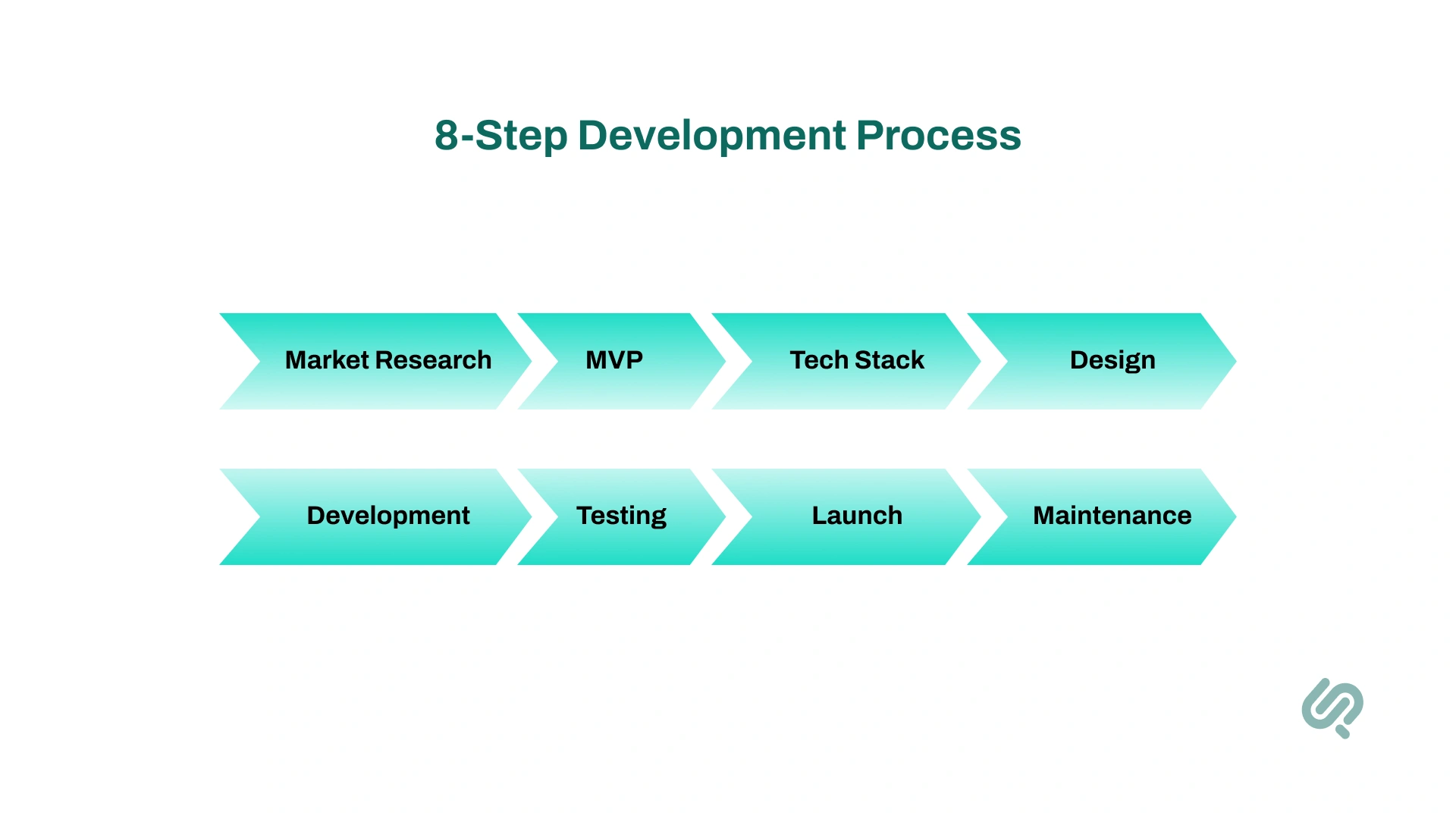
Every great healthcare app starts with solid research. Define who your users are: patients, doctors, or hospitals, and study market gaps among top healthcare apps in the USA.
Understand regulations (like HIPAA and FDA) to set clear data and privacy boundaries early.
For example, while developing a telehealth app for chronic care, you might find most platforms don’t integrate with wearables or IoMT development solutions.
That insight helps you create a competitive edge. The goal: identify an underserved need, validate your idea, and align it with healthcare application development services standards.
After research, narrow down your Minimum Viable Product (MVP) to avoid overbuilding. Focus on key features like appointment booking, video calls, and secure login.
Document everything in a Product Requirements Document (PRD). User roles, data flow, and privacy settings.
Decide between iOS, Android, or cross-platform mobile app development to manage development costs efficiently.
For instance, your telehealth MVP might start with chat, prescriptions, and EHR access while saving AI insights for later. This approach ensures faster time-to-market while keeping your app compliant and patient-focused from day one.
Your technology stack defines performance, scalability, and compliance. Use React Native or Flutter for a cost-efficient front end, and Node.js or Django for a secure backend.
Host data on HIPAA-compliant cloud providers like AWS or GCP and encrypt all sensitive patient data at rest and in transit.
For example, your telehealth app could integrate wearable devices using secure IoT solutions and Internet of Things (IoT) protocols for real-time health monitoring.
Choosing the right tech stack early helps avoid integration issues, improves app performance, and simplifies future scaling when you expand features like machine learning analytics.
In healthcare, good design can be life-saving. Keep the interface clean, intuitive, and easy to use for all age groups. Add clear icons, large buttons, and accessible colors to make navigation effortless.
Example: your telehealth app’s home screen could have three options: Book Visit, Join Video Call, and View Reports. Follow accessibility standards (WCAG) and ensure the design inspires trust, similar to the best weather app for Android in usability, but with medical-grade security.
Prioritize empathy and ease over aesthetics because in healthcare, user satisfaction equals better patient outcomes.
Once the design is finalized, begin development in Agile sprints for better testing and iteration. Set up APIs for authentication, data syncing, and secure messaging between patients and providers. Integrate with electronic health records (EHR) via FHIR or HL7 protocols.
Example: your telehealth app’s integration could allow doctors to instantly view patient vitals uploaded through an IoMT device.
Partner with a top Android app development company experienced in healthcare software development advisory for smooth execution.
Keep compliance in mind; every feature must pass security and HIPAA validation before moving forward.
Testing ensures your healthcare app is safe, stable, and compliant. Conduct functional testing, usability testing, and security testing.
For example, test your telehealth app with 50 simulated patients booking video calls at once to check load performance. Perform HIPAA compliance audits, penetration tests, and user acceptance testing (UAT) with clinicians.
Resolve bugs and strengthen weak points before launch. A healthcare app must go beyond basic QA; it needs continuous security audits to protect sensitive health records and user trust.
When your app passes QA, prepare for launch. Host it on a HIPAA-compliant cloud, ensure backup systems are ready, and publish it on Google Play and the App Store.
Optimize app listings with ASO keywords like telemedicine app or healthcare mobile app development.
Example: soft-launch your telehealth app in one hospital or city, gather feedback, and refine features before nationwide rollout. Monitor usage metrics, crash reports, and reviews closely. Whether you’re building a telehealth platform to hire virtual healthcare assistants or a chronic-care app, this breakdown helps you move from concept to compliance-ready product, faster and smarter.
Ensure your regulatory compliance documents are finalized and audit logs are active to handle PHI securely during live operations.
Healthcare app development doesn’t end at launch; it evolves. Continuously track performance, fix bugs, and add new features based on user feedback. Schedule regular security audits to stay HIPAA-compliant and protect patient data.
Example: if patients request AI-based health reminders or wearable integrations, introduce them in later updates using IoMT development solutions. Maintain code libraries, cloud servers, and encryption standards to prevent downtime.
Proper post-launch support ensures your app remains reliable, compliant, and competitive in the fast-changing healthcare industry.
Now, let’s look at typical cost ranges for healthcare apps, key factors that affect this cost, and the estimated healthcare app development costs according to app type:
Some essential factors that make the healthcare app development cost vary are:
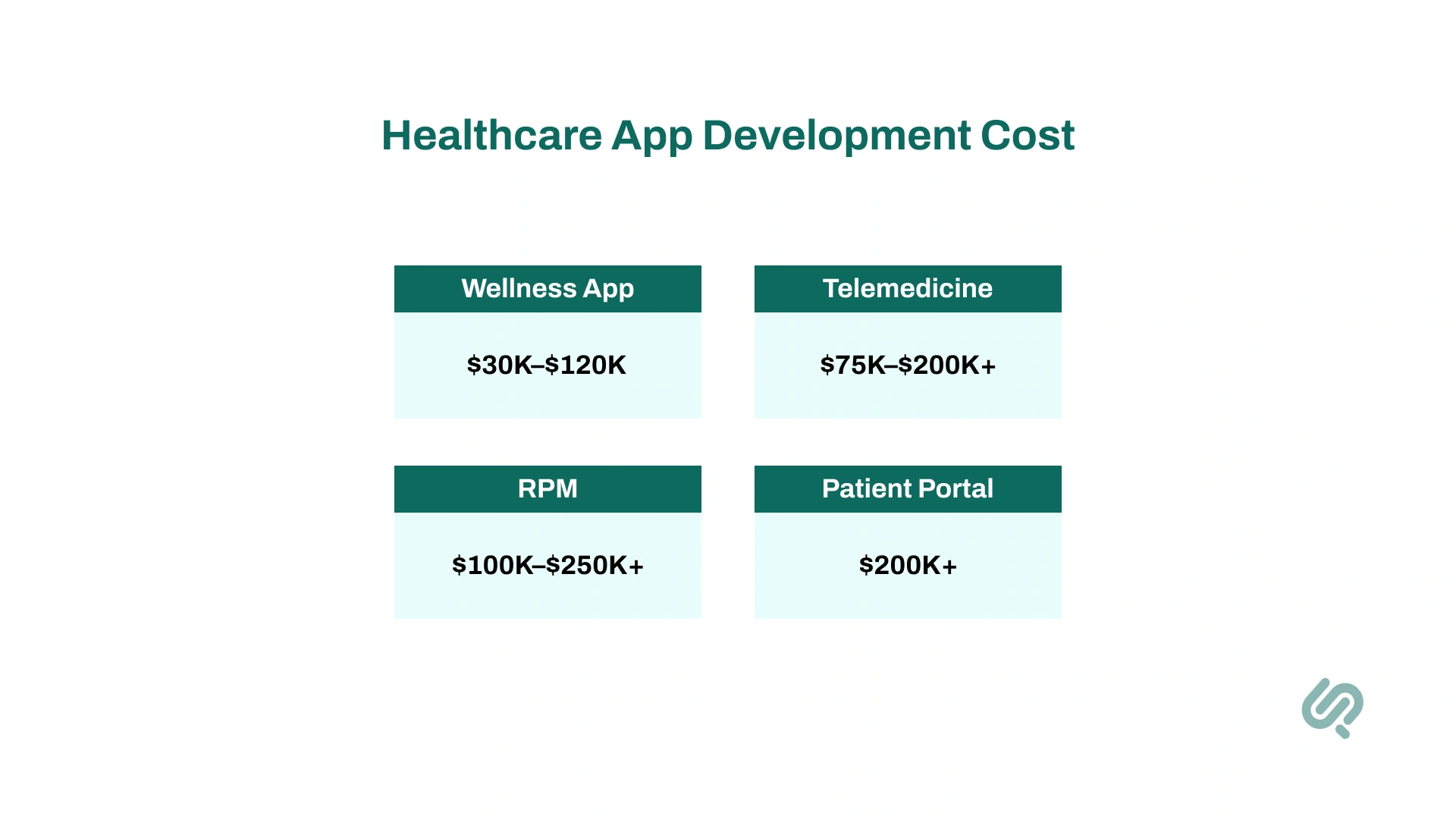
Whether for hospitals, clinics, or startups, the right healthcare app bridges gaps between patients and providers, improving both experience and efficiency.
Let’s look at 7 top benefits of healthcare app development below:
Healthcare apps empower patients to take charge of their health by offering real-time access to records, reminders, and consultations. This sense of control leads to higher satisfaction and long-term trust.
Example: A telehealth app that sends daily medication reminders and check-in notifications increases patient adherence by up to 40%.
Automating manual processes like scheduling, billing, and record management reduces staff workload and errors. Doctors can spend more time treating patients instead of managing paperwork.
Example: A hospital portal that auto-updates EHRs after each appointment saves staff 3–4 hours daily.
By reducing administrative overhead and enabling remote consultations, healthcare apps lower operational costs while expanding service reach.
Example: A virtual care app can cut in-person visit costs by up to 50% per patient.
Mobile apps remove barriers like distance and scheduling conflicts, making it easier for patients to connect with specialists instantly — especially in underserved or rural areas.
Example: A telemedicine platform allows rural patients to book video consultations with urban specialists within minutes.
With IoMT and wearable integrations, apps continuously track vitals like heart rate, glucose levels, or oxygen saturation, helping detect issues early.
Example: A smartwatch-integrated app alerts a cardiologist when abnormal heart activity is detected.
Automated data entry and encrypted storage minimize human error and protect sensitive patient information under HIPAA guidelines.
Example: A secure EHR system prevents unauthorized access and reduces record errors by over 60%.
AI-powered healthcare apps analyze user data to deliver customized treatment plans, predictions, and preventive health recommendations.
Example: An AI-based diabetes app suggests daily meal adjustments based on real-time glucose readings.
Wondering how to make apps? You’re not the only one.
Luckily for you, there are dozens more like you who don’t only want to create healthcare apps, but they want to do it at low cost too.
Here’s how you can do that:
To ensure you choose the right healthcare development partner, follow these steps:

Of course, there are some compliance and security essentials to watch out for when developing your healthcare application:
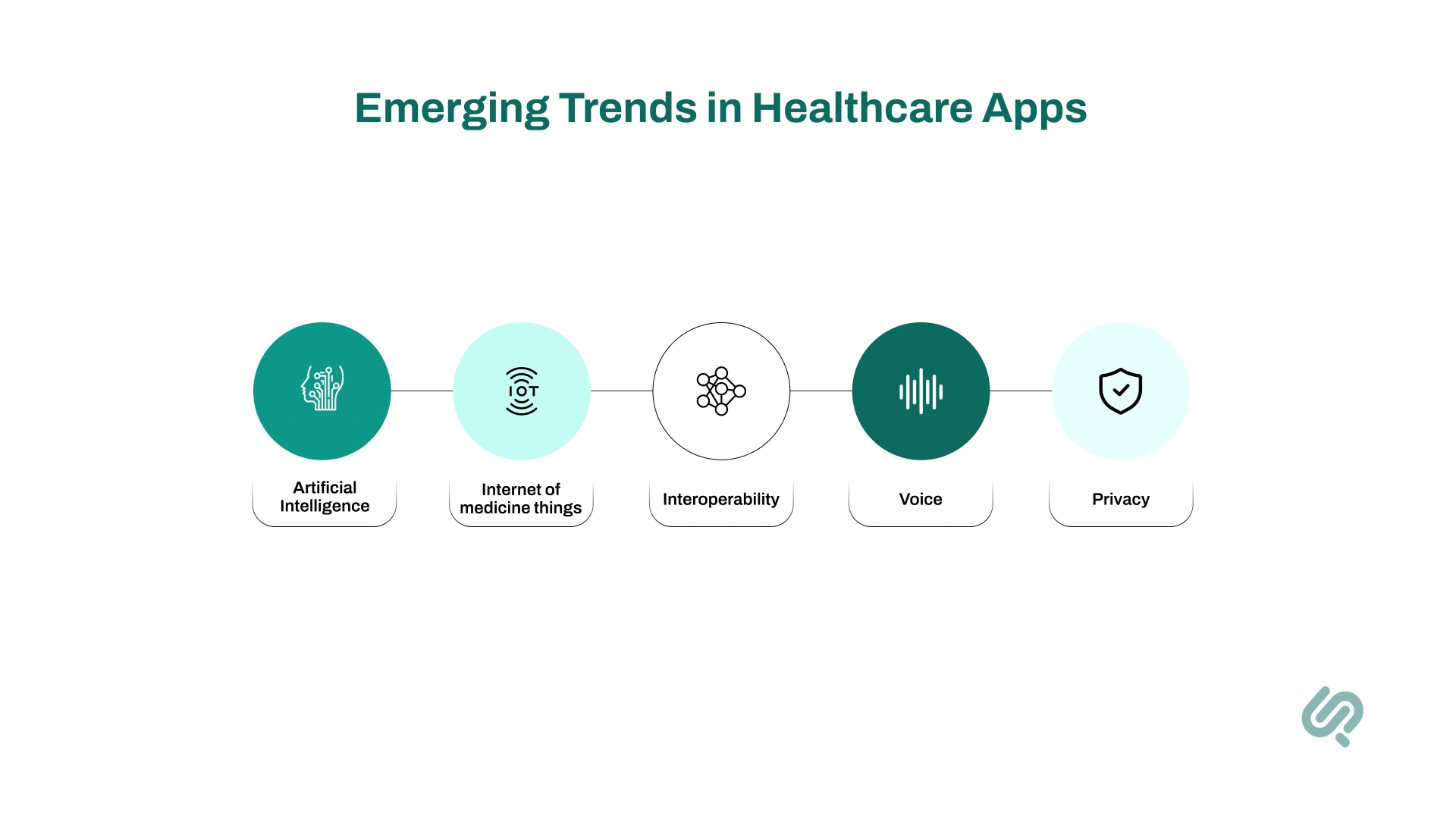
Before we wrap up, let’s look at 5 emerging trends that are shaping the future of healthcare:
Healthcare apps are redefining how patients access care and how providers deliver it. With the U.S. Health market expected to surpass $25 billion by 2030, this is the moment for innovation.
Building a healthcare app isn’t just about code. It’s about compliance, trust, and seamless experience.
Start small with a secure MVP, integrate AI and IoMT smartly, and scale as user needs grow. That’s how we do it at Phaedra Solutions!



Ameena is a content writer with a background in International Relations, blending academic insight with SEO-driven writing experience. She has written extensively in the academic space and contributed blog content for various platforms.
Her interests lie in human rights, conflict resolution, and emerging technologies in global policy. Outside of work, she enjoys reading fiction, exploring AI as a hobby, and learning how digital systems shape society.