


.webp)
.webp)
.webp)











Most projects don’t fail because teams are lazy or incompetent. They fail because plans become outdated the moment real work starts.
That’s why agile project management principles exist.
They help teams deal with change, not fight it.
Agile project management principles are a set of 12 guidelines that help teams deliver value early, adapt to change, collaborate closely, and improve continuously instead of following rigid plans.
If you’re building anything complex, software, AI systems, products, or internal tools, these principles shape how good teams actually work.
This guide explains each principle in plain language, with practical examples and real benefits, so you can apply them in your own projects without overcomplicating things.
It’s a way of running projects that focuses on flexibility, frequent delivery, and close collaboration with customers. Instead of planning everything up front, work is delivered in small cycles so teams can get feedback early and adjust as needed.
This approach helps teams catch problems sooner, adapt to changing requirements, and deliver useful results faster, which is critical in AI system development.
That’s why many organizations now use Agile as their main way of working; it improves project success, reduces wasted effort, and keeps teams aligned with real customer needs.
The agile project management framework has 4 core values that the 12 key principles are based on. These core values are:
The Agile Manifesto defines four core values, but it’s the 12 Agile principles that show teams how to actually apply those values in daily work.
These principles guide how teams plan, build, deliver, and improve, from working with customers and handling change to maintaining quality and team alignment.
In this section, we’ll walk through each principle one by one. You’ll see what it means in practical terms, why it matters, and a simple real-world example of how teams use it, both in software projects and beyond.
By the end, you’ll clearly understand how Agile teams turn these principles into real actions, not just ideas.
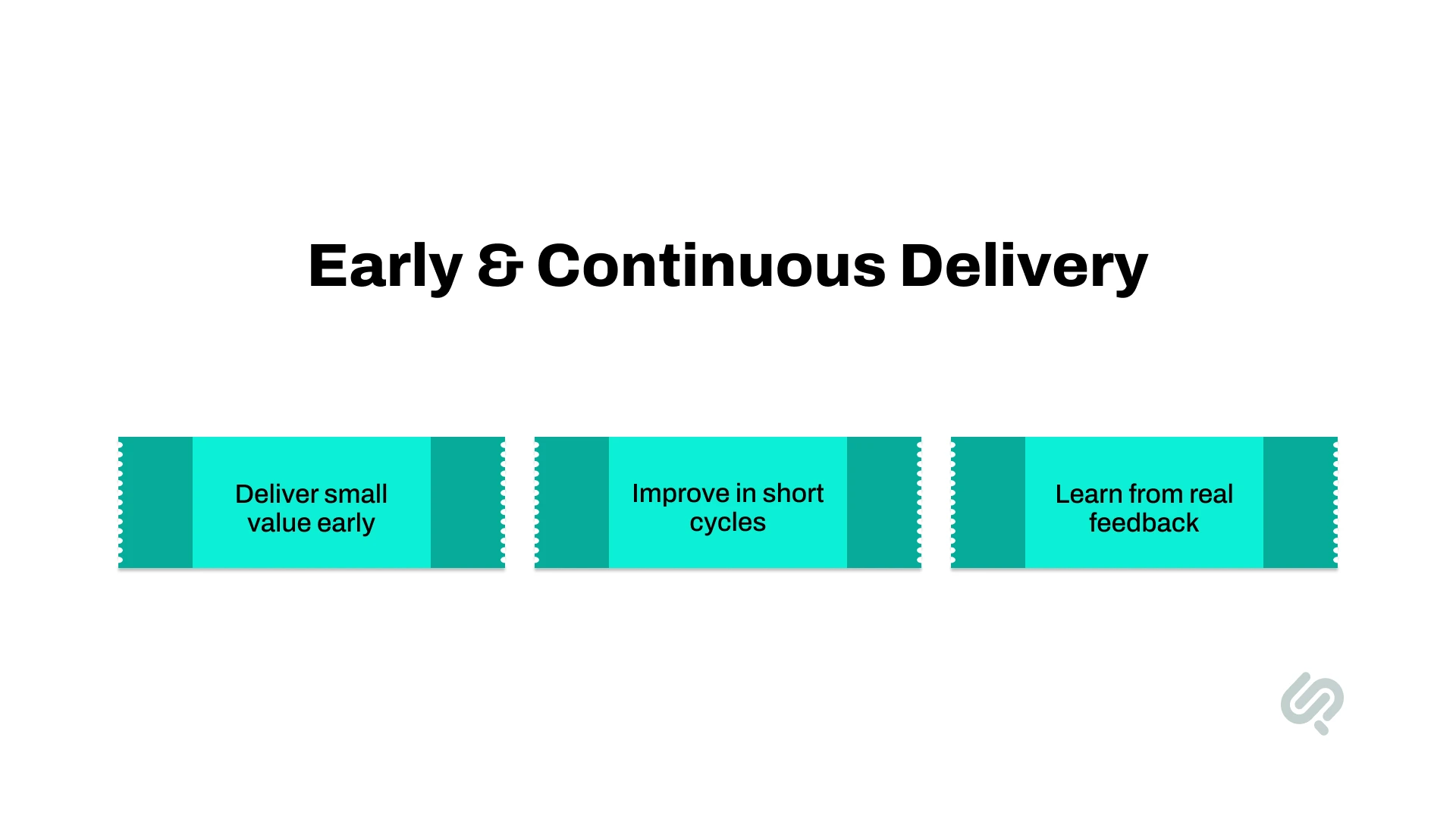
Principle: Our highest priority is to satisfy the customer through early and continuous delivery of valuable software.
Explanation:
This principle means teams should deliver something useful as early as possible, then keep improving it in short cycles.
Instead of waiting months for a final release, work is delivered in small increments so customers can use it, review it, and guide what comes next.
This supports the Agile delivery process, where feedback is built into every stage of project execution. By delivering working software frequently, teams reduce risk, catch mistakes early, and stay aligned with real customer needs.
It also helps businesses respond to market changes faster and maintain a competitive advantage. This is a core part of agile project management principles and practices, and lean agile project management principles.
Key Benefits
Example
A team launches a basic version of an online store within one month instead of waiting a year. Customers start using it immediately and share feedback. Every two weeks, new features are added based on real usage, improving both adoption and revenue.
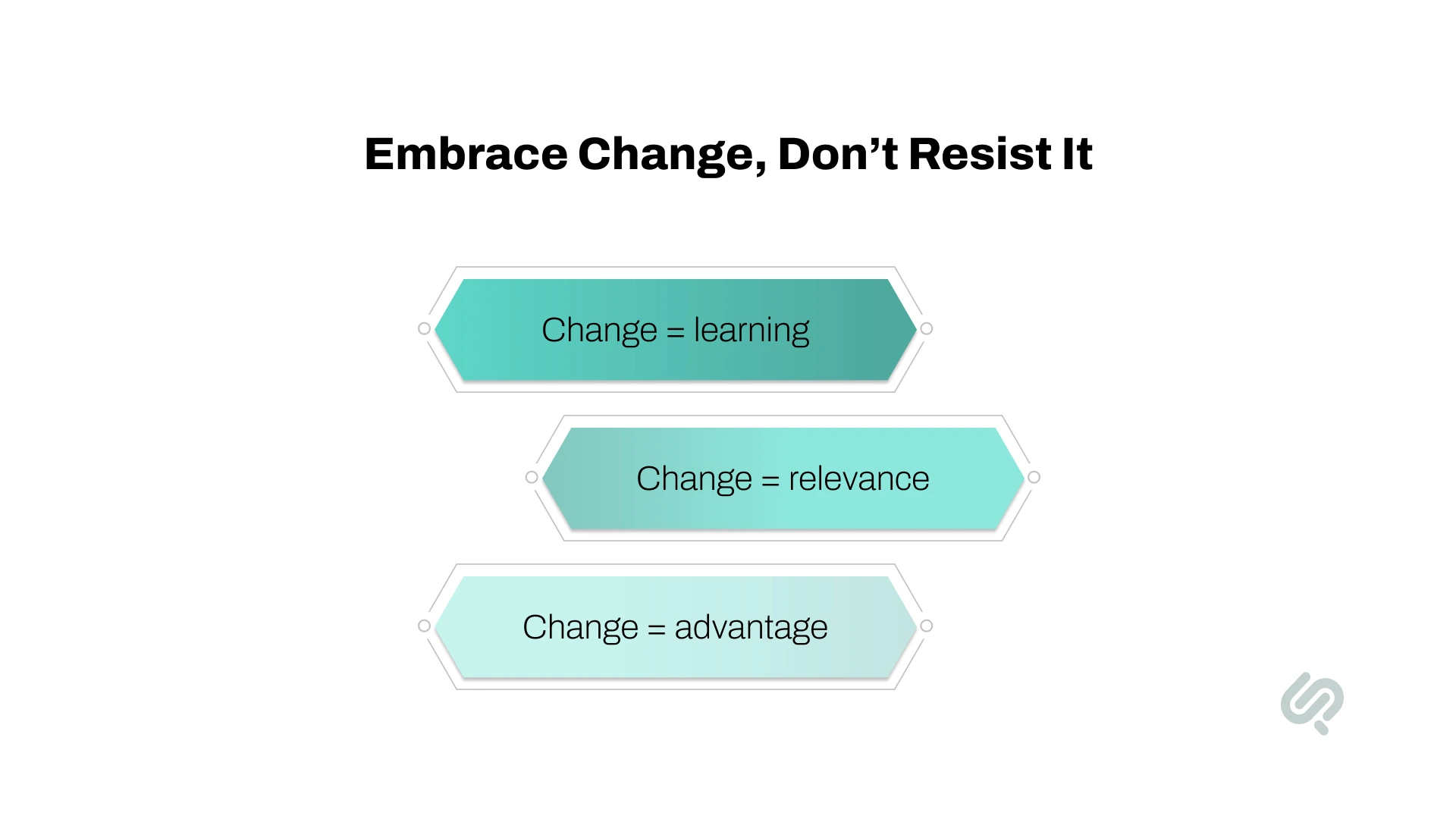
Principle: Welcome changing requirements, even late in development. Agile processes harness change for the customer’s competitive advantage.
Explanation:
This principle means teams should expect change and be ready to respond to it at any point in the project lifecycle.
Instead of treating new requirements as problems, agile teams treat them as signals that priorities or market needs have shifted. This flexibility is built into agile processes through short iterations, frequent planning, and regular customer feedback.
It ensures teams are always working on what matters most right now, not what mattered months ago.
This approach helps organizations stay relevant in fast-moving markets and avoid building outdated or low-value features. It is a key part of agile methodology principles and agile execution approaches that support continuous improvement.
Key Benefits
Example:
A product team changes priorities midway through development after a competitor launches a new feature. The team adjusts the backlog, delivers an improved version quickly, and stays ahead of market expectations instead of sticking to an outdated plan.
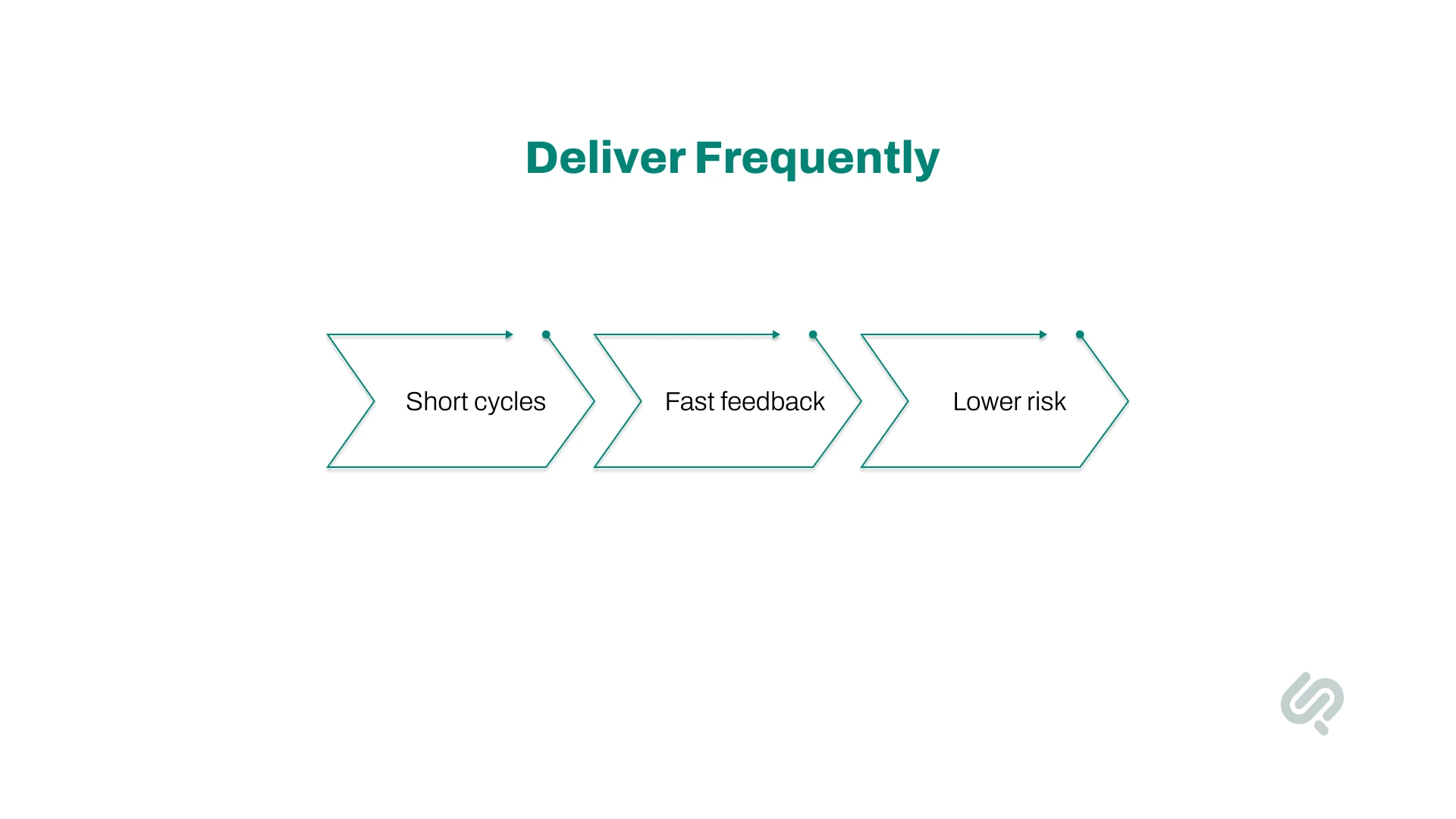
Principle: Deliver working software frequently, from a couple of weeks to a couple of months, with a preference for shorter timeframes.
Explanation:
This principle focuses on delivering usable output in short, regular cycles instead of waiting for a final release. Frequent delivery creates fast feedback loops, which are essential when training and refining machine learning models.
It also keeps stakeholders informed and confident because progress is visible, not hidden behind reports. Short delivery cycles reduce risk by catching problems early before they become expensive to fix.
They also support continuous improvement by allowing teams to refine both the product and their process every iteration. This rhythm is a core part of agile project management principles and practices and the agile delivery lifecycle.
Key Benefits
Example:
A team releases a new version of their app every two weeks instead of every six months. Users start using new features immediately, and the team improves each release based on real feedback instead of assumptions.
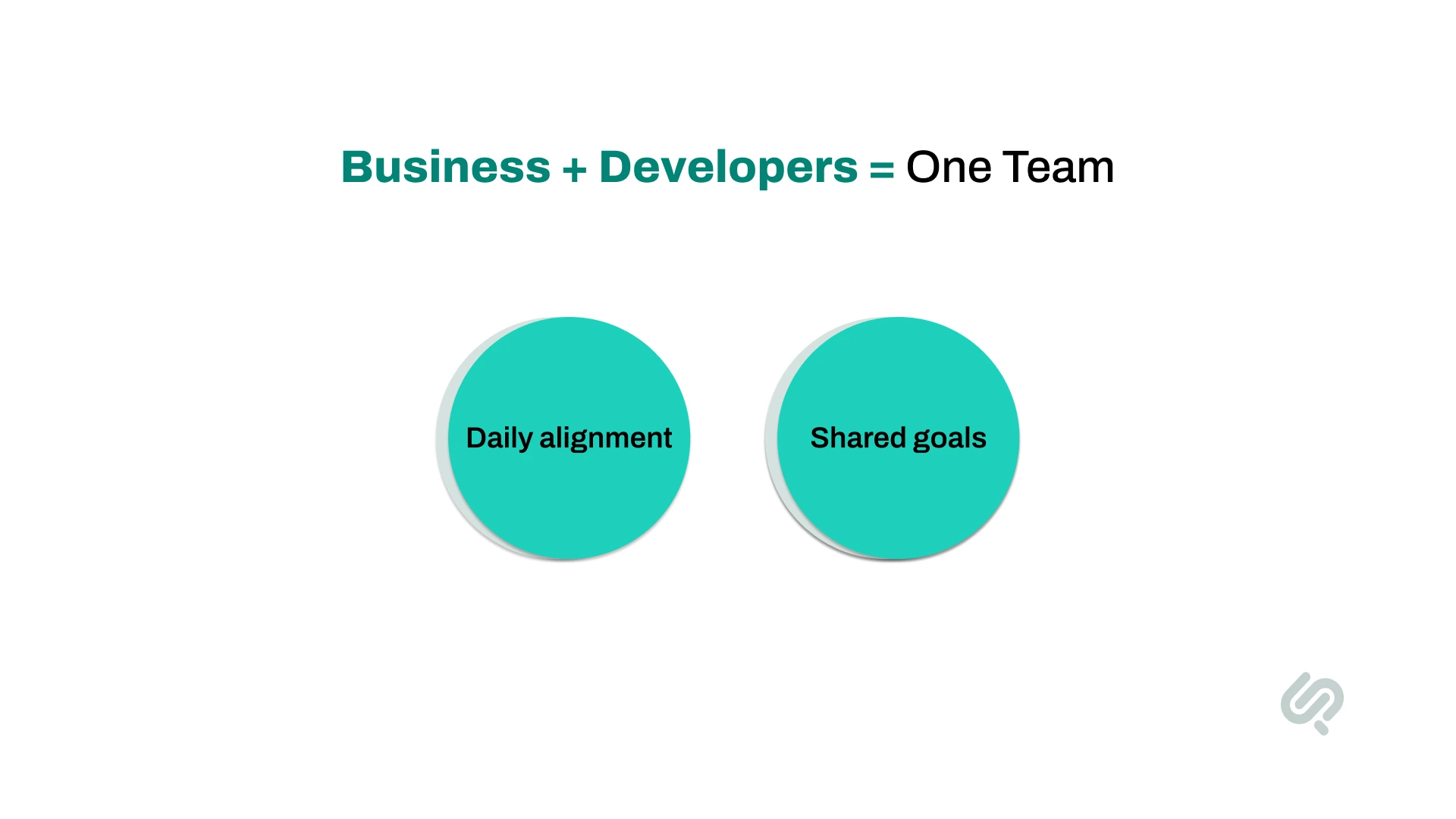
Principle: Business people and developers must work together daily throughout the project.
Explanation:
This principle means business and technical teams should stay closely connected every day, not only at major milestones.
Daily collaboration keeps work aligned with real business goals and customer needs. It reduces misunderstandings by allowing questions and decisions to happen in real time.
In real-world Agile examples, this often shows up as product owners joining daily stand-ups, quick clarification calls replacing long email threads, and shared reviews where feedback is addressed immediately.
It also builds trust and shared ownership between business and delivery teams. This approach supports faster decision-making and fewer handoff delays.
It is a core part of agile project management principles and practices, and strong agile team collaboration.
Key Benefits
Example:
A product owner joins the development team’s daily stand-up to answer questions and adjust priorities. This keeps features aligned with business needs and prevents late-stage surprises.
Principle: Build projects around motivated individuals. Give them the environment and support they need, and trust them to get the job done.
Explanation:
This principle emphasizes that people, not processes, are the main driver of project success.
It means forming teams with the right skills, mindset, and sense of ownership, then giving them the support they need to do their best work.
Instead of controlling every detail, leaders focus on removing obstacles, providing clarity, and enabling progress.
Trust encourages accountability, collaboration, and better problem-solving across the team.
Motivated individuals are more likely to take initiative, adapt to change, and care about quality.
This is a core part of agile methodology principles and building strong, self-organizing teams.
Key Benefits

Example:
A project lead sets clear goals, equips the team with the right tools, and trusts them to make decisions. Instead of micromanaging, the lead supports the team when issues arise, helping them stay focused and motivated.
Principle: The most efficient and effective way to share information within a team is through face-to-face (real-time) conversation.
Explanation:
This principle emphasizes that direct, real-time communication reduces confusion and speeds up understanding.
Talking things through allows teams to ask questions, clarify intent, and resolve issues immediately.
It prevents misunderstandings that often happen with long documents or message threads. In modern teams, face-to-face includes video calls and live discussions, not only physical meetings.
This approach supports faster decisions, better alignment, and stronger collaboration. It is a key part of agile project management principles and practices, and effective team communication.
Key Benefits
Example:
Instead of emailing back and forth about a feature, a developer and product owner discuss it in a short call and reach an agreement in minutes, not days.

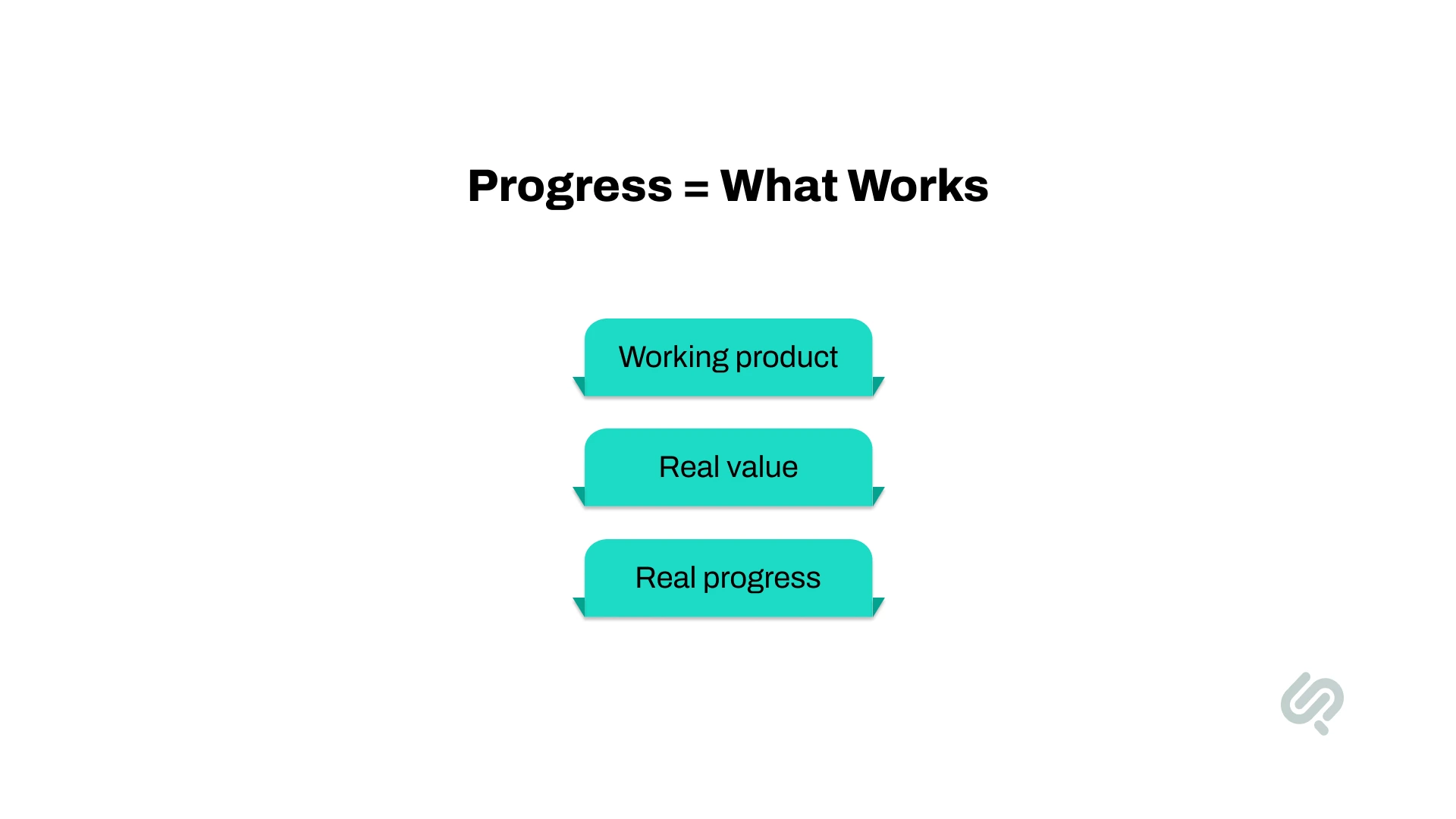
Principle: Working software is the primary measure of progress.
Explanation
This principle means progress is judged by what actually works, not by how busy the team looks. Plans, documents, and task lists only matter if they lead to something usable and valuable.
A feature is considered progress only when it can be used, tested, or demonstrated. This keeps teams focused on outcomes instead of activity.
It also helps stakeholders clearly see what has been achieved and what still needs work. This mindset supports agile delivery practices and keeps projects aligned with real value.
Key Benefits
Example
Instead of reporting tasks completed, a team shows a new feature that users can already use. Stakeholders can immediately see the value and give feedback.
Principle: Agile processes promote sustainable development. Teams should be able to maintain a constant pace indefinitely.
Explanation:
This principle means work should move at a steady, realistic speed that the team can maintain over time. It avoids burnout by discouraging overtime and last-minute pressure as a normal way of working.
A sustainable pace helps teams stay focused, productive, and consistent across iterations. It also supports better quality because tired teams make more mistakes.
By planning work based on real capacity, teams become more predictable and reliable. This is a core part of agile project management principles and practices and long-term project success.
Key Benefits
Example:
A team commits only to what they can deliver in normal working hours. By keeping a steady rhythm each sprint, they avoid burnout and deliver more reliably over the long run.

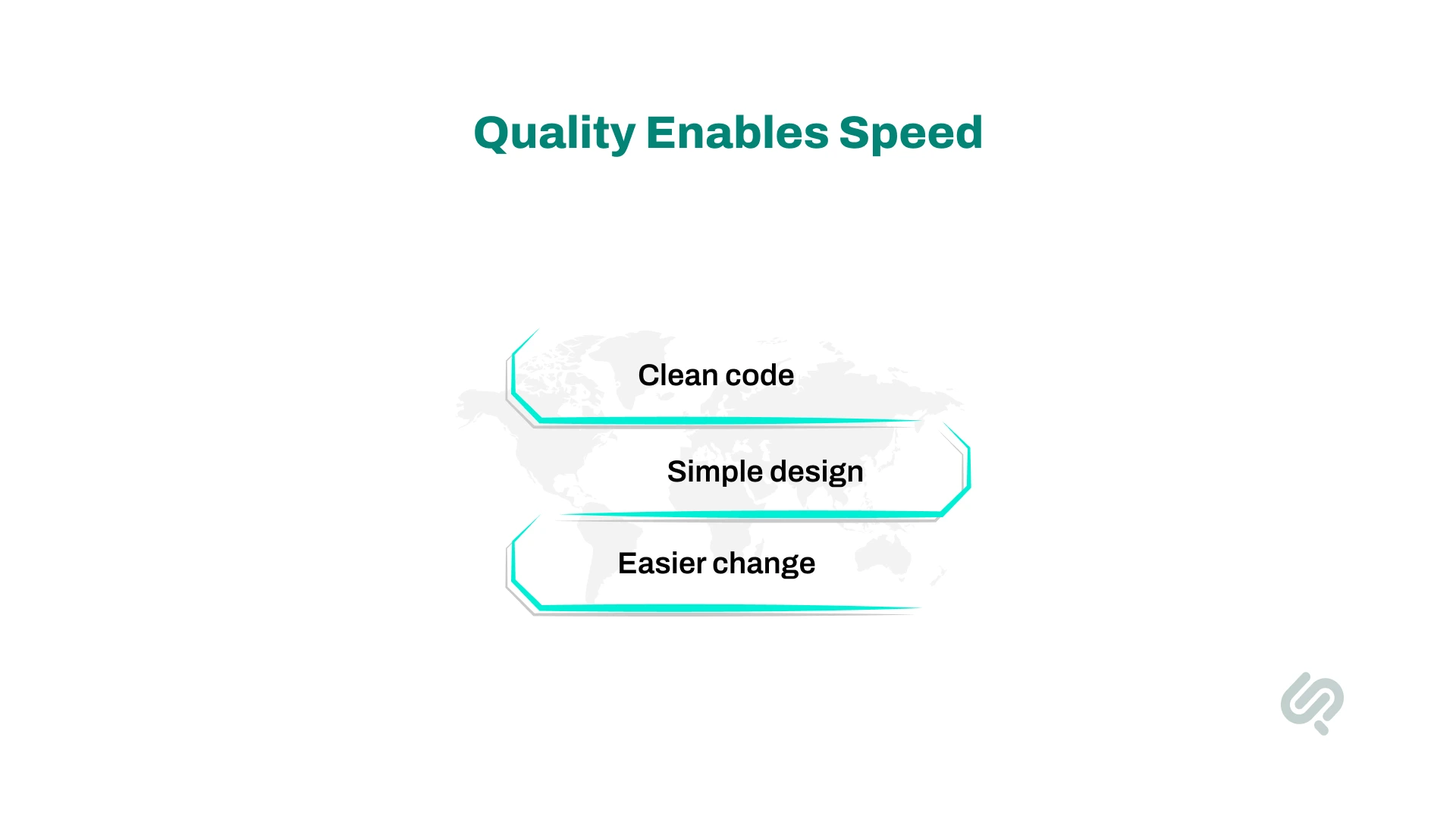
Principle: Continuous attention to technical excellence and good design enhances agility.
Explanation:
This principle means quality is not something you add at the end. It is built into the work every step of the way. Clean code, simple design, and regular improvement make systems easier to change and maintain.
When technical debt is controlled, teams can respond faster to new requirements. Strong design also reduces bugs, rework, and long-term maintenance costs.
This allows teams to move quickly without creating fragile systems. It is a key part of agile methodology principles and sustainable agile delivery practices.
Key Benefits
Example:
One team invests time in clean code and testing, while another rushes and skips quality checks. When change is needed, the first team adapts quickly, while the second struggles with bugs and fragile systems.
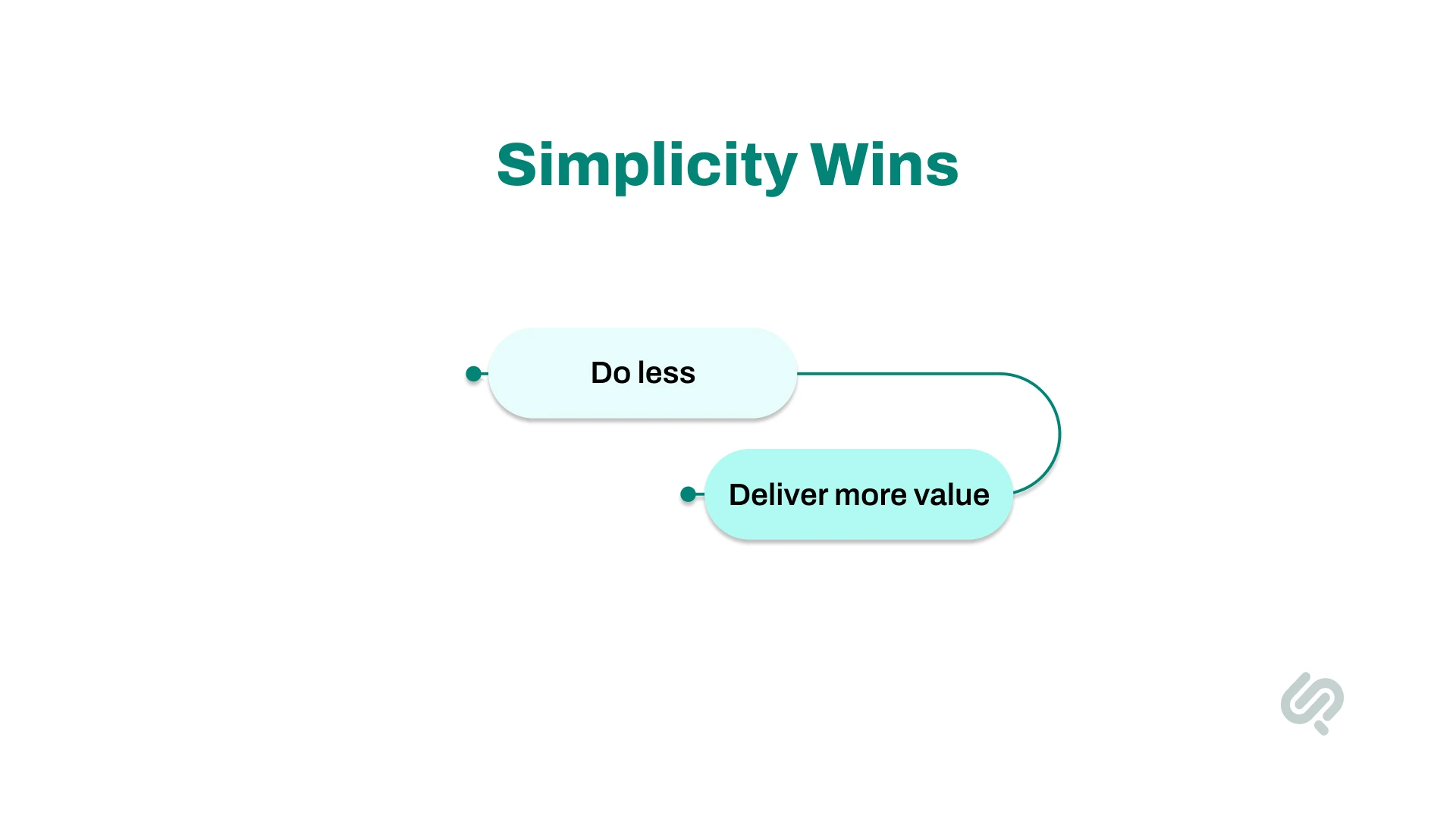
Principle: Simplicity, the art of maximizing the amount of work not done, is essential.
Explanation:
This principle encourages teams to focus only on what truly adds value and avoid unnecessary work. It means choosing the simplest solution that meets the need instead of overbuilding.
By reducing complexity, teams move faster and make systems easier to change and maintain. This approach also helps eliminate waste in process, scope, and design.
Simplicity supports better prioritization and keeps teams focused on real outcomes. It reflects both agile methodology principles and lean agile project management principles.
Key Benefits
Example:
A team launches a simple version of a product with only the most important features. They skip low-value extras, deliver faster, and add more only when users actually need it.
Principle: The best architectures, requirements, and designs emerge from self-organizing teams.
Explanation:
This principle means teams are trusted to decide how to organize their work and solve problems. Instead of being directed in detail, teams collaborate to design the best solutions together.
This leads to better technical decisions because the people closest to the work have the most context. Self-organizing teams adapt faster when challenges or changes arise.
They also build stronger ownership, accountability, and creativity within the group. This approach is a key part of agile methodology principles and high-performing agile teams.

Key Benefits
Example
During planning, the team decides how to divide work and design the solution together. This leads to stronger designs and faster problem-solving than top-down direction.
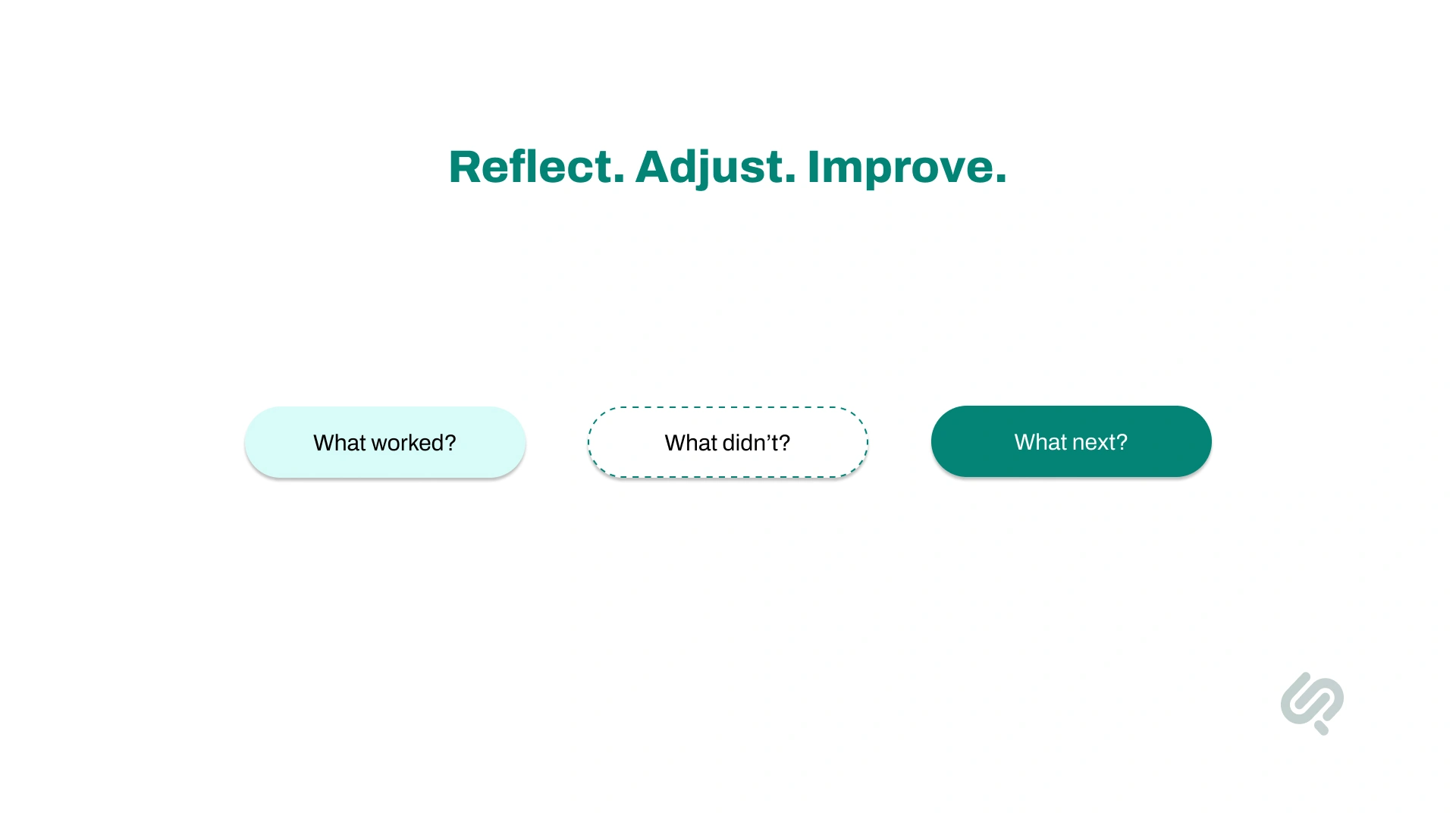
Principle: At regular intervals, the team reflects on how to become more effective, then adjusts its behavior accordingly.
Explanation:
This principle encourages teams to pause regularly and improve how they work, not just what they deliver. By reflecting at the end of each cycle, teams identify what’s working and what needs improvement.
Small adjustments made continuously lead to better performance over time. This keeps the team adaptable, efficient, and aligned with goals.
It also creates a culture of learning instead of blame. This is a core part of agile project management principles and practices, and continuous improvement.
Key Benefits
Example
After each sprint, the team reviews what went well and what didn’t, then makes small changes to improve the next cycle.
Understanding the principles is one thing. Applying them in real work is what creates results. Here’s how teams bring Agile to life in practice.
Begin with a simple Agile delivery methodology like Scrum or Kanban to create structure. Use sprints, reviews, and retrospectives to support frequent delivery, collaboration, and reflection.
Then adjust the process based on what works for your team. Agile works best when it evolves with the team, not when it’s followed rigidly.
According to research, at least 71% of U.S. companies use Agile as their primary project management approach, and many report better alignment with business goals and flexibility (2).
Agile delivery platforms like Jira, Trello, or Azure DevOps help teams track work, share progress, and stay aligned. CI/CD and automation tools make it easier to deliver frequently and safely. Tools should support the team, not replace communication.
Regularly review and trim the backlog so teams focus only on what creates real value. Simple prioritization methods help avoid overloading the team and support a steady, sustainable pace.
Make technical excellence part of everyday work. Encourage testing, refactoring, code reviews, and learning. Building quality into the process makes future changes faster and safer.
Leaders should remove obstacles, not control every detail. Trust teams to organize their work, make decisions, and improve their process. This creates ownership, accountability, and better outcomes.
Release early, get feedback often, and adjust based on real usage. User input keeps the team aligned with what matters most and prevents wasted effort.
Study successful Agile transformations to understand what worked and what did not.
“In most organizations, the biggest shift is not adopting Scrum or Kanban, it’s moving from prediction-based planning to learning-based delivery,” says Khawar Qayyum, digital transformation and project management lead.
“Traditional waterfall approaches assume you can define everything upfront. In reality, especially in digital and AI projects, requirements evolve as users interact with the system and data reveals new behavior. That’s where an Agile operating model becomes essential, it creates a structure where change is expected, not disruptive.
Khawar points to one internal example: an AI-powered inventory management system built to forecast demand, automate reordering, and reduce stockouts across retail operations.
“In this project, early assumptions about demand patterns changed once the system went live. Instead of re-planning everything, we used short delivery cycles, continuous feedback from users, and regular reflection to adjust the models and workflows incrementally. That Agile operating framework allowed the system to improve while already delivering business value.”
This approach highlights a practical Agile vs traditional comparison: waterfall optimizes for certainty at the start, while Agile optimizes for learning over time.
This blend of structured delivery, continuous feedback, and iterative improvement is what turns Agile from a theory into a reliable way of building complex, evolving systems.
Agile project management is not about moving faster for the sake of speed. It’s about building the right thing, in the right way, at the right time.
The 12 principles create a system where teams can respond to change without losing direction, deliver value without burning out, and improve without waiting for permission.
When applied with the right mindset, Agile becomes more than a framework. It becomes a sustainable way to build better products, better teams, and better outcomes.



Ameena is a content writer with a background in International Relations, blending academic insight with SEO-driven writing experience. She has written extensively in the academic space and contributed blog content for various platforms.
Her interests lie in human rights, conflict resolution, and emerging technologies in global policy. Outside of work, she enjoys reading fiction, exploring AI as a hobby, and learning how digital systems shape society.