











The forward deployed engineer vs solutions engineer difference comes down mainly to what happens after technical validation: a solutions engineer proves that a product can solve the customer's problem, while a forward deployed engineer helps build, integrate, deploy, and operate the solution in the customer's real environment.
A solutions architect plays a different role again, defining the technical blueprint across systems, data, security, infrastructure, and integrations. In simple terms: solutions engineers prove technical fit, solutions architects design the solution, and forward deployed engineers own hands-on production execution.
For business leaders, the right choice depends on whether the bottleneck is technical sales, architecture, or getting the system successfully into production.
A solutions engineer primarily helps prove technical fit during the buying process through discovery, demos, and PoCs. A forward deployed engineer writes production code, builds integrations, and works with the customer to get the solution successfully deployed.
A solutions architect primarily owns system design and technical direction. A forward deployed engineer is more execution-focused, turning that architecture into working integrations, workflows, and production systems.
Hire an FDE when the main bottleneck is implementation, integrations, production deployment, or slow time-to-value. Hire a solutions engineer when prospects are struggling to validate the product technically before buying.
Usually, but not always. FDEs commonly work from rollout through production, but some companies bring them into strategic accounts before signature when a production-grade prototype or complex technical validation is required.
A forward deployed engineer is usually the strongest fit when the architecture is reasonably understood but significant engineering is still required around real data, APIs, infrastructure, security, evaluation, and deployment.
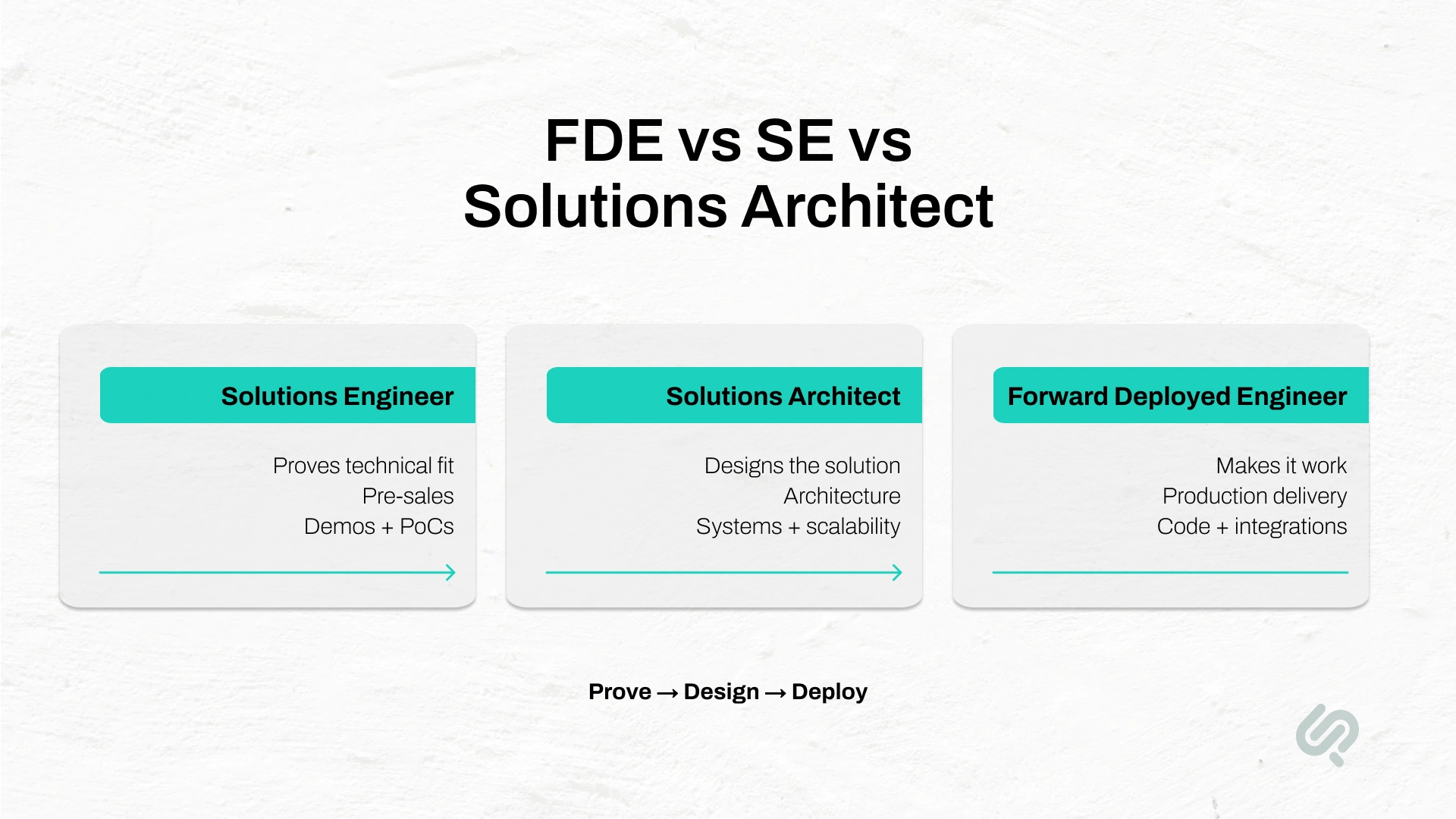
A forward deployed engineer, solutions engineer, and solutions architect all work closely with customers, but they own different parts of the technical journey.
In simple terms, a solutions engineer helps prove the solution can work, a solutions architect designs how it should work, and a forward deployed engineer helps make it work in production.
The main difference is ownership.
A solutions engineer focuses on technical fit before purchase, a solutions architect focuses on system design and technical direction, and a forward-deployed engineer stays close to the customer during hands-on implementation and production rollout.
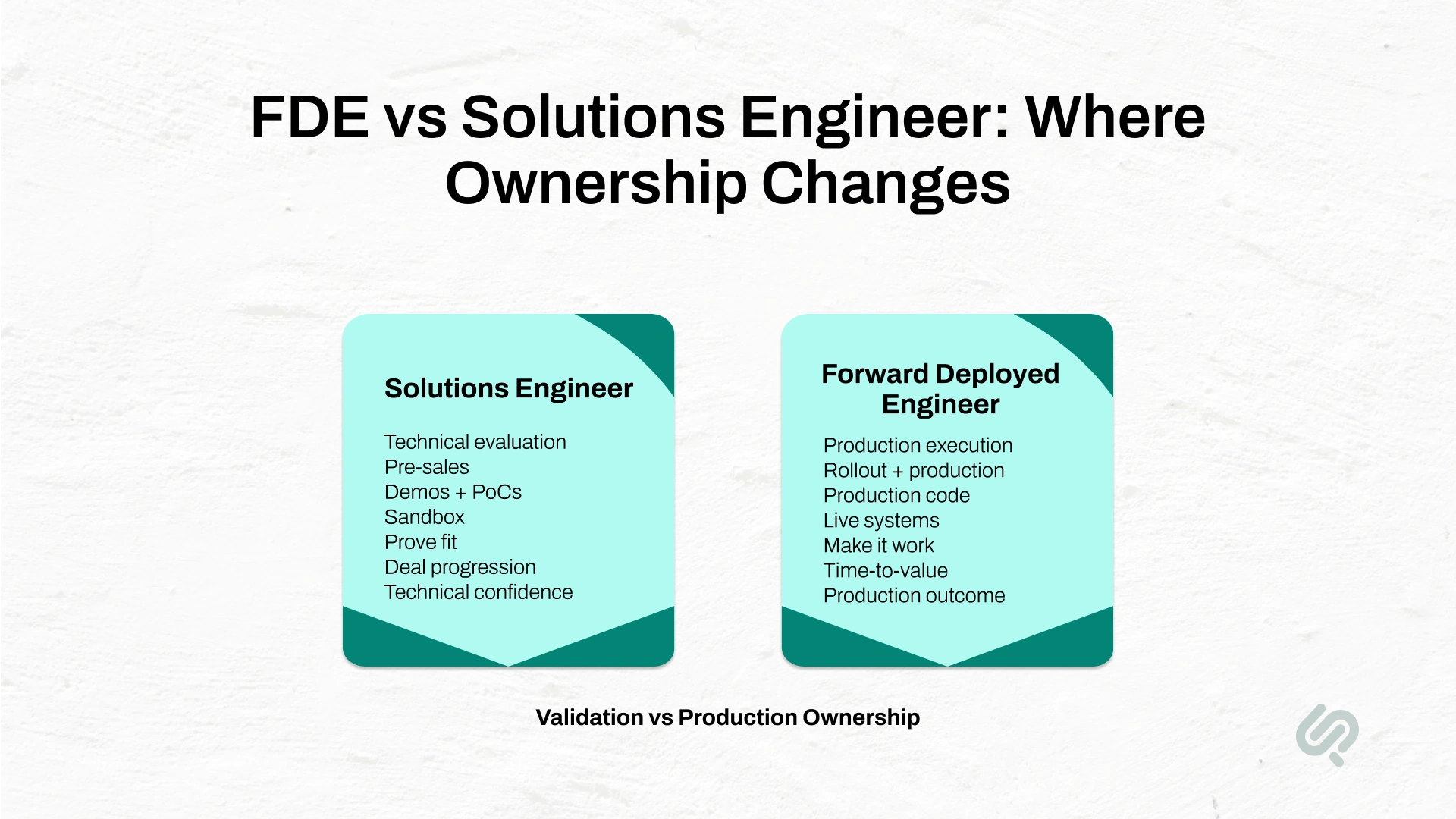
The forward deployed engineer vs solutions engineer difference is mainly about what each role is expected to deliver.
Both work closely with customers and need strong technical knowledge, but a solutions engineer primarily helps prove technical fit, while an FDE takes responsibility for making the solution work in a real production environment.
For a buyer, the simplest distinction is this:
That distinction matters when a successful demo still leaves significant work around APIs, data, infrastructure, security, workflows, integrations, or deployment.
Usually, but not always.
Solutions engineers are primarily associated with technical pre-sales, while FDEs usually become most valuable during implementation and production deployment. However, strategic or technically complex deals can require an FDE before the contract is signed.
For example, an FDE may join when a customer needs:
In those cases, the solutions engineer can continue managing technical evaluation while the FDE works more deeply with the customer's engineering team.
So, pre-sale vs post-sale is a useful rule of thumb, but production ownership is the better distinction.
Ignore the job title for a moment and ask three questions:
This is especially important because customer-facing engineering titles vary between companies. Responsibilities, deliverables, and accountability tell you more than the title.
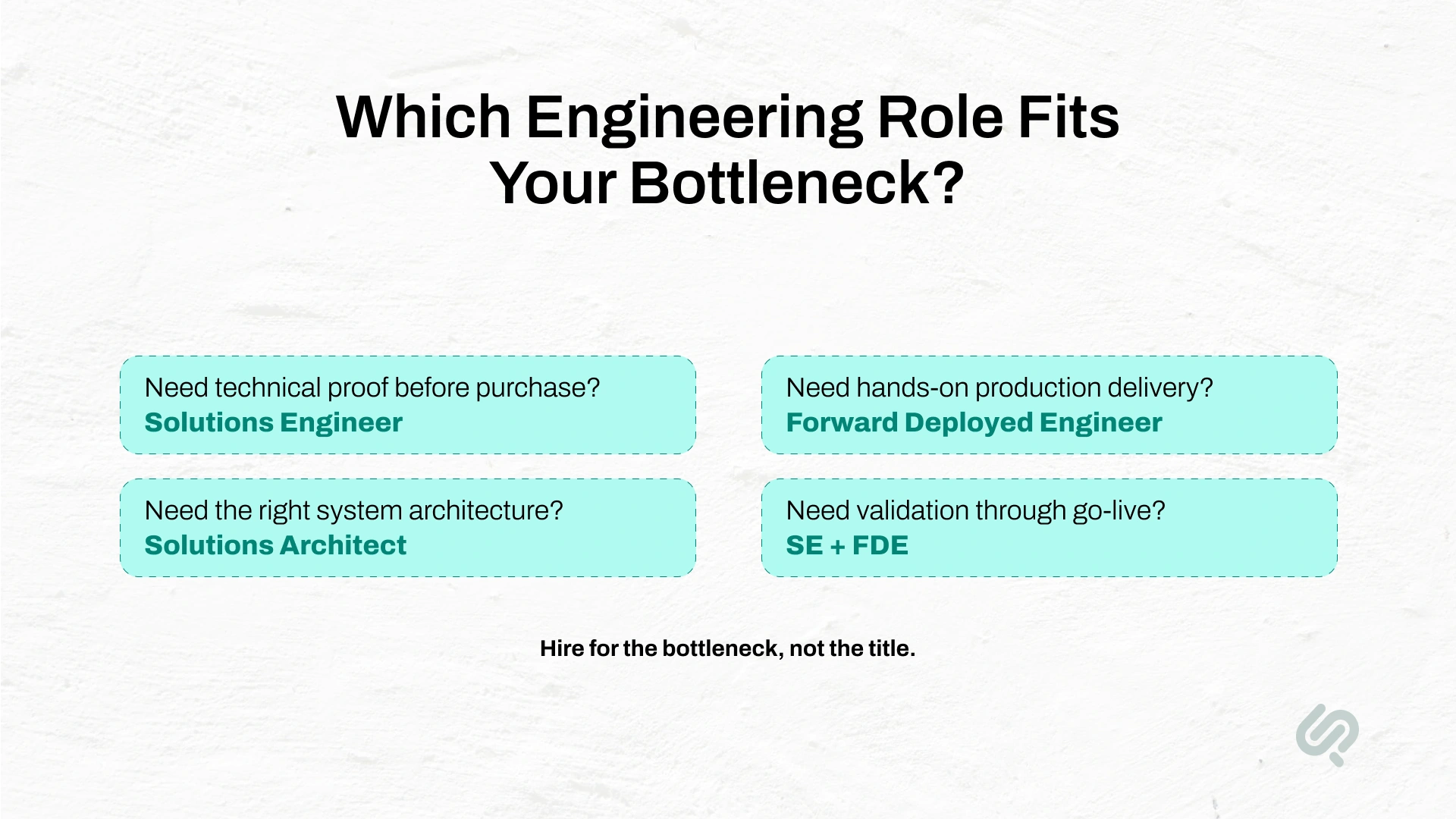
The right role depends on where the project or customer journey is getting stuck.
For companies comparing a forward deployed engineer vs solutions engineer, another useful signal is where senior engineering time is going.
If founders or engineering leaders are constantly joining demos and technical sales calls, pre-sales support may be the bottleneck. If senior engineers are spending large amounts of time building customer-specific integrations instead of the core product, the problem is closer to forward deployed engineering.
Neither role is inherently better. The right hire is the one that owns the bottleneck currently delaying revenue, deployment, or customer value.
A forward deployed engineer role combines customer discovery with hands-on technical delivery. The engineer stays close to the business problem while also building the software, integrations, and workflows needed to make the solution work in a real production environment.
Typical forward-deployed engineer responsibilities include:
An FDE engineer is especially useful when a technically successful pilot still needs significant work before it can operate inside the business.
This often happens with:
The key advantage is proximity. An embedded engineer can see where assumptions fail once the solution meets real data, security rules, workflows, users, and infrastructure.
Best fit: Use an FDE when execution inside the customer's real environment—not technical validation or architecture—is the main delivery risk.
A solutions engineer role is primarily focused on technical evaluation during the buying process. The solutions engineer works with prospects to understand their requirements, demonstrate how the product fits those needs, and resolve technical concerns before a purchasing decision is made.
Typical solutions engineer responsibilities include:
Salesforce currently classifies Solution Engineering as a pre-sales function, with responsibilities including technical discovery, product demonstrations, proofs of concept, technical workshops, and architectural recommendations. (1)
A solutions engineer is most useful when the biggest obstacle happens before purchase.
Typical signs include:
In these situations, the problem is technical confidence rather than production delivery. A strong solutions engineer reduces that friction without pulling product engineers into every sales cycle.
Best fit: Use a solutions engineer when technical confidence before purchase is the main obstacle.
A solutions architect role focuses on system design, technical direction, and architecture decisions.
The architect determines how applications, data, cloud services, security controls, integrations, and infrastructure should work together before or during implementation.
Typical solutions architect responsibilities include:
AWS describes Solutions Architects as technical advisors who help customers assess workloads, architecture, cloud migration, and high-risk technical decisions; when customers need hands-on implementation, AWS points them toward Professional Services or implementation partners. (2)
A solutions architect is most valuable when the main risk is making the wrong system-level decisions.
Common examples include:
The architect provides a clear technical direction before engineering teams commit heavily to implementation. They reduce architecture risk; they do not necessarily own the daily production build.
Best fit: Use a solutions architect when system design, scalability, integration strategy, or long-term technical risk is the main concern.
The forward deployed engineer vs solutions architect comparison is mainly about execution ownership versus architecture ownership. Both roles solve complex technical problems, but they usually operate at different levels of the delivery process.
A forward deployed engineer works close to users, systems, and real operational constraints. The role typically involves writing production code, building integrations, debugging issues, adapting workflows, and getting the solution running inside the customer environment.
The key difference is production ownership: the solutions architect defines the technical direction, while the FDE works through the real implementation constraints required to make that design succeed.
A solutions architect defines how the overall system should work. This includes deciding how applications connect, where data moves, which technologies should be used, how security boundaries are designed, and how the system can scale.
The architect reduces the risk of teams making disconnected or expensive technical decisions without a coherent long-term design.
Use both when a project has significant architecture complexity and implementation complexity.
The solutions architect can define the target architecture and technical standards, while the FDE tests those decisions against production reality and handles the engineering required to make them work.
In larger AI, modernization and enterprise integration programs, this combination helps prevent both poor architecture and stalled implementation.
The solutions engineer vs solutions architect difference comes down to scope. Both work with customers and technical teams, but a solutions engineer usually validates whether a product fits the buyer’s needs, while a solutions architect designs how the wider technical solution should work.
A solutions engineer supports the buying process through technical discovery, demos, proofs of concept, and integration discussions.
Their main question is: “Can this product solve the customer’s problem?”
A solutions architect focuses on how applications, APIs, data, cloud services, and security controls should fit together.
Their main question is: “How should the complete system be designed to work reliably and scale?”
Both may join discovery sessions, review integrations, and advise technical stakeholders. The difference is ownership:
For buyers, responsibilities and deliverables matter more than the job title.
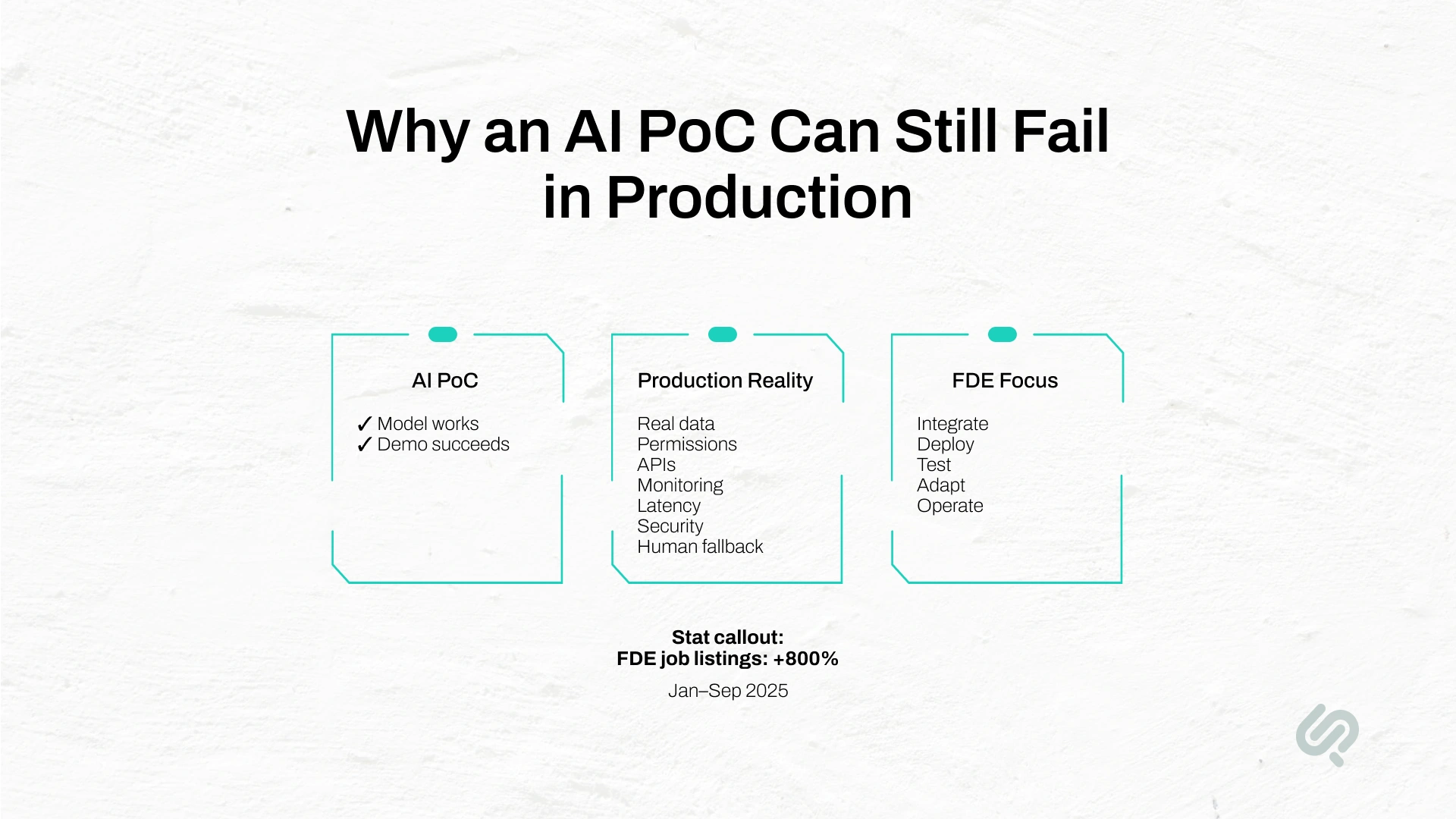
AI makes the gap between technical validation and production deployment much larger.
An AI PoC can perform well in a controlled environment and still fail once it reaches real operations. Production introduces requirements that a demo may never expose, including:
That is why choosing between solution architecture, solutions engineering, and embedded engineering becomes particularly important for enterprise AI deployment.
“AI delivery often becomes difficult at the interfaces: between the model and the data, the prototype and production, or the engineering team and the people running the workflow. A strong forward deployed engineer owns those interfaces instead of turning each one into another handoff.”
— Hammad Maqbool, Head of AI & ML, Phaedra Solutions
Demand reflects that deployment gap: Financial Times analysis of Indeed data found monthly Forward Deployed Engineer job listings increased by more than 800% between January and September 2025 as AI companies expanded customer-facing engineering teams. (3)
McKinsey's 2025 Global Survey on AI found that 88% of respondents said their organizations regularly use AI in at least one business function, yet nearly two-thirds had not begun scaling AI across the enterprise. The gap between experimentation and scaled deployment helps explain why implementation-focused roles are becoming more important. (4)
That shift is visible in the market itself. In May 2026, OpenAI launched its Deployment Company specifically around embedding Forward Deployed Engineers inside organizations and said its Tomoro acquisition would bring approximately 150 experienced FDEs and Deployment Specialists from day one. (5)
A strong forward deployed engagement should provide more than one engineer writing code. It should bring together the capabilities needed to take a complex initiative from discovery to production without creating another chain of handoffs.
Typical forward deployed engineering services should include:
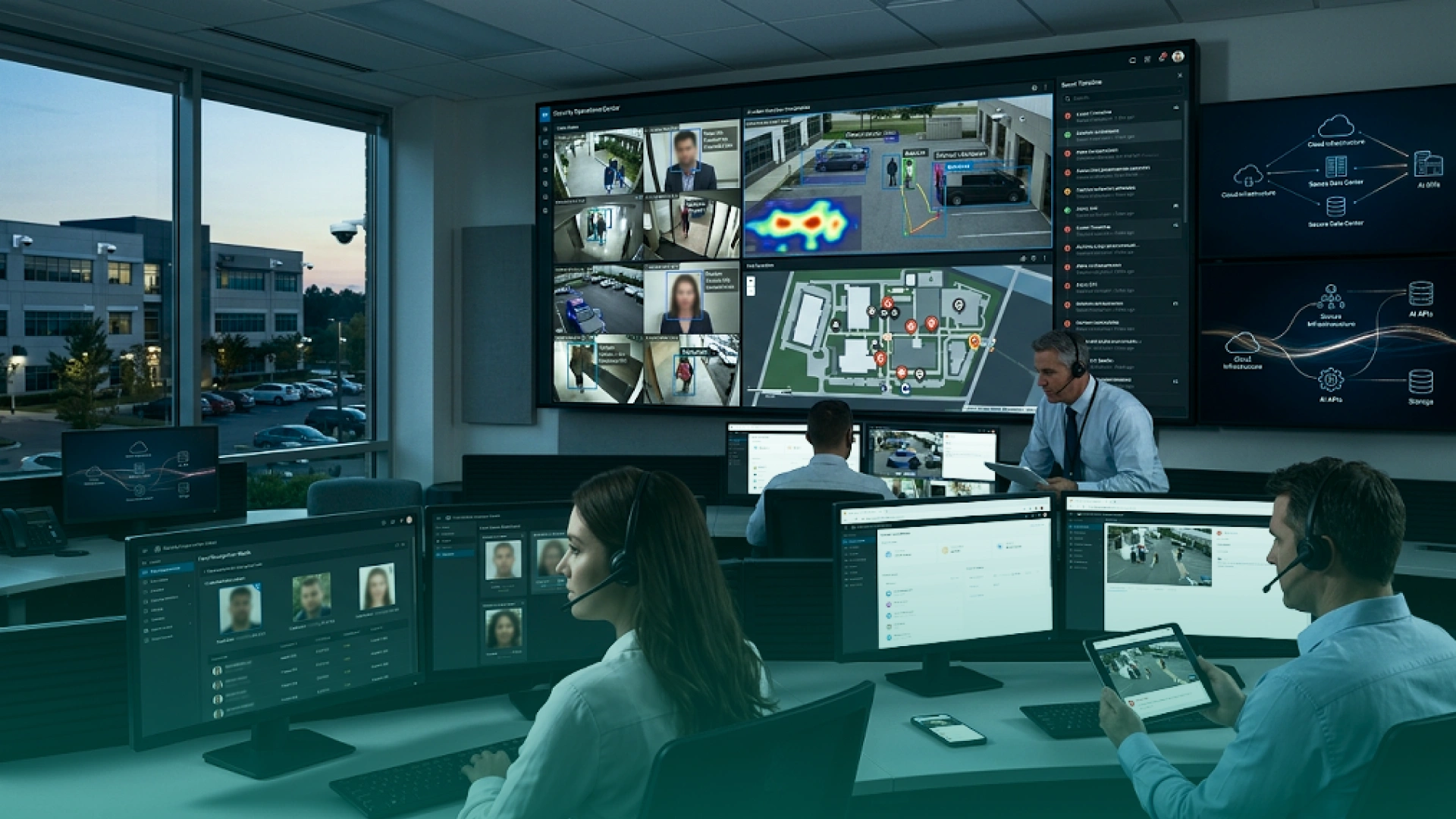
A security technology client needed more than an AI prototype. The platform had to work with existing IP cameras and access-control systems while supporting real-time monitoring, AI-powered search, face detection, tracking, analytics, and web and mobile access.
Phaedra Solutions built the AI Cloud Surveillance Platform across AI integration, application engineering, system integrations, AWS infrastructure, Docker, CI/CD, performance testing, security testing, and production deployment.
It is a strong example of the type of cross-functional ownership forward deployed engineering is designed for: keeping engineering close to the operational problem while connecting AI, integrations, infrastructure, QA, and deployment into one working system.
Choose a solutions engineer when the bottleneck is technical validation before purchase, a solutions architect when the risk is system design, and a forward deployed engineer when the solution needs hands-on integration, deployment, and production ownership.
For complex AI and enterprise projects, an FDE is especially valuable when the technology works in a PoC but still needs to work reliably with real data, systems, workflows, and users.
Phaedra Solutions provides AI forward deployed engineering services, combining embedded senior engineers with AI-assisted development, testing, QA, and deployment.
Depending on project scope and automation potential, this approach is designed to target 60–80% shorter development timelines, 30–50% cost-efficiency improvement, and 30–80% leaner team requirements.
Book a free call with our forward deployed engineering team.


1.https://www.salesforce.com/company/careers/jobs/jr331878/solution-engineer-pre-sales-informatica/
2. https://aws.amazon.com/blogs/training-and-certification/engaging-a-solutions-architect/
3.https://www.ft.com/content/91002071-7874-4cb7-9245-08ca0571c408
4.https://www.mckinsey.com/capabilities/quantumblack/our-insights/the-state-of-ai
5.https://openai.com/index/openai-launches-the-deployment-company/

Ameena is a content writer with a background in International Relations, blending academic insight with SEO-driven writing experience. She has written extensively in the academic space and contributed blog content for various platforms.
Her interests lie in human rights, conflict resolution, and emerging technologies in global policy. Outside of work, she enjoys reading fiction, exploring AI as a hobby, and learning how digital systems shape society.