


.webp)
.webp)









.webp)
If you’re trying to understand the agile project management phases, you’re trying to figure out what actually happens first, what comes next, and how projects move from idea to delivery without falling apart.
Here’s the simple answer:
Agile project management phases are the seven structured stages teams use to plan, build, review, release, and continuously improve a project in small, flexible cycles.
They exist so teams can move fast without losing control, adapt to change without chaos, and deliver real value without endless delays.
This guide walks you through each phase in plain language — what it’s for, who’s involved, and what “good” looks like at every step — so you can run projects with more clarity, less stress, and better outcomes.
Agile project management is an approach to managing projects that focuses on flexibility, fast delivery, and continuous improvement.
Instead of planning every detail upfront, Agile divides work into short cycles so teams can adapt as requirements change.
This makes the Agile framework especially effective for complex projects, software development, and fast-moving business environments where priorities often shift.
Agile value is built on the Agile Manifesto, which defines the core principles behind the Agile approach.
Key Agile values:
These principles help teams stay focused on delivering real business value instead of just completing tasks.
Agile uses an iterative approach where work is delivered in small, manageable increments called sprints.
Each sprint includes:
This cycle allows teams to release functional software frequently and continuously align with customer needs.
Agile frameworks provide structure to the Agile development methodology.
Common frameworks include:
These frameworks help teams manage work efficiently while remaining flexible.
Organizations use Agile project management because it helps them:
This is why Agile is now widely used across software projects, digital transformation initiatives, and business operations.
The Agile project management life cycle phases guide a project from concept and planning through development, review, release, and continuous improvement, often referred to as the agile project management model phases in practice.
These phases show how Agile projects move from idea to delivery in a flexible, structured way.
They help teams plan, build, review, and improve while staying aligned with customer needs and business goals.
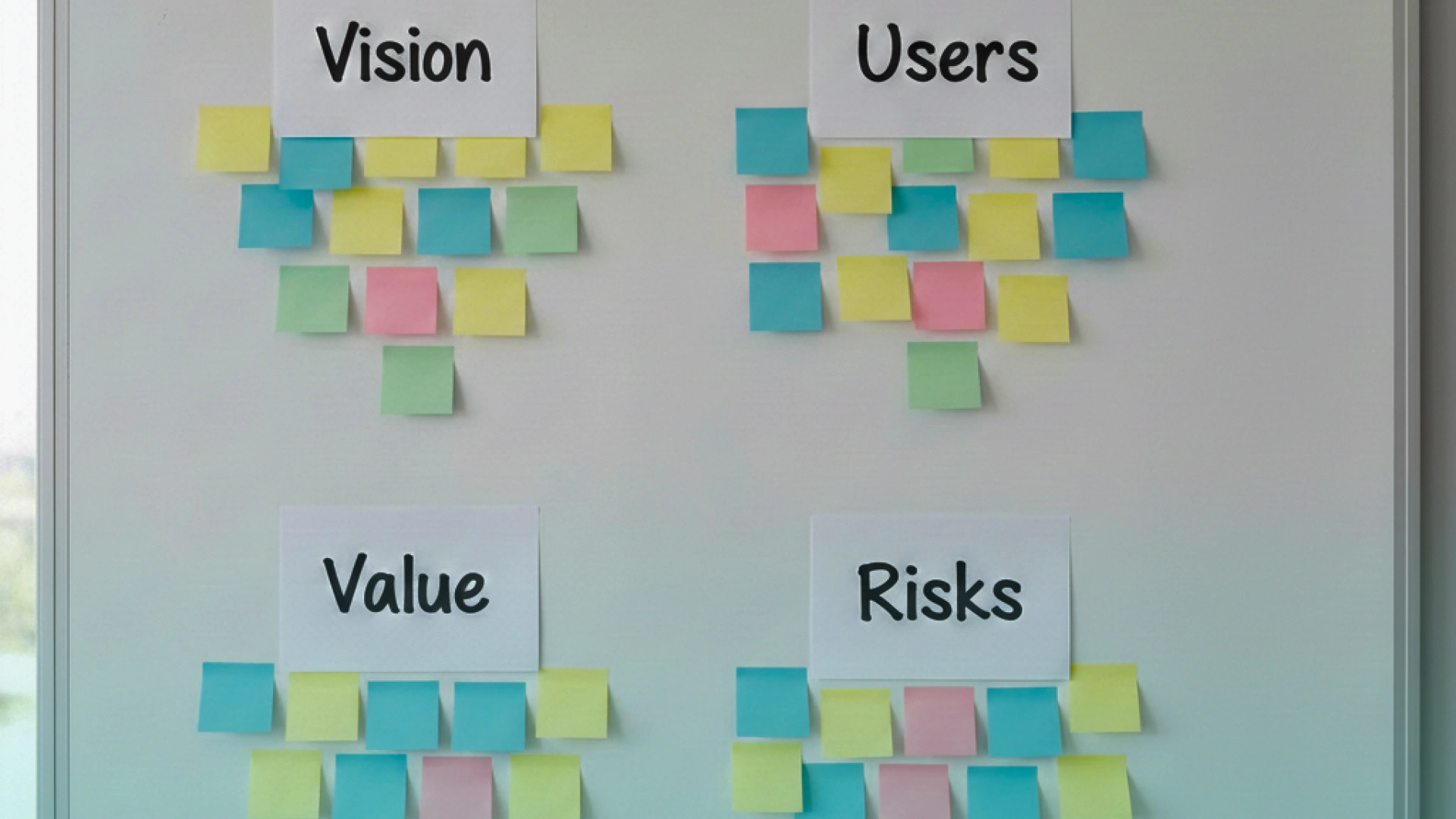
The Initiation phase is the starting point of the Agile project management lifecycle. It defines the purpose, direction, and boundaries of the project before any delivery work begins.
This is where business goals, customer needs, and technical feasibility are aligned. A strong initiation phase prevents confusion later and creates a shared understanding of what success looks like.
Every Agile project starts with a clear reason for existing.
This is where the team defines what problem they are solving and why it matters to the business and the customer.
The project vision becomes the reference point for decisions throughout the lifecycle. When priorities change, the vision helps the team stay focused on what really matters.
This usually includes:
Agile projects rely heavily on collaboration, communication, and fast decision-making. That only works when the right people are involved from the start.
This phase ensures that ownership is clear and that everyone knows who is responsible for what. It also helps avoid delays caused by unclear authority or conflicting priorities later on.
Key roles include:
Before work begins, the team needs clarity on the boundaries of the project. This does not mean locking everything down, but it does mean defining the starting frame.
Scope definition helps the team understand what they are responsible for and what sits outside the project. It also makes trade-offs easier when time, budget, or priorities shift.
Common areas of scope definition include:
Agile avoids detailed documentation at the start, but it still requires structure. That structure comes from a high-level product backlog that captures what needs to be built.
This backlog gives the team a shared view of priorities without forcing premature detail.
It also creates a flexible plan that can evolve as the team learns more.
The backlog typically contains:
Not every idea is worth building, even if it sounds good on paper. This part of the phase checks whether the project is technically possible, economically sensible, and strategically aligned.
It helps the organization avoid committing resources to initiatives that are unlikely to succeed.
It also surfaces risks early, when they are easier and cheaper to address.
This includes reviewing:
The Planning phase translates the project vision into an actionable delivery plan. Instead of creating a fixed long-term plan, an Agile roadmap focuses on what to build next and how to adjust as the project evolves.
The goal is to create enough structure to move forward while keeping room for change.
This phase prepares the team for the first iteration and sets direction for the ones that follow.

The team starts by breaking the project vision into smaller pieces of work. These pieces are written as user stories or tasks and added to the product backlog. Each item represents something that delivers value to the customer or business.
This turns abstract goals into concrete, buildable work.
The backlog typically includes:
Once the backlog exists, the team prioritizes what matters most. High-value and high-risk items are usually scheduled earlier, so learning happens fast. The team also estimates the effort to understand the scope, complexity, and trade-offs.
This includes:
The team then outlines how work will be delivered over time. This includes selecting items for the first sprint and sketching a release roadmap. Near-term work is planned in detail, while later work stays flexible.
This helps answer:
Planning also confirms who will do the work and how it will be managed. Team roles are clarified, and tools are set up to support execution.
This includes:
The Execution phase is where the team builds and delivers the product in small, usable increments. Work is done in short cycles called sprints, allowing teams to deliver value early and adapt as requirements change.
This phase turns plans into working solutions through continuous collaboration and feedback. It is the core delivery phase of Agile project management.

The team works in time-boxed sprints, usually lasting one to four weeks. Each sprint starts with sprint planning and ends with a working product increment. This approach allows teams to learn quickly and adjust direction based on real feedback.
This includes:
Agile teams stay aligned through frequent communication. Daily stand-ups help the team share progress, identify blockers, and adjust plans.
This keeps work visible and prevents small issues from becoming large problems.
Quality is built into the process, not added at the end. Teams use testing, code reviews, and continuous integration to keep the product stable and reliable.
This reduces rework and supports faster, safer delivery.
The Review & Adapt phase is where Agile turns delivery into learning. After each iteration, the team reviews what was built and reflects on how the work was done.
This phase ensures the project stays aligned with customer needs and continuously improves over time. It is one of the main reasons Agile projects remain flexible and responsive.

The sprint review focuses on the product itself. The team demonstrates the working features to stakeholders and users. This makes progress visible and invites immediate feedback.
Stakeholders are asked:
This feedback helps refine priorities and guides what the team builds in the next iteration.
The retrospective focuses on how the team worked, not what was built. It is a safe space for the team to reflect, learn, and improve together. The goal is to make each iteration better than the last.
Teams typically discuss:
Small changes to communication, tooling, or workload often lead to big improvements over time.
The Release phase is when the team delivers working software to real users. This is where the value created during development becomes visible to the business and customers.
The focus shifts from building to validating, deploying, and supporting the product in a live environment. This phase ensures the product is stable, usable, and ready for real-world use.

Before release, the team verifies that the product works as expected. This includes functional testing, performance checks, and user acceptance testing. The goal is to reduce risk and ensure quality before deployment.
This often includes:
Once the product is validated, it is deployed to the production environment. This can happen at the end of a sprint or continuously, depending on the team’s delivery model. Some teams release small updates frequently, while others group features into larger releases.
Deployment may involve coordination with:
After release, the team begins collecting real user feedback. This feedback helps confirm whether the product meets customer needs and business goals. It also informs future improvements and backlog priorities.
The Closure phase formally completes the Agile project. It confirms that the project goals have been met and that all agreed work has been delivered.
This phase provides closure for the team, the stakeholders, and the organization. It also ensures that nothing important is left unresolved.

The team and stakeholders review the final deliverables. They confirm that the agreed project scope has been met and the objectives have been achieved. This helps validate that the project has delivered its intended value.
This includes:
Once the project is complete, ownership of the product is transitioned.
This includes:
Before disbanding, the team reflects on the project as a whole. They review what worked, what didn’t, and what could be improved next time. This retrospective helps the organization learn from experience.
This may include:
Closure also means recognizing the team’s effort. Celebrating success reinforces motivation and supports a healthy team culture. It also marks a clear transition into the next phase of work or support.
Continuous Improvement is not a one-time activity. It is an ongoing mindset in Agile. It ensures that teams, processes, and products continue to evolve after delivery.
This phase connects one project to the next through learning and refinement. It is what makes Agile sustainable over time.

Teams continue to gather feedback from users and stakeholders. They monitor how the product performs in real-world use. This helps identify new opportunities and areas for improvement.
This includes:
Continuous improvement also applies to the delivery process itself. Teams regularly reflect on how they collaborate, plan, and execute work.
They make small changes that lead to better results over time.
This may include:
Organizations use these learnings to strengthen their overall Agile maturity. This may involve training, coaching, or evolving frameworks and tools. The goal is to improve speed, quality, and adaptability over time.
Today, approximately 86% of software development teams use Agile practices, showing widespread acceptance of Agile methodologies well beyond just tech teams. This reflects how Agile frameworks are becoming foundational in modern project workflows (2).
The most successful transitions happen gradually, by changing how teams plan, deliver, and learn from real work.
Here’s a practical, step-by-step way to make that shift without disrupting delivery.
Before changing tools or frameworks, align leadership and teams on why Agile is being adopted.
Agile is about learning faster and responding to change, not just moving quicker. Set expectations early that plans will evolve and feedback will guide decisions.
Choose one project or team to pilot Agile practices. This reduces risk and allows teams to learn through real execution.
Use short delivery cycles, frequent reviews, and retrospectives to test what works before scaling Agile across the organization.
Traditional methods focus on big upfront plans. Agile shifts that focus on small, usable outcomes.
Break work into smaller pieces that can be delivered, reviewed, and improved regularly. This makes progress visible and reduces late-stage surprises.
Replace long approval chains with frequent check-ins. Sprint reviews, demos, and retrospectives help teams gather feedback early and adjust direction before issues grow.
This is where Agile starts to outperform waterfall in real-world conditions.
Agile works best when business and delivery teams collaborate daily. Clearly define roles like product owner, delivery lead, and cross-functional team members.
Encourage shared ownership instead of siloed responsibilities.
Adopt Agile-friendly tools such as Jira, Azure DevOps, or Trello to improve visibility and coordination.
Tools should make work easier to track and discuss — not replace communication or create extra overhead.
Example: In a parenting education platform we delivered using Agile project management, these tools helped coordinate multiple stakeholders, iterate on grant workflows, and continuously refine the platform based on real user feedback.
Agile is not a one-time change. Provide coaching, training, and space for teams to reflect and improve how they work.
Regular retrospectives and leadership support help Agile practices mature over time instead of fading after initial adoption.
Agile methods work best when supported by the right agile practices and agile tools. These help teams stay aligned, deliver faster, and improve continuously across all phases.
Agile improves speed and flexibility, but teams still face common agile challenges. Recognizing these early helps avoid delays, confusion, and wasted effort.
Fix: Keep planning continuously and review progress every iteration.
Fix: Involve stakeholders in sprint reviews and backlog prioritization.
Fix: Use the backlog to manage scope and re-prioritize regularly.
Fix: Use daily stand-ups, visual boards, and direct conversations.
Fix: Make retrospectives mandatory and action-focused.
Fix: Run regular backlog refinement and keep stories clear and small.
Fix: Start small, offer training, and show early wins.
Khawar Qayyum, who leads digital transformation and delivery at Phaedra Solutions, often sees teams focus on frameworks and tools while missing the thinking behind them.
“Most teams don’t struggle with Agile because they chose the wrong framework,” Khawar says. “They struggle because they treat Agile as a process instead of a decision model.”
He explains that the agile project management phases — and the Agile Roadmap that connects them — exist to guide better decisions over time, not just to organize work.
“Initiation forces clarity before speed. Planning forces prioritization before execution. Review and retrospectives force learning before scaling. If teams skip those moments, they can move fast — but in the wrong direction.”
That’s why, he says, a good Agile roadmap isn’t just a delivery plan. It’s a way to keep teams aligned on what matters, what’s changing, and what they’re learning as they go.
“It’s not about Scrum or Kanban. It’s about regularly asking: Are we solving the right problem? Are we still aligned with the customer? Are we learning fast enough? The phases exist to create those pauses.”
That discipline is what helps teams reduce waste, adapt earlier, and build products that stay relevant as conditions change.
Agile works because it reflects how real projects actually happen. Plans change. Priorities shift. New information shows up late. The seven Agile project management phases give teams a simple structure to handle that reality without losing direction.
By moving from initiation and planning into execution, review, release, and continuous improvement, teams stay focused on what matters now — while remaining open to what might change next. Instead of betting everything on a fixed plan, Agile teams learn from real work, real users, and real results.
That’s why Agile continues to outperform traditional approaches.
It helps teams deliver value earlier, course-correct before mistakes become expensive, and make decisions based on evidence rather than assumptions.
Whether you’re building software, launching a product, or driving broader business change, understanding the Agile project management lifecycle phases gives you a practical way to work with uncertainty instead of fighting it.
More than a process, Agile is a way of working that builds resilient teams, encourages collaboration, and turns learning into a lasting advantage.
Book a Free 30-minute Consultation For Expert Agile Delivery.



Ameena is a content writer with a background in International Relations, blending academic insight with SEO-driven writing experience. She has written extensively in the academic space and contributed blog content for various platforms.
Her interests lie in human rights, conflict resolution, and emerging technologies in global policy. Outside of work, she enjoys reading fiction, exploring AI as a hobby, and learning how digital systems shape society.