








Software development costs in 2026 typically range from $15,000 for a focused MVP to $600,000 or more for a complex enterprise platform. The final budget depends on scope, delivery region, team seniority, integrations, security, data and AI requirements, and post-launch support.
This guide explains project tiers, regional hourly rates, hidden expenses, outsourcing options, legacy modernization, and how to calculate a realistic first-year software budget.
A focused MVP commonly costs $15,000 to $80,000. Mid-complexity products generally fall between $80,000 and $250,000, while enterprise systems can cost $250,000 to $600,000 or more. The final amount depends on scope, integrations, platforms, security, data, and delivery requirements.
Scope, architecture, integrations, user roles, platform count, security, compliance, and data requirements have the greatest effect. Changes made after development begins can also increase design, engineering, testing, and documentation work.
Indicative agency and outsourcing rates range from around $18 per hour for junior talent in lower-cost regions to $250 or more for senior US specialists. The actual rate depends on location, seniority, specialization, vendor type, and which supporting roles are included.
Outsourcing usually requires less upfront investment because the business avoids recruitment, permanent salaries, benefits, equipment, and separate specialist hires. However, poor requirements or an unsuitable vendor can create enough rework to remove those savings.
Fixed price works for small and stable scopes. Time and materials works for evolving requirements, while a dedicated team suits continuous product development. A hybrid model is often appropriate when discovery and core modules are defined but integrations and later priorities may change.
Request a scoped quote after defining the main users, platforms, workflows, integrations, data sources, security requirements, and launch priorities. When these details remain uncertain, start with a paid discovery or technical assessment rather than asking vendors to guess.
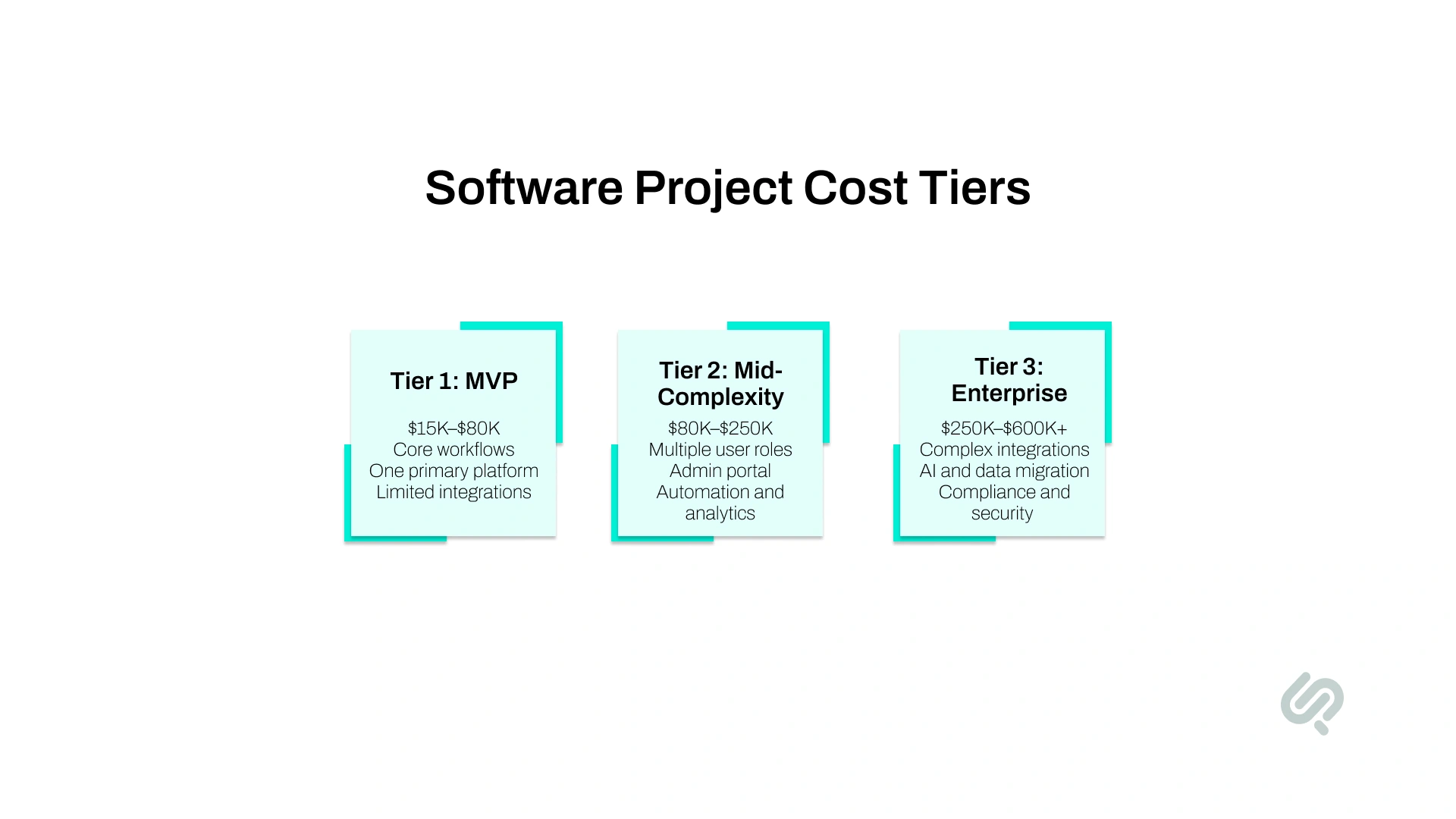
A realistic budget starts with the type of product being built. A customer portal with a small set of workflows should not be estimated like a multi-region enterprise system with AI, several integrations, and regulated data.
For platform-specific estimates, compare current web, mobile, and AI app development costs
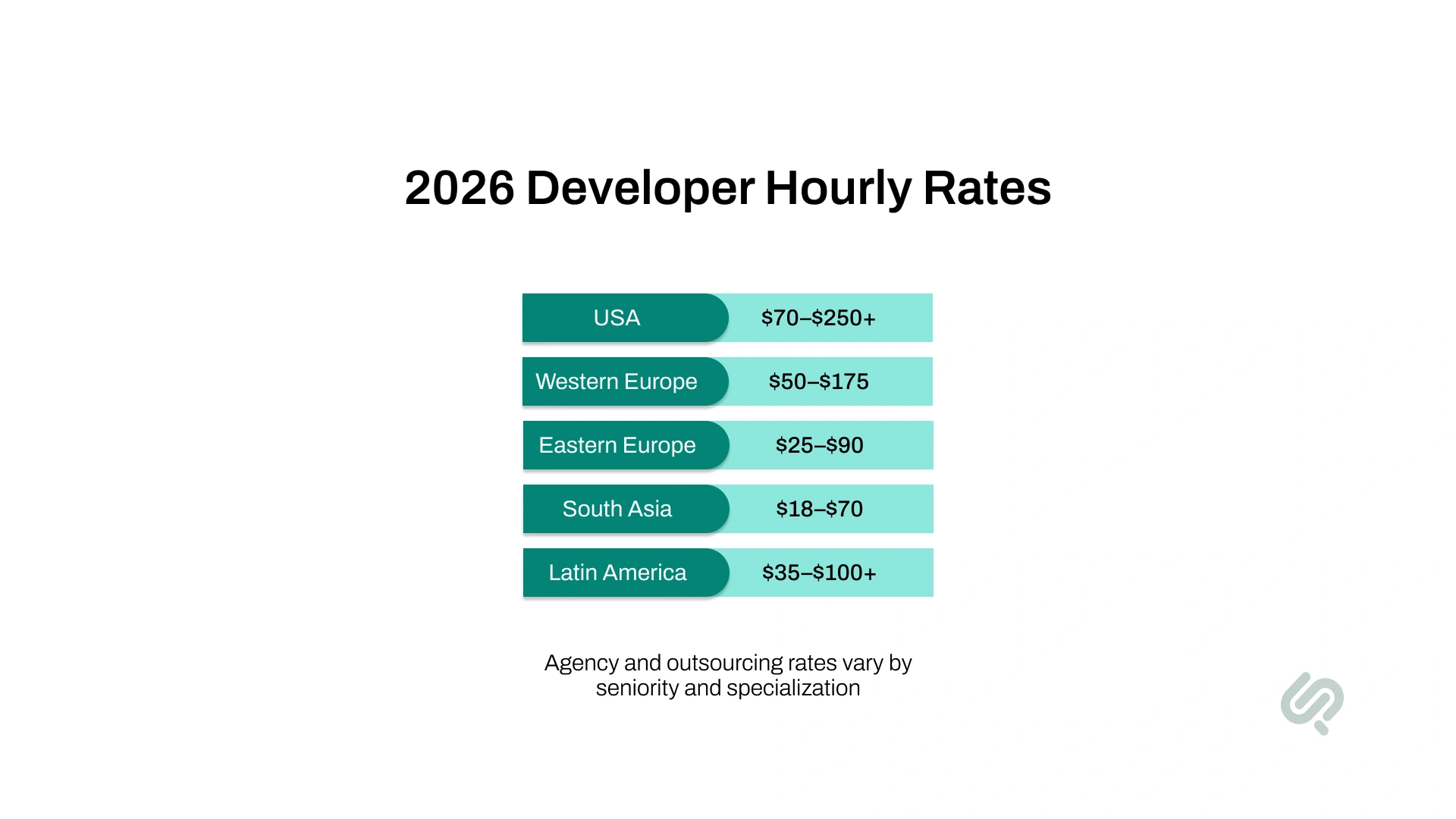
These 2026 estimates reflect indicative agency and outsourcing rates, not employee salaries.
AI, cybersecurity, cloud, and data specialists may charge more than general software developers. Rates may also include or exclude design, QA, project management, DevOps, deployment, and support.
Development location affects hourly rates, but it does not determine the final budget by itself. Communication, seniority, technical experience, time-zone overlap, project management, and rework can have a greater effect than the lowest advertised rate.
Businesses should confirm where product management, design, engineering, QA, and DevOps will be delivered. A company may be registered in the US, UK, or UAE while operating with a distributed development team.
When comparing regions, evaluate:
The best location is the one that provides the right balance of cost, expertise, communication, and delivery control.
A software project budget covers more than coding. It also pays for planning, design, architecture, testing, deployment, security, documentation, and project management.
Engineering normally takes the largest share of the budget. However, legacy modernization, regulated systems, complex integrations, and AI products may require more spending on discovery, data preparation, security, and testing.
A quote that focuses only on development hours may leave out important work required to launch and operate the product safely.
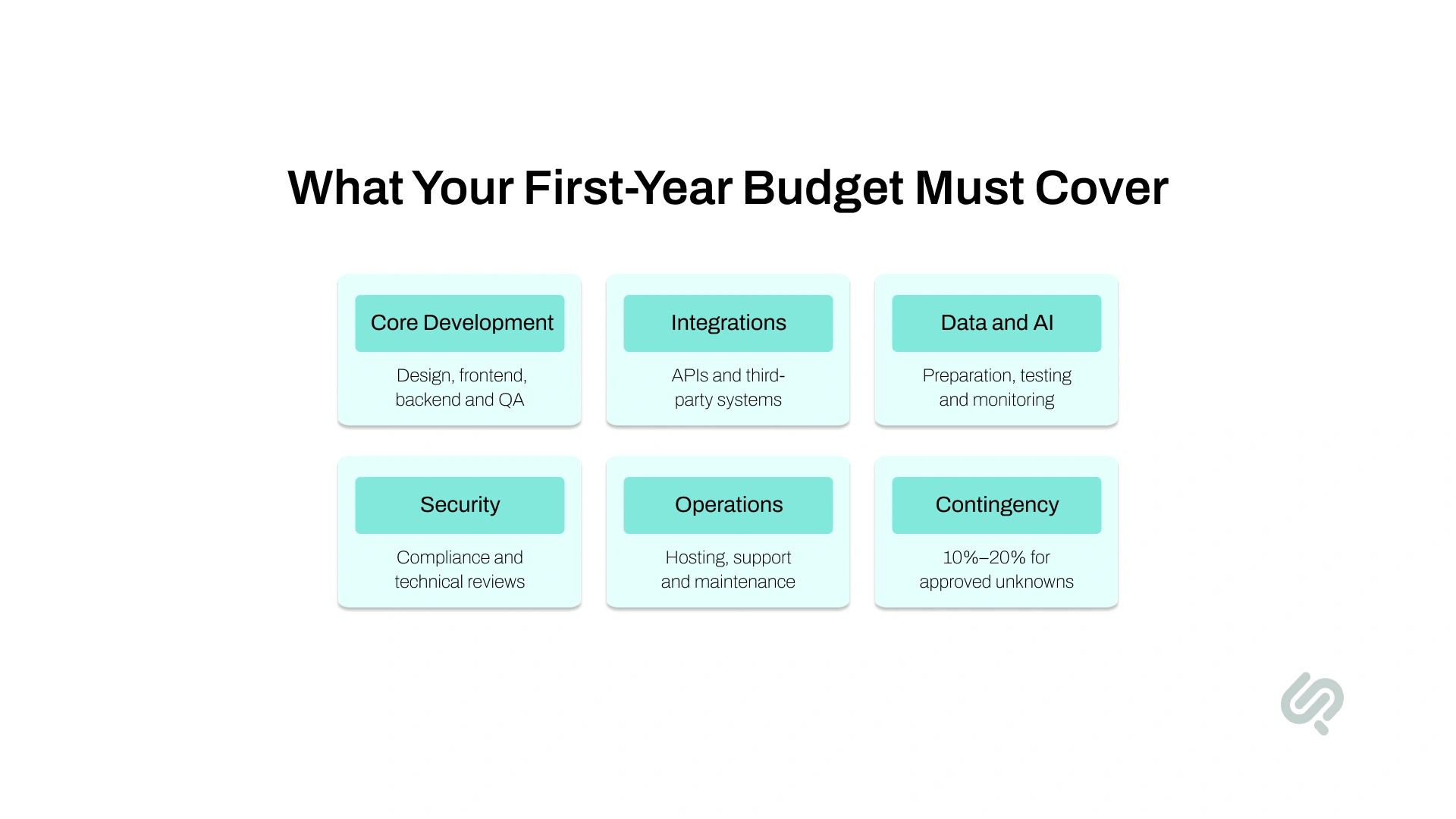
A reliable software development cost estimation should include the full first-year cost, not only design and engineering.
Use this formula:
First-year software budget = core development + integrations + data and AI work + security and compliance + launch costs + infrastructure and support + contingency
Start with the MVP, mid-complexity, or enterprise tier.
Do not choose a tier based only on the number of screens. A small interface can still require complex integrations, permissions, data migration, or security controls.
List every platform required for the first release:
Teams that have not selected a first-release platform should compare a web app vs. mobile app before budgeting for both.
Then define each user role and what that user can view, create, edit, approve, download, or delete.
More platforms and user roles create additional design, development, permission, and testing work.
Document every external system the product must connect with, such as:
Also identify where current data is stored, whether it is accurate, and whether it needs cleaning or migration.
Include requirements such as:
For AI products, budget separately for data preparation, model testing, guardrails, human review, and recurring API or infrastructure usage.
Include first-year costs for:
A contingency of approximately 10% to 20% can help cover approved scope changes and unknown technical issues. Projects involving old systems, undocumented integrations, or uncertain data may require a larger allowance.
An initial quote is based on the information available at the time. The following factors can increase the final amount when they are discovered or added later.
New features can affect designs, databases, integrations, testing, documentation, and release dates. Every project should have a written process for estimating and approving changes.
Legacy systems, undocumented APIs, payment platforms, and government databases often require additional discovery and testing. Confirm technical access before finalizing the estimate.
Each user role may need separate permissions, dashboards, workflows, notifications, and reports. More roles create more business rules and testing paths.
Requirements such as GDPR, HIPAA, PCI DSS, SOC 2, accessibility, audit logging, and data residency can add architecture, documentation, testing, and external review work.
Web, iOS, Android, tablet, and admin platforms each require design, development, testing, deployment, and maintenance. Limit the first release to the platforms users genuinely need.
AI functionality may require data collection, cleaning, migration, evaluation, security, monitoring, and human review.
“The most underestimated cost in an AI project is often not the model itself. It is collecting, cleaning, structuring, securing, and validating the data the system depends on.”
— Mujtaba Sheikh, Head of Design & Engineering, Phaedra Solutions
Unclear requirements can lead to repeated design changes, rework, and inaccurate estimates. Slow approvals can also leave delivery teams waiting or force completed work to be revisited later.
Define decision-makers, approval timelines, priorities, and acceptance criteria before development begins. When important questions remain unresolved, use a discovery phase before agreeing to the full build budget.
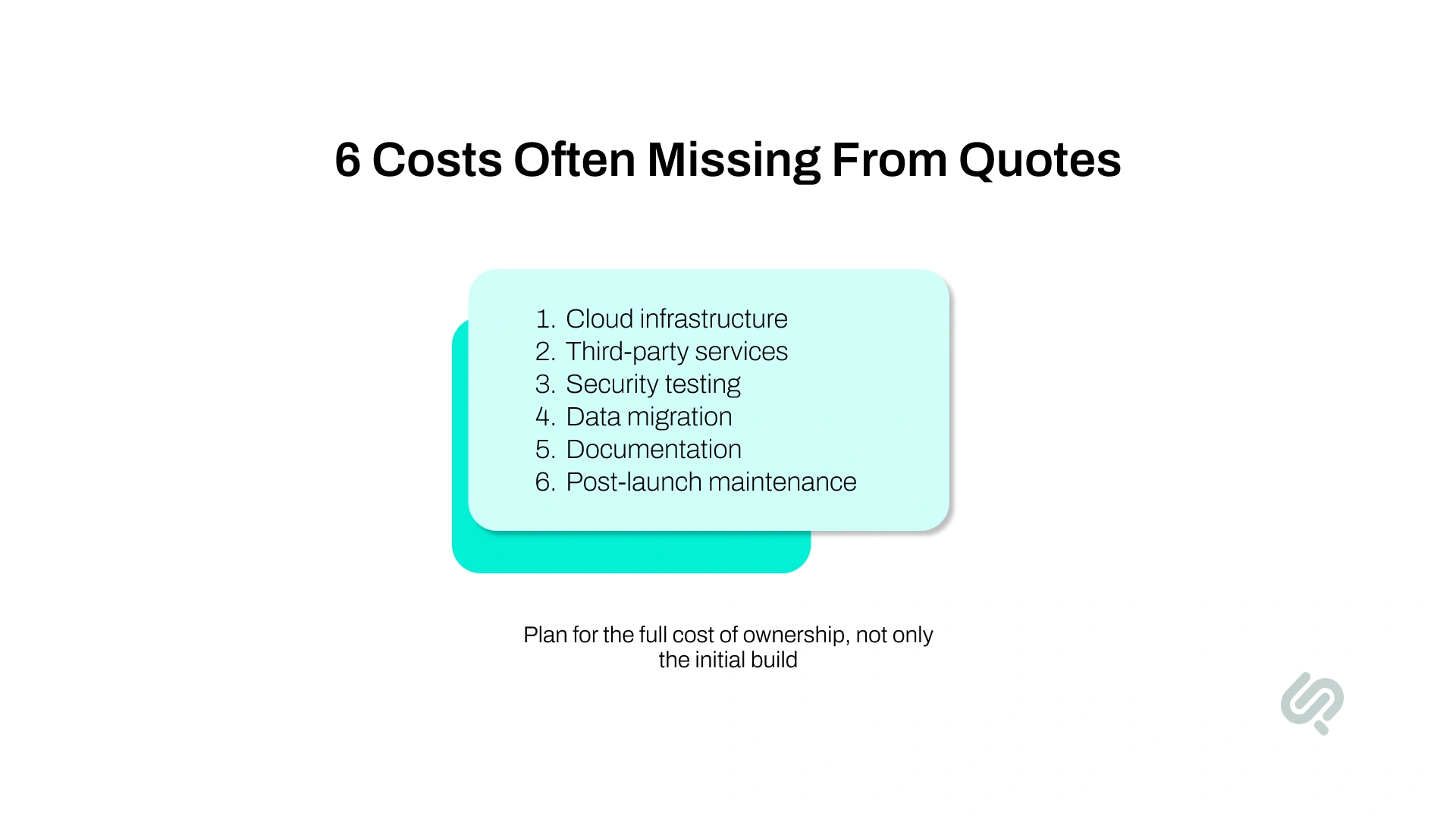
The initial build price may not represent the total cost of owning and operating the product.
Ask whether the following items are included in the proposal.
Cloud costs depend on traffic, storage, uptime, processing, backups, and data transfer. Video, analytics, and AI products may require more computing resources than a standard business application.
Flexera’s 2026 State of the Cloud Report found that 85% of organizations considered managing cloud spend a top challenge, while estimated wasted cloud spending increased to 29%. (2)
Products may depend on paid services for:
These providers may charge by user, transaction, message, request, storage, or token usage.
Automated code checks do not always replace an independent penetration test. Fintech, healthcare, government, and enterprise products may also require remediation reports and retesting.
Moving data is rarely a direct export and import. Records may need to be cleaned, matched, reformatted, deduplicated, validated, and tested before launch.
Missing technical documentation makes maintenance and vendor handover more difficult. Confirm that the project includes deployment instructions, API documentation, access records, and system architecture details.
Maintenance is usually separate from the initial build. ScienceSoft uses approximately 15% to 20% of the original development cost per year as a general planning benchmark, although actual spending depends on product usage, infrastructure, security, support coverage, and release frequency.
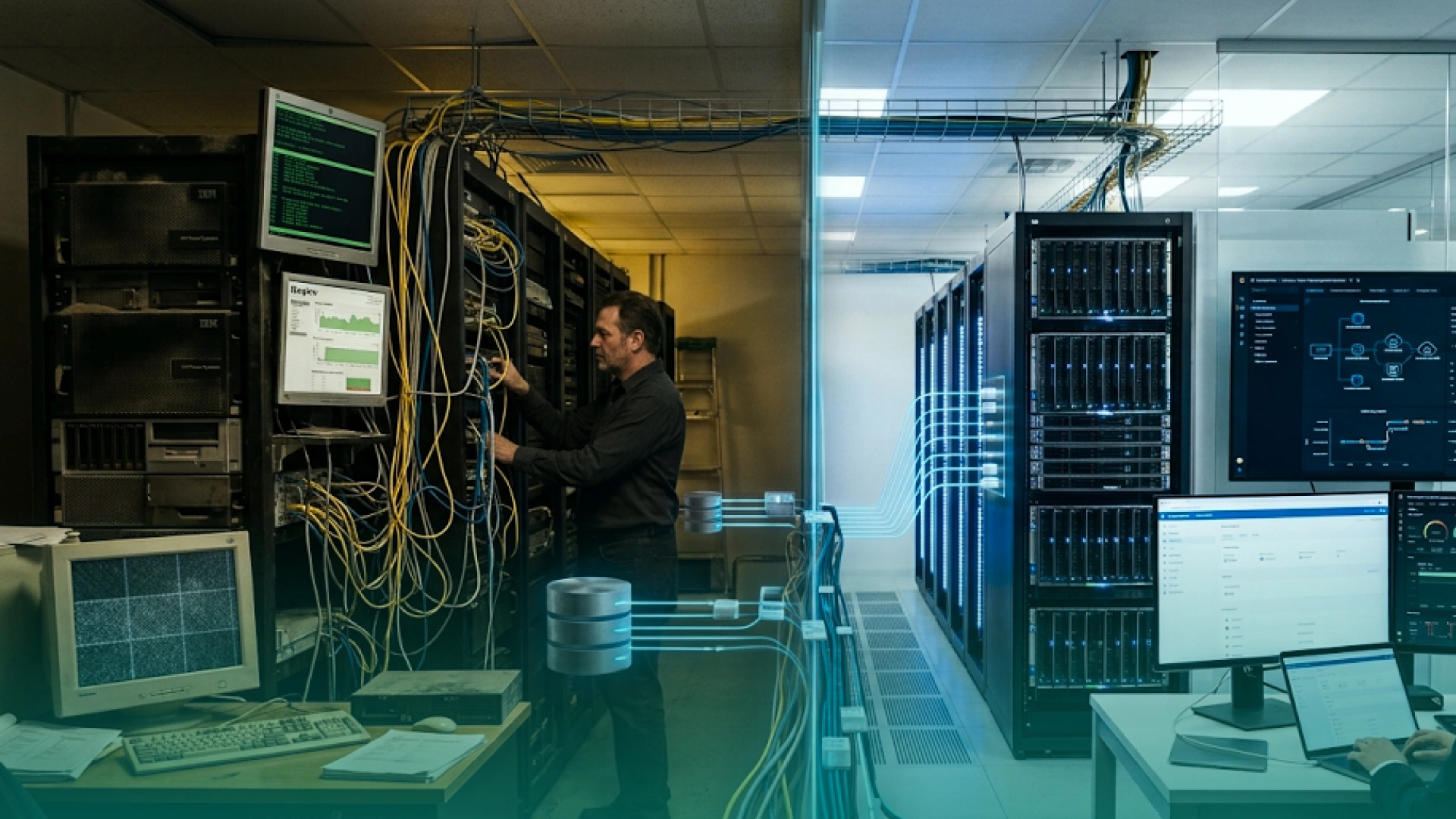
Building a new product and modernizing an existing system require different estimates.
A new software build starts with fewer technical restrictions. A legacy modernization project must work around existing code, data, integrations, infrastructure, and business processes that may still need to operate during development.
Before estimating a modernization project, the development partner should review:
A technical audit helps determine whether the business should refactor, replatform, integrate, or replace the system. Without this step, a legacy software quote may be based on assumptions rather than the system’s actual condition.
An in-house team gives the business direct control over hiring, priorities, product knowledge, and long-term development. It is usually most suitable when software is central to the company, and there is enough continuous work to support permanent product, engineering, QA, DevOps, and management roles.
In March 2026, benefits represented 30.1% of total employer compensation costs for US private-industry workers, showing why salary alone does not represent the full cost of an in-house team. (1)
Software development outsourcing can reduce the time and upfront cost required to assemble a cross-functional team. It is often suitable for new product builds, legacy modernization, specialist work, delivery acceleration, or demand that changes over time.
Outsourcing still requires clear internal ownership. The buyer must provide timely decisions, business knowledge, access to users, and clear priorities.
The right choice depends on whether the company needs permanent internal capacity or a team focused on delivering a defined project or roadmap.
The pricing model determines how scope, risk, and changes are managed.
Use fixed pricing when the features, dependencies, deliverables, and acceptance criteria are unlikely to change.
It provides budget certainty, but the vendor must include a risk allowance. Changes normally require a new estimate and approval.
This model is suitable when requirements will evolve through research, testing, and user feedback.
The buyer pays for actual effort. Regular reviews of the backlog, completed work, and remaining budget are essential.
A dedicated development team suits businesses with a long-term roadmap and a continuous need for engineering, QA, design, or DevOps capacity.
It provides consistent product knowledge but requires enough ongoing work to justify the monthly cost.
A hybrid model combines fixed and flexible pricing.
Discovery, architecture, and clearly defined modules can use fixed pricing. Integrations, experiments, and approved changes can use time and materials within an agreed limit.
For many mid-complexity and enterprise projects, this model provides useful budget control without assuming that every requirement will remain unchanged.
Two software development quotes can show similar totals while including very different levels of service.
Do not compare price alone. Compare what each development company is responsible for delivering.
Confirm whether the proposal covers:
A reliable software project estimate should clearly state:
Before signing, establish who will own:
The proposal should also explain how the product will be transferred if the business changes vendors or moves development in-house.
Ask each vendor:
The best quote is not always the lowest one. It is the quote that defines the scope, responsibilities, risks, and expected outcome most clearly.
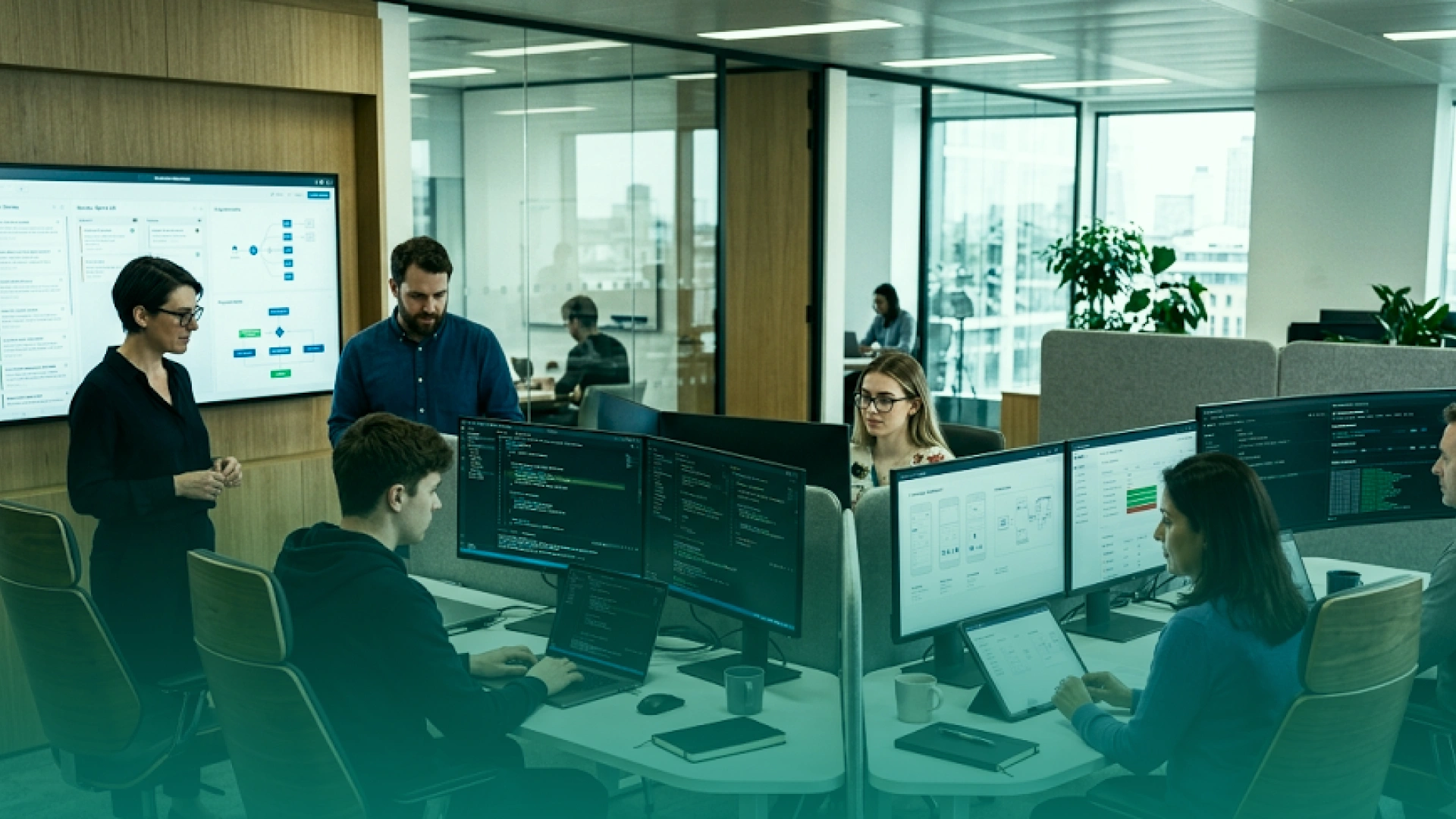
AI-first software development uses AI throughout the delivery process, not only inside the final product.
AI can assist with research, requirements, prototyping, standard code, test preparation, code review, QA planning, technical documentation, and migration analysis. These methods reduce repetitive manual work and allow experienced team members to focus on architecture, security, integrations, and business logic.
McKinsey found that leading organizations reported improvements of 16% to 30% in productivity, customer experience, and time to market, along with improvements of 31% to 45% in software quality (3). The results depended on strong workflows, governance, testing, and operating practices rather than AI tools alone.
Phaedra Solutions applies AI assistance across:
Depending on project size, complexity, and implementation scope, Phaedra projects can achieve 30% to 80% improvement across development speed, operational efficiency, and resource utilization.
Phaedra Solutions’ AI-first delivery benchmarks include:
These ranges are not guaranteed for every project. Senior engineering, human QA, security review, and product oversight remain necessary.
The goal is not to produce the largest amount of AI-generated code. It is to reduce avoidable billable work while keeping the software secure, maintainable, tested, and documented.
In this AI inventory platform case study, a client needed to replace manual inventory processes that caused inaccurate stock records, overstocking, shortages, and weak forecasting. The project included web and mobile applications, centralized inventory management, barcode scanning and generation, real-time stock updates, low-stock reminders, analytics, and AI-supported reporting.
Phaedra Solutions delivered the full-stack product in ten weeks across five sprints, with product, design, frontend, backend, DevOps, and QA roles involved. The completed platform gave users real-time inventory visibility and better tools for stock planning, demonstrating what a coordinated mid-complexity product can include beyond coding alone.
General price ranges can help with early planning, but an accurate estimate requires a review of your users, workflows, platforms, integrations, data, security requirements, and delivery priorities.
Phaedra Solutions provides custom software development services for new products and existing systems, using AI-assisted delivery where it can reduce repetitive work without weakening engineering control.
Book a Free Call.



Ameena is a content writer with a background in International Relations, blending academic insight with SEO-driven writing experience. She has written extensively in the academic space and contributed blog content for various platforms.
Her interests lie in human rights, conflict resolution, and emerging technologies in global policy. Outside of work, she enjoys reading fiction, exploring AI as a hobby, and learning how digital systems shape society.