





Phaedra Solutions built an AI-powered web portal and mobile super app that unified 30+ government services into a single platform. The solution featured secure digital identity, real-time tracking, ministry integrations, analytics, and AI assistance.
Outcome: 30+ services consolidated, 1 web portal and super app launched, 3 access channels enabled, centralized authentication implemented, and 3 pilot ministries integrated via secure APIs.
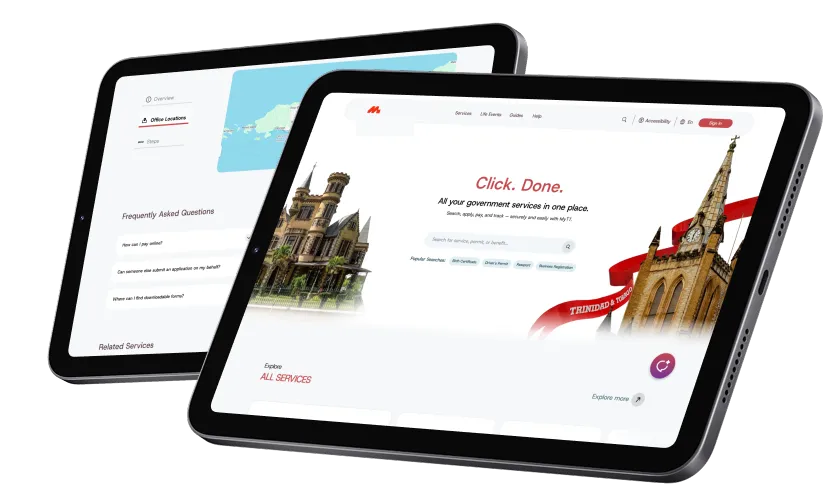

This AI-first web app development case study shows how Phaedra Solutions helped a government agency build a digital government services platform across web, mobile, and AI support. The client needed a secure way for citizens, businesses, ministries, and administrators to search services, access tools, track requests, and get guided help.
We created a cloud-native platform with digital identity, real-time tracking, AI-powered guidance, analytics, secure APIs, and ministry integrations.
The result was an AI-first public-service platform powered by product strategy, UI/UX, web and mobile development, backend APIs, AI, QA, security support, and cloud & DevOps engineering — giving the client a stronger base for future services and integrations.
The platform gives citizens, residents, businesses, ministries, and administrators one place to access and manage public services. Citizens can search services, track requests, receive updates, and use AI-powered guidance.
Businesses can complete licensing, compliance, taxation, and regulatory steps with less repeated work, while ministries manage requests and monitor performance from one connected system.
In short, this became a unified public-service platform built for better service coordination, real-time visibility, and future expansion across more ministries. It helps users complete more service journeys digitally without depending on multiple portals or manual follow-ups.

Public services were spread across different portals, ministries, and manual workflows. Over time, that created a serious service delivery problem:
Citizens had to move between multiple disconnected portals
Service journeys looked and worked differently across ministries
Businesses repeated the same information across processes
Manual paperwork and in-person follow-ups slowed completion
Ministries had limited visibility into performance, requests, and SLAs
The client needed one shared platform with secure identity, service tracking, AI support, and an API-first web development foundation.
The platform had to serve very different users without becoming difficult to use. Citizens needed simple service access, businesses needed faster digital submissions, and ministries needed dashboards with real visibility. Administrators also needed governance, security, compliance, and platform-wide control.
The deeper challenge was technical. The system needed centralized identity, secure APIs, AI assistance, real-time tracking, analytics, and future ministry onboarding in one cloud-native architecture. That meant every feature had to support both user experience and long-term platform growth.
Phaedra Solutions approached the work as a full platform build, not a basic website project.
The platform was designed in clear layers so every user action, service request, AI interaction, and ministry workflow could move through a secure and scalable system.

.webp)
.svg)
.svg)
.svg)
To reduce delivery risk, we worked in structured phases with sprint-based execution.
The prototype phase ran from July to September. Full development started on September 22, 2025, and continued through April 2026.
Our delivery model focused on:
That is what made delivery practical. The platform moved forward quickly without losing control, quality, or stakeholder alignment.
This is the path we followed:

.svg)

.svg)
.svg)
.svg)
Unified citizen, business, ministry, and administrator access through one web portal
Expanded public-service reach through a mobile Super App for users across devices
Improved service discovery through AI-powered search, guidance, and support
Strengthened secure access with centralized IAM, MFA, RBAC, and audit logging
Enabled faster ministry onboarding through secure API integrations for 3 pilot ministries
Built a full stack AI web application foundation across web, mobile, backend, AI, analytics, QA, security, and cloud
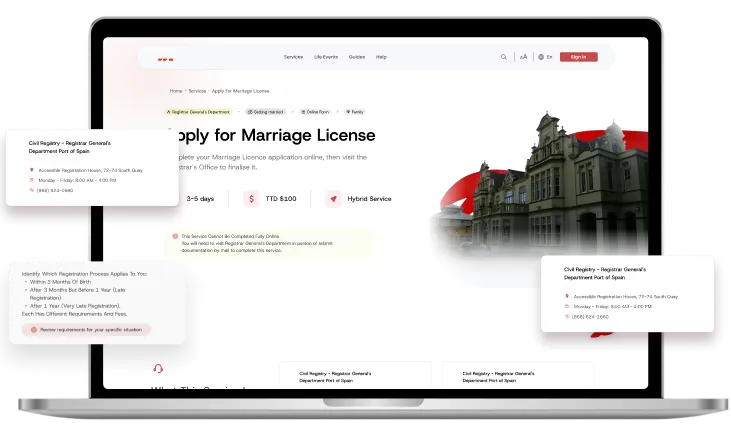
The public-service outcomes were clear:
This is what effective AI-first web app development services look like when they are tied to real service delivery outcomes, not just digital screens.
Service Access
Authentication
Ministry Integration
User Journey
Data Entry
Paperwork
Request Tracking
Governance
Multiple disconnected portals
No shared identity layer
Limited cross-ministry connection
Inconsistent service journeys
Repeated data entry
Heavy paperwork and follow-ups
Limited status visibility
Manual reporting and oversight
1 web portal + 1 mobile Super App
100% centralized authentication through IAM
3 pilot ministries integrated through secure APIs
Unified web, mobile, and AI access
Shared digital service workflows
Digitized requests and online updates
Real-time service tracking
Central analytics and SLA monitoring
Easier access from one place
Stronger security and simpler login
Better service delivery and future scalability
Smoother experience across channels
Faster request completion
Less manual effort
Better transparency for users
Better operational control




.svg)
.svg)
.svg)


.svg)
.svg)
.svg)
.svg)
.webp)
.svg)
.svg)
Many digital government programs fail because they turn manual processes into separate online forms without fixing the full user journey. This project took a better path.
Phaedra Solutions helped build one connected platform where citizens, businesses, ministries, and administrators could work through a shared digital experience. The platform brought together identity, service access, AI guidance, tracking, analytics, APIs, and governance.
For this client, the right answer was not another portal. It was a smarter digital foundation built by an AI first web development agency that understands product, engineering, cloud, AI, and public-sector delivery.
If your organization is still managing disconnected portals, manual workflows, scattered data, or slow user journeys, another standalone website will not solve the real problem. You need one platform strategy backed by the right architecture, AI capabilities, secure integrations, and delivery team.
Our AI-first web app development services help organizations build smarter platforms where web, mobile, backend, AI, cloud, governance, and compliance work together from day one. We also support AI coding services for web applications where speed matters, but quality and control cannot be compromised.
Tell us what you're building — and we'll take it from there.
Fill out the form to schedule a free 30-minute discovery call where we understand your idea, offer early advice, and suggest the best next steps.